
You wake up in the middle of the night with a throat that feels like it is on fire and a forehead radiating heat. Dealing with a sudden sore throat and fever is more than just uncomfortable; it’s often the start of a stressful guessing game. You might find yourself wondering if it’s a common cold, the flu, or something like strep throat that requires a prescription. We know how draining that uncertainty can be, especially when every swallow is a struggle and you’re worried about passing an illness to your loved ones.
We believe that getting back to health should be a straightforward process without the stress of long waits. In this guide, you’ll learn how to differentiate between viral and bacterial infections and find the fastest path to relief in Winnipeg. We’ll walk you through the common causes of these symptoms, share effective ways to manage pain at home, and explain how our community focused clinic can help you skip the eight hour wait times often found at local emergency rooms. Whether you need a quick physician assessment or a prescription from our on-site pharmacy, we’re here to support your journey back to wellness.
Key Takeaways
- Learn the physical signs that distinguish a viral infection from strep throat, including why the absence of a cough is often a key indicator.
- Understand why a sudden sore throat and fever are often best treated at a community walk-in clinic to avoid the long wait times found at local emergency rooms.
- Discover practical home relief strategies, from choosing the right soft foods to the proper use of over-the-counter pain relievers for faster recovery.
- Identify the specific “red flag” symptoms that require immediate emergency medical attention rather than a routine clinic visit.
- Explore how a neighborhood healthcare hub with an on-site pharmacy can provide a seamless, one-stop path from diagnosis to treatment.
Understanding the Sudden Onset of Sore Throat and Fever
Most of us have experienced that moment when a slight tickle in the throat transforms into a sharp, burning pain in what feels like the blink of an eye. When we talk about a “sudden onset,” we aren’t referring to a cold that develops over several days. Instead, we mean symptoms that escalate from perfectly healthy to significant discomfort within just a few hours. A sudden sore throat and fever often catch you off guard, forcing you to cancel plans and focus entirely on finding relief. This rapid shift is usually a sign that your body has encountered an irritant or pathogen and has immediately shifted into a defensive mode.
Physiologically, your throat is the front line of your respiratory system. When viruses or bacteria settle into the delicate tissues of the pharynx, they cause inflammation. Understanding Sore Throat (Pharyngitis) helps us see that this inflammation isn’t just a side effect; it’s an active immune response. As your body detects these invaders, it releases chemicals that increase blood flow to the area, causing the redness and swelling you see in the mirror. This process also triggers the brain to raise your internal temperature, creating a fever to make your body a less hospitable environment for germs.
It’s helpful to distinguish these acute episodes from chronic conditions. Acute pharyngitis happens fast and usually resolves within a week with proper care. Chronic conditions, on the other hand, might linger for weeks or recur frequently due to allergies or long term irritants. In our neighborhood, we often see these sudden spikes caused by a few common triggers:
- Viral Infections: The most frequent culprit, including the common cold or influenza.
- Bacterial Infections: Most notably Group A Streptococcus (Strep throat).
- Environmental Factors: Rapid changes in humidity or exposure to heavy smoke and pollutants.
Why Fever Accompanies a Sore Throat
Think of a fever as your body’s internal thermostat being turned up to fight a fire. When you experience a sudden sore throat and fever together, your immune system is working overtime. A low-grade fever, typically under 38°C (100.4°F), is often the body’s way of handling a mild viral infection. However, a high-grade fever might suggest a more aggressive bacterial invader. For the families in our community, we always recommend keeping a close eye on temperature trends in children. Kids can spike fevers quickly, and tracking whether the heat stays steady or climbs can help our physicians provide a more accurate diagnosis during your visit.
Common Causes of Abrupt Throat Pain
While many factors can cause discomfort, abrupt pain is usually tied to a handful of specific issues. Viral infections like mononucleosis or the seasonal flu are notorious for hitting hard and fast. Bacterial infections, specifically Strep throat, are famous for causing intense pain without the typical “drippy nose” symptoms of a cold. Sometimes, the environment plays a role too. In Winnipeg, the transition between seasons often brings sudden drops in humidity that can dry out the throat overnight, leaving it raw and vulnerable to secondary infections. Identifying which of these triggers is at play is the first step toward getting you back on your feet.
Is it Strep Throat or a Virus? How to Tell the Difference
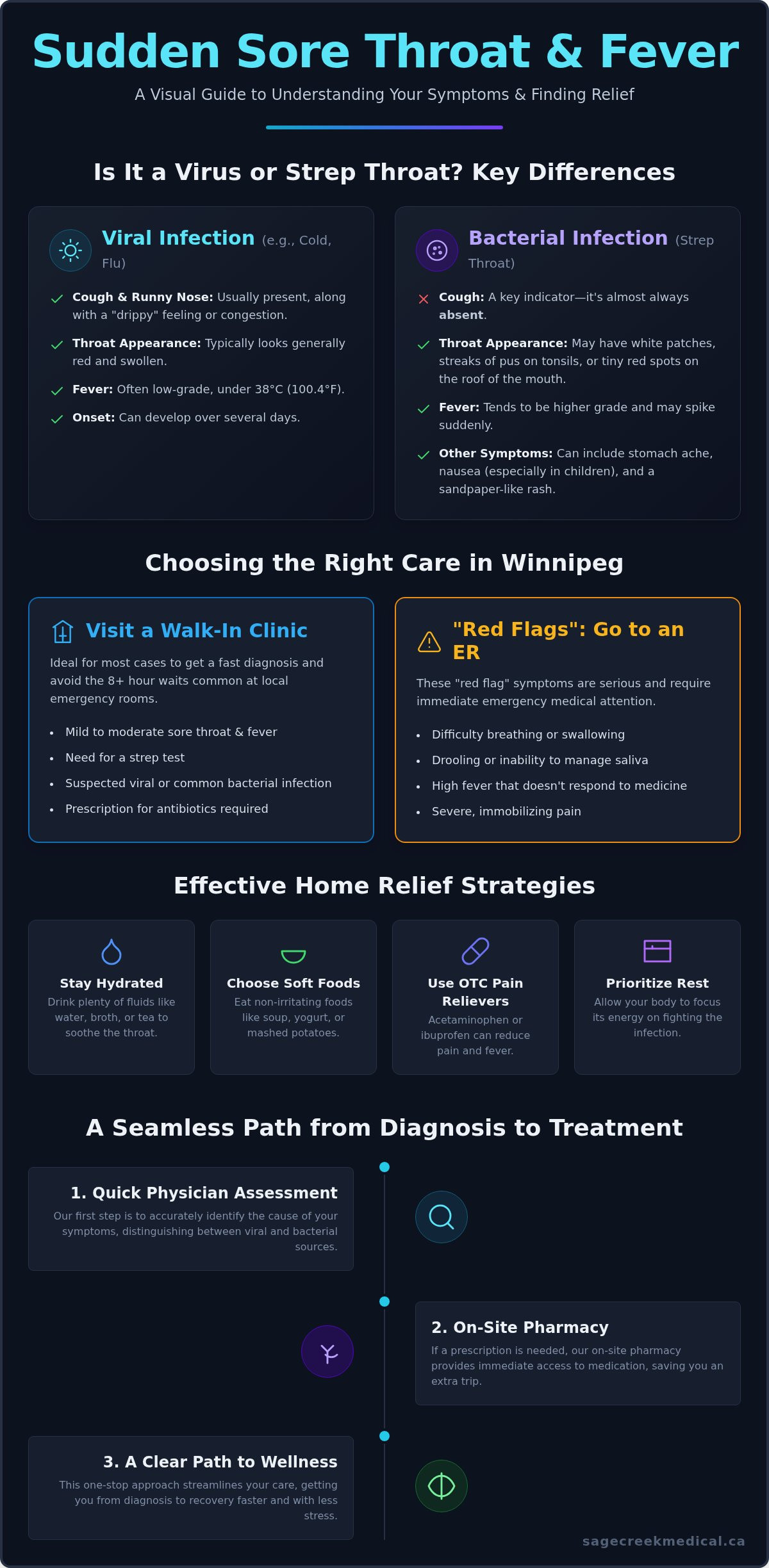
When you’re hit with a sudden sore throat and fever, your first instinct might be to wonder if you need a prescription for antibiotics. Most throat infections are actually viral, which means they require rest rather than medication. However, bacterial infections like strep throat need a specific treatment plan to prevent complications. One of the most reliable clues is the presence of “companion” symptoms. If you have a cough, a runny nose, or a raspy voice, you’re likely dealing with a virus. Strep throat is typically a “dry” illness; it causes intense pain but rarely involves a cough or congestion.
The appearance of your throat can also offer some hints, though it’s not always definitive. A viral infection often makes the throat look generally red and swollen. In contrast, strep throat may present with distinct white patches or streaks of pus on the tonsils. You might also notice tiny red spots on the roof of your mouth. In children, bacterial infections often come with secondary symptoms like a stomach ache, nausea, or even a sandpaper-like rash on the chest. Because these signs can be confusing, knowing When to See a Doctor is essential for peace of mind and proper care.
Symptom Checklist: Viral vs. Bacterial
Group A Streptococcus is the primary bacteria behind strep throat. While every person reacts differently, we generally look for these patterns during an assessment:
- Viral signals: Runny nose, cough, hoarseness, and pink eye (conjunctivitis).
- Bacterial (Strep) signals: Sudden severe pain, swollen and tender lymph nodes in the neck, and tiny red spots on the palate.
If you’re noticing these bacterial signs, our walk-in clinic services can help you get a clear answer quickly.
The Role of Rapid Testing
We believe in providing certain answers so you don’t have to guess about your health. A rapid strep test is a simple tool we use to detect bacterial antigens in minutes. During the swabbing process, we gently use a long cotton swab to collect a sample from the back of your throat. It might feel a bit ticklish or cause a brief gag reflex, but the discomfort only lasts a second. If the rapid test comes back negative but your symptoms are particularly severe, we might send a throat culture to a lab. This ensures that even low levels of bacteria aren’t missed, allowing us to provide the most accurate care for you and your family.
Walk-In Clinic vs. Emergency Room in Winnipeg
Deciding where to go when you are hit with a sudden sore throat and fever can be a difficult choice, especially when you’re feeling drained. In Winnipeg, our healthcare system is designed with different tiers of care to help you get the most appropriate treatment. For most cases of throat pain and fever, a walk-in clinic is your best primary choice. These facilities are equipped to handle “urgent but non-life-threatening” cases, providing a middle ground between a scheduled family doctor visit and a hospital visit. By choosing a walk in clinic Winnipeg residents can often avoid the significant wait times seen in our city’s emergency departments, which averaged over eight hours as of late July 2026.
Understanding the common causes of a sore throat helps us triage your care effectively. Most infections are viral and don’t require the specialized, high-intensity resources of a hospital. When you visit a community clinic, you’ll receive a thorough assessment by a physician who can perform rapid testing and provide immediate guidance. Best of all, these essential health services are covered by Manitoba Health. Just remember to bring your valid health card to your appointment so our team can focus entirely on your recovery.
When to Choose a Walk-In Clinic
A walk-in clinic is the ideal setting for symptoms that are uncomfortable but stable. If you have moderate pain that makes it difficult to swallow solid food but you can still manage liquids, we can help. We also recommend this route if your fever responds well to over-the-counter medications like acetaminophen or ibuprofen. Additionally, if you need a medical certificate or sick note for your employer or school while you recover, a walk-in physician can provide this documentation after your assessment, saving you a trip to a more crowded facility.
When to Head to the Emergency Room
While we are here for your urgent needs, certain “red flag” symptoms require the advanced support only an ER can provide. You should seek emergency care immediately if you experience difficulty breathing or hear a high-pitched, noisy sound when inhaling. An inability to swallow your own saliva, resulting in drooling, is another serious sign that requires a hospital visit. For infants and young children, watch for severe lethargy or signs of dehydration, such as fewer wet diapers. Finally, if a high fever is accompanied by a stiff neck and does not come down with medication, please head to the nearest emergency department right away.
Managing Symptoms at Home: Relief and Recovery Strategies
Recovering from a sudden sore throat and fever starts with giving your body the environment it needs to heal. While your immune system works to clear the infection, your priority should be managing discomfort and staying hydrated. Sipping fluids throughout the day isn’t just about thirst; it’s about keeping the mucous membranes in your throat moist so they can defend themselves. We recommend sticking to “soft” foods that won’t irritate the area. Chilled smoothies, lukewarm soups, and yogurt are excellent choices that provide nutrition without the scratchy pain of harder foods like toast or crackers.
Rest is a non-negotiable part of your recovery regimen. When you’re fighting a fever, your body is burning a significant amount of energy, so staying home isn’t just about comfort; it’s about preventing the spread of illness to our neighbors. We generally advise that you remain in isolation until you’ve been fever-free for at least 24 hours without the help of fever-reducing medication. If you’ve been diagnosed with a bacterial infection, you’re usually safe to return to public activities after 24 hours of consistent antibiotic use, provided you feel strong enough to do so.
Effective Home Remedies
You can find significant relief using simple items already in your pantry. A warm salt water gargle, made with about half a teaspoon of salt in a cup of warm water, helps draw out excess fluid from inflamed tissues to reduce swelling. For a natural throat coating, try adding a spoonful of honey to warm herbal tea or water. The honey acts as a mild demulcent, creating a protective film over the raw parts of your throat. Additionally, using a cool-mist humidifier can be a game-changer in our dry climate, as it prevents your airways from drying out while you sleep.
Safe Use of OTC Medications
Over-the-counter (OTC) medications are helpful tools for managing a sudden sore throat and fever. Acetaminophen is typically the go-to for reducing high temperatures, while Ibuprofen is often more effective at targeting the inflammation that causes sharp throat pain. It’s vital to never give aspirin to children or teenagers recovering from viral symptoms, as this has been linked to Reye’s syndrome, a rare but very serious condition. Our team at the pharmacy in Winnipeg is always available to help you select the right products and confirm the correct dosages for every member of your family.
If your symptoms don’t improve after a few days of home care, or if you’re concerned about a potential bacterial infection, we’re here to help. You can visit our walk-in clinic for a professional assessment and a personalized recovery plan today.
Fast Care and Pharmacy Support at Sage Creek Medical Center
When a sudden sore throat and fever disrupt your day, you shouldn’t have to navigate a complex or impersonal system to find relief. Sage Creek Medical Center serves as a community focused healthcare hub, designed to provide a safe and accessible environment for our neighbors in Winnipeg. We believe that professional care should feel like a partnership, combining clinical expertise with the warmth of a trusted local provider. Our team of experienced physicians is here to help you understand your symptoms and find the quickest path to recovery without the stress of navigating a large, institutional hospital setting.
We know that when you’re dealing with a sudden sore throat and fever, the last thing you want to do is drive to multiple locations for testing and medication. Our facility is structured to respect your time and energy, offering a person centered approach that prioritizes your comfort. By keeping our services integrated and local, we aim to lower the anxiety often associated with medical visits, ensuring you feel supported from the moment you walk through our doors until you’re back home resting.
Comprehensive Care Under One Roof
One of the greatest advantages of visiting our clinic is the seamless transition from your doctor consultation to our on-site pharmacy. If our physicians determine that your symptoms require a prescription, you won’t need to make an extra stop. You can have your medication dispensed immediately right where you were treated. For those who are feeling too unwell to wait or leave the house again, we offer free city-wide delivery for prescriptions. This holistic support ensures that whether you’re visiting for pediatric care or a minor surgical procedure, your recovery remains our primary focus.
- Immediate prescription dispensing at our on-site pharmacy.
- Free city-wide delivery for those recovering at home.
- Coordinated care between your physician and pharmacist.
- Support for all phases of life, from infants to seniors.
Accessing Our Services in Winnipeg
Our modern facility in the Sage Creek neighborhood was built to be a reliable pillar of the local community. We’ve created a space that is technologically current yet approachable, where our friendly staff takes the time to treat you as an individual. If you’re ready to find relief and get a professional assessment of your symptoms, you can book your appointment at Sage Creek or visit our walk-in clinic during our regular hours. We’re committed to providing the steady, calm, and organized care you need to get back to your daily life. Visit us today for the professional guidance and empathetic support you deserve.
Taking the Next Step Toward Wellness
Dealing with a sudden sore throat and fever is never easy, but you don’t have to manage it alone. We’ve explored the essential differences between viral and bacterial infections, helping you understand when rest is enough and when a physician’s assessment is necessary. By choosing a community focused walk-in clinic, you can skip the long wait times at the hospital and receive the personalized care you need to start feeling better sooner. Whether it’s through simple home remedies or professional medical intervention, your path to recovery is well within reach.
Our team is here to make your journey back to health as smooth as possible. We provide a modern, patient-centered facility staffed by an experienced team of Winnipeg physicians who are dedicated to our neighborhood’s wellness. With our on-site pharmacy and free city-wide delivery, we ensure that access to medication is never a burden. If you’re ready to find relief and get back on your feet, visit Sage Creek Medical Center for immediate walk-in care and pharmacy support today. We’re honored to be a part of your health journey and look forward to seeing you feel like yourself again.
Frequently Asked Questions
How long does a fever typically last with a sore throat?
A fever associated with a viral sore throat usually lasts between two to four days as your immune system works to clear the infection. If your temperature remains high for more than three days or doesn’t respond to over-the-counter medications, it’s a good idea to visit our walk-in clinic. Bacterial infections like strep throat may cause a fever that persists until you begin the appropriate antibiotic treatment.
Can I have strep throat without a fever?
Yes, it’s possible to have strep throat without a fever, particularly in adults. While children almost always spike a temperature with a bacterial infection, adults might only experience intense throat pain, difficulty swallowing, and swollen lymph nodes. Because you can’t always rely on a fever to signal a bacterial infection, we recommend a rapid strep test to get a certain diagnosis.
Is a sudden sore throat always contagious?
Most cases of a sudden sore throat and fever are contagious because they’re typically caused by viruses or bacteria. These germs spread through respiratory droplets when you talk, cough, or sneeze. However, if your throat is sore due to environmental factors like extreme dryness or smoke, you aren’t contagious. It’s best to stay home until your fever has broken to protect your neighbors and coworkers.
When should I start antibiotics for a sore throat?
You should only start antibiotics after a physician confirms a bacterial infection through a rapid test or throat culture. Antibiotics are designed specifically to kill bacteria and have no effect on viruses, which cause the majority of throat infections. Using these medications correctly helps prevent antibiotic resistance and ensures you’re only taking what your body actually needs to recover.
What is the fastest way to soothe a sore throat at night?
The most effective way to find relief at night is to use a cool-mist humidifier to keep the air in your bedroom from drying out your airways. Taking a dose of acetaminophen or ibuprofen before bed can help manage a sudden sore throat and fever so you can get the rest you need. Gargling with warm salt water right before sleep also helps by reducing local swelling and discomfort.
Can COVID-19 start with a sudden sore throat and fever?
Yes, many people report that a sore throat is one of the first symptoms they notice with several COVID-19 variants. This is often accompanied or followed by a fever, making it difficult to distinguish from the flu or strep throat without a test. If you’re feeling unwell, we can provide guidance on the next steps for testing and care to keep you and your family safe.
Does Manitoba Health cover walk-in clinic visits for sore throats?
Yes, Manitoba Health covers the cost of visits to our walk-in clinic for residents with a valid health card. This includes the physician’s assessment of your throat and any necessary consultations. We prioritize making care accessible to our community, so please ensure you bring your up-to-date Manitoba Health card to your appointment for seamless processing.
What should I do if my child has a sudden sore throat and won’t drink fluids?
If your child is refusing to drink because it hurts to swallow, try offering cold items like fruit popsicles, ice chips, or chilled electrolyte solutions. These can help numb the throat and provide hydration at the same time. If your child continues to refuse all liquids or shows signs of dehydration, such as a dry mouth or fewer wet diapers, please visit us for pediatric care right away.