
What if symptoms returning after antibiotics don’t mean the same infection is back? If you’ve searched “treatment for recurring UTIs winnipeg,” it’s understandable to want relief and to wonder whether another infection, an infection that hasn’t resolved, or a different condition is causing your symptoms.
Recurring urinary symptoms deserve an individualized assessment, not the assumption that every episode is the same. This guide explains what recurrent UTIs generally mean, why symptoms may return, and what a clinician may consider when deciding whether urine testing or further assessment is appropriate. It also covers what to bring to an appointment and which symptoms call for prompt or emergency attention.
In Winnipeg, a physician consultation may be one possible next step. Before visiting, confirm that the clinic can assess your symptoms and ask about appointment access and testing arrangements. Sage Creek Medical Center offers walk-in clinic services and family medicine consultations, but its current suitability for UTI concerns should be confirmed. Bringing clear details about your symptoms and past episodes can make a care discussion more useful.
Key Takeaways
- Recurrent UTIs are commonly defined as two infections in six months or three in a year, but returning urinary symptoms don’t automatically confirm another bacterial infection.
- A new infection, an infection that hasn’t resolved, or a non-UTI cause may each shape a clinician’s assessment.
- Testing and antibiotics depend on the individual situation. They aren’t automatic for every episode.
- Discuss prevention measures with a clinician, and learn which symptoms need prompt or emergency attention.
- For treatment for recurring UTIs winnipeg, consider a local physician assessment and confirm whether the clinic can assess your symptoms and what access is currently available.
Recurring UTIs in Winnipeg: what counts as a recurrence?
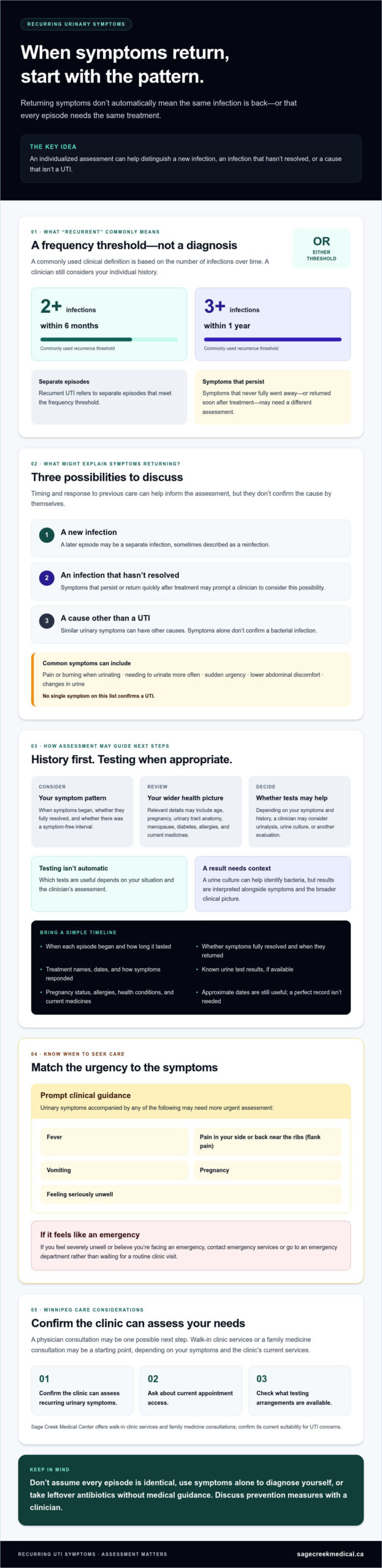
Symptoms returning after treatment can be worrying, but they don’t automatically mean a new bacterial infection. A commonly used clinical threshold for recurrent urinary tract infections is two or more infections within six months, or three or more within a year. The Urinary Tract Infection overview describes this threshold, though a clinician will consider your individual history rather than relying on the number alone.
Recurrent UTI refers to separate episodes that meet the frequency threshold; persistent symptoms are symptoms that never fully went away or returned soon after treatment. A separate episode may be a reinfection. Ongoing or quickly returning symptoms could reflect an infection that hasn’t resolved, or another cause. An appropriate clinical assessment can help distinguish these possibilities. Treatment for recurring UTIs winnipeg should start with understanding the pattern, not assuming each episode is identical.
What symptoms can accompany a urinary tract infection?
Common symptoms include pain or burning when urinating, needing to urinate more often, and a sudden or urgent need to go. Some people notice lower abdominal discomfort or changes in their urine. Symptoms vary, and none of these signs alone confirms a UTI. Similar symptoms can have other causes, so don’t use a checklist to diagnose yourself or take leftover antibiotics without medical guidance.
When should recurring urinary symptoms be assessed?
Contact a clinician if symptoms return after treatment, don’t fully resolve, or differ from your usual pattern. If possible, note when each episode began, whether you had a symptom-free interval, what care or treatment you received, and how your symptoms responded. This information can help a clinician assess whether episodes seem separate or symptoms have persisted, and decide whether testing or another assessment is appropriate.
Seek prompt clinical guidance for urinary symptoms accompanied by fever, pain in your side or back near the ribs (flank pain), vomiting, pregnancy, or feeling seriously unwell. These situations may need more urgent assessment. If you feel severely unwell or believe you’re facing an emergency, contact emergency services or go to an emergency department rather than waiting for a routine clinic visit.
In Winnipeg, a walk-in clinic or family medicine consultation may be a possible starting point, depending on your symptoms and the clinic’s current services. Confirm in advance whether the clinic can assess recurring urinary symptoms and ask about appointment access and testing arrangements.
Why UTIs may return and how Winnipeg clinicians assess them
Repeated urinary symptoms can have different explanations. A later episode may be a new infection, while symptoms that never fully settled could point to an infection that hasn’t resolved. Sometimes the cause isn’t a UTI. The timing of symptoms and how they responded to previous care can help a clinician decide what to consider next, but they can’t confirm the cause on their own.
Your wider health picture matters, too. Age, pregnancy, urinary tract anatomy, menopause, and conditions such as diabetes may affect which questions or assessments are relevant. Share these details openly so the conversation can focus on your circumstances. The right approach to treatment for recurring UTIs winnipeg starts with this individual context, rather than assuming every episode needs the same response.
What information helps a clinician understand repeated episodes?
A short timeline can make an appointment more useful. Note when symptoms began, how long they lasted, whether they fully resolved, and when they returned. Bring medication names and treatment dates, along with any known urine test results. Also mention pregnancy status, allergies, health conditions, and current medicines. You don’t need a perfect record. Approximate dates and a clear description of what changed can still help.
When might urine testing or further evaluation be considered?
Depending on your symptoms and history, a clinician may consider urinalysis, a urine culture, or another type of evaluation. A urine culture can help identify bacteria, but its results need to be interpreted alongside your symptoms and broader clinical picture. A result alone doesn’t explain every urinary symptom or determine the best next step.
Which tests are useful depends on your symptoms, medical history, and the clinician’s assessment. Testing isn’t automatic in every situation. The appropriate next step may differ if symptoms persist, return soon after treatment, or suggest another cause. Ask what a proposed test is meant to clarify and how you’ll receive follow-up. Local sample collection and laboratory arrangements vary, so confirm the process with the clinic. Sage Creek Medical Center’s specific testing arrangements aren’t confirmed here.
For general background on prevention and care-seeking, the US Centers for Disease Control and Prevention provides UTI prevention steps. In Winnipeg, a walk-in clinic or family medicine consultation may be an option, depending on current services. You can review Sage Creek Medical Center’s clinic information and confirm whether it can assess your symptoms, along with appointment access and testing arrangements, before visiting.
Treatment for recurring UTIs in Winnipeg: how assessment guides the next step
There isn’t one treatment plan for every return of urinary symptoms. A clinician may ask about your symptoms and relevant health details, then choose a next step based on the assessment. That may mean monitoring or managing symptoms, arranging testing when it could clarify the picture, or considering causes other than a UTI.
- Assess: Review your symptoms, their timing, previous episodes, and response to earlier care.
- Test when indicated: Consider urine testing if your history or clinical findings make it useful.
- Look beyond infection: If symptoms don’t fit a typical UTI pattern or persist, consider whether another explanation needs assessment.
Antibiotics aren’t automatic. A clinician considers the overall picture, which may include test results, before deciding whether they’re appropriate. This helps avoid treating symptoms as a bacterial infection when the cause is uncertain and supports a plan suited to the episode. The goal of treatment for recurring UTIs winnipeg is not simply to repeat the previous response, but to make a careful decision based on what’s happening now.
Why might a clinician choose testing before treatment?
Testing may help clarify uncertain, recurrent, or persistent symptoms, especially if the timing or response to earlier treatment raises questions. A clinician may consider urinalysis or a urine culture alongside your symptoms and examination findings. Not everyone needs a culture, and testing doesn’t always mean care must wait. The decision depends on the clinical situation and the information already available.
What if symptoms continue after treatment?
If symptoms don’t improve, return, or change after treatment, contact a clinician rather than waiting indefinitely or restarting leftover medication. An old prescription may not suit the current cause, and using antibiotics without guidance can expose you to side effects or contribute to antibiotic resistance. Don’t take leftover antibiotics or repeat a previous prescription unless a clinician advises you to.
For follow-up, bring your treatment timeline, medication name and dates, and any test results you have. A clinician can reassess your symptoms and decide whether further testing or consideration of another cause is appropriate. If a new prescription is determined to be appropriate, Sage Creek Medical Center has an on-site pharmacy for prescription dispensing, but the pharmacy doesn’t replace a clinical assessment. Confirm the clinic’s current ability to assess urinary symptoms and its appointment and testing arrangements before visiting.
Preventing recurring UTIs: practical steps to discuss with a clinician
Prevention isn’t one-size-fits-all, and a recurrence doesn’t mean you’ve done something wrong. Your health, life stage, symptom pattern, and previous test results can all matter. Rather than relying on a single habit or supplement, use an appointment to discuss which steps may be relevant to you and what evidence supports them.
Which prevention habits are worth discussing?
Ask whether fluid intake, bathroom routines, or other daily habits are worth adjusting in your circumstances. These measures aren’t guaranteed to prevent infections, and advice should take your overall health into account. Research on specific products also varies: a 2023 Cochrane review found cranberry products may reduce UTI risk for women with recurrent infections, while a large 2024 trial found no significant prevention benefit from D-mannose compared with placebo. Ask a clinician before starting supplements, especially if you take other medicines or have health conditions.
When might a prevention plan need medical guidance?
If episodes keep recurring, a clinician can review the pattern and discuss individualized prevention options. Some approaches involve medical treatment and need professional advice about potential benefits, risks, and suitability. Don’t start hormone therapy or preventive antibiotics based on general information alone. A qualified clinician can review treatment options and guideline details in light of your history and preferences.
To make that conversation more useful, prepare a short checklist:
- 1. Record when symptoms occurred, how long they lasted, and whether they fully resolved.
- 2. Bring medication names, treatment dates, and any urine test results you have.
- 3. Note relevant health conditions, current medicines, allergies, and questions about daily habits or prevention options.
This preparation can help you and your clinician focus on a plan that fits your circumstances, rather than repeatedly trying the same measure without knowing whether it’s appropriate. For treatment for recurring UTIs winnipeg, Sage Creek Medical Center offers walk-in clinic services and family medicine consultations. Confirm whether the clinic can assess recurring urinary symptoms and check current appointment access before visiting. Review Sage Creek Medical Center’s clinic information as you consider a local assessment.
Where to seek care for recurring UTIs in Winnipeg
If symptoms return or don’t fully resolve, a clinical assessment can help clarify what may be happening and whether testing or follow-up is appropriate. Sage Creek Medical Center offers walk-in clinic services and family medicine consultations in Winnipeg, but its current ability to assess urinary symptoms and recurrent UTIs isn’t confirmed. Before visiting, check whether the clinic is appropriate for your symptoms and confirm current appointment access.
What should you bring to a Winnipeg appointment?
A clear timeline can make the visit more productive. Note when symptoms started, whether they went away, and when they returned. Bring your current medication list, known allergies, and prior urine test results if available. Mention recent antibiotic use, pregnancy, and significant health conditions, since these details can affect the assessment. For practical details about accessing local walk-in care, see the Winnipeg walk-in clinic access guide.
When should you seek urgent medical attention?
Contact a clinician promptly for urinary symptoms with fever, chills, pain in your side or back near the ribs, vomiting, or feeling seriously ill. Pregnancy and significant underlying health conditions can also change how quickly you should be assessed, so seek prompt clinical guidance rather than relying on routine appointment timing. If you believe you’re experiencing an emergency or are severely unwell, contact emergency services or go to an emergency department. A walk-in clinic is not an emergency department.
How can ongoing primary care support follow-up?
Seeing a clinician who can review your history over time may make it easier to track episodes, test results, and how symptoms responded to past care. If you’re looking for ongoing primary care, the guide to finding a family doctor in Winnipeg outlines considerations for that search.
For treatment for recurring UTIs winnipeg, a local physician assessment may be one possible next step, depending on your needs and current service availability. Contact Sage Creek Medical Center to confirm whether it can assess your symptoms, current appointment access, and any clinic instructions before you visit.
Take a thoughtful next step toward care
Recurring urinary symptoms can be frustrating, especially when relief doesn’t last. The next episode may not have the same cause as the last, so a clinician’s assessment can help guide whether testing, treatment, or another kind of follow-up makes sense. A brief record of symptom timing, previous treatment, and results can make that conversation clearer.
If you’re exploring treatment for recurring UTIs winnipeg, Sage Creek Medical Center lists Winnipeg walk-in clinic services and family medicine consultations. Confirm the clinic’s current ability to assess urinary symptoms, appointment access, and testing arrangements before visiting. The center also has an on-site pharmacy for prescription dispensing if a clinician determines a prescription is appropriate.
Contact Sage Creek Medical Center to confirm care options and ask whether the clinic is a suitable place to discuss your symptoms. Bring your symptom and treatment history so you can make the most of the assessment.
Frequently Asked Questions
What counts as a recurring UTI?
A commonly used definition is two or more UTIs within six months, or three or more within a year. This threshold describes repeated episodes, but current Canadian guidance should be checked when applying it in clinical practice. Symptoms alone don’t confirm a bacterial infection: burning, urgency, or frequent urination can have other causes. A clinician considers your symptom pattern and health history to assess whether episodes represent infections.
Why do my UTI symptoms keep coming back?
Returning symptoms may be due to a new infection, an infection that hasn’t fully resolved, or a cause other than a UTI. The timing matters: symptoms that never went away differ from symptoms that returned after a symptom-free period. Rather than guessing or repeating previous treatment, contact a clinician. Share when symptoms began, what care you received, and whether you improved so the assessment reflects your situation.
Do I need a urine test for every suspected UTI?
No, a urine test isn’t automatically needed for every suspected UTI. A clinician decides whether urinalysis, urine culture, or further assessment may help based on your symptoms, medical history, and whether infections are recurring or symptoms persist. Test results are interpreted alongside how you feel and other clinical information. If testing is recommended, ask what it may clarify and how to follow up on the result.
Can recurring UTIs be treated with antibiotics each time?
Antibiotics may be considered when a clinician’s assessment supports a bacterial infection, but they aren’t automatic for every episode of urinary symptoms. The decision can depend on your symptoms, history, and relevant test results. Don’t take leftover antibiotics or repeat an old prescription without clinician advice. The medicine previously used may not suit the current episode, and symptoms could have another cause that needs assessment.
What happens if UTI symptoms return after treatment?
Contact a clinician if symptoms return, persist, or change after treatment, rather than waiting indefinitely or restarting leftover medication. Be ready to share when treatment began and ended, what medication you took, whether symptoms improved, and any urine test results. The clinician may reassess your symptoms and consider whether further testing or another explanation is relevant. Seek prompt guidance if you also have fever, flank pain, vomiting, or feel seriously unwell.
When should I seek urgent care for UTI symptoms in Winnipeg?
Seek prompt clinical guidance if urinary symptoms come with fever, chills, pain in your side or back near the ribs, vomiting, or feeling seriously ill. Pregnancy or significant underlying health conditions can also affect how urgently you need assessment. If you’re severely unwell or think you’re having an emergency, contact emergency services or go to an emergency department. A routine clinic visit isn’t a substitute for emergency care.
Can I get recurring UTI symptoms assessed at a Winnipeg walk-in clinic?
A Winnipeg walk-in clinic may be one possible place to ask about recurring urinary symptoms, but services and access vary. Sage Creek Medical Center lists walk-in clinic services and family medicine consultations; its current ability to assess UTI concerns isn’t confirmed. If you’re looking for treatment for recurring UTIs in Winnipeg, contact the clinic first to confirm whether it can assess your symptoms and what access is available. For emergencies, seek emergency care instead.