
Did you know that nearly 40% of people waiting in Winnipeg’s emergency departments could actually receive faster, more personalized care at a local community clinic? When you are healing from an injury, the thought of sitting in a crowded hospital waiting room for a five-minute procedure can be stressful. You might feel anxious about potential pain or confused about when to seek professional stitches removal winnipeg to ensure your wound has closed correctly.
We understand that these small steps in your healthcare journey matter deeply to your peace of mind. Our goal is to provide a calm, welcoming environment where you can access the care you need without the long wait. In this article, you’ll learn the specific healing timelines for different parts of your body, from five days for facial wounds to 14 days for your hands or feet, ensuring you get the best cosmetic result possible.
We’ll also explain how Manitoba Health coverage works for these visits and provide practical advice on minimizing scars so you can move forward with confidence. Let’s look at how our neighborhood walk-in care makes your recovery process simple and supportive.
Key Takeaways
- Understand why professional removal is essential to avoid localized infections and ensure every thread is safely extracted from the wound.
- Discover how to identify the “sweet spot” in timing to avoid permanent “railroad track” scarring or the risk of the wound reopening.
- Learn what the actual process of stitches removal winnipeg feels like and why it is typically a quick, painless experience at a local clinic.
- Identify the number one aftercare step you should take to protect your skin and ensure your scar fades effectively over time.
- Find out how our community-centered walk-in care provides a stress-free, local alternative to waiting in hospital settings for minor procedures.
Why Professional Stitches Removal Matters for Your Healing
Stitches removal is the careful, clinical extraction of sutures once your wound has gained enough tensile strength to remain closed without assistance. It marks the transition from active healing to long-term recovery. While the process is often quick, it requires a professional eye to ensure the underlying tissue is truly ready. A Surgical suture serves as a temporary support system, and removing it at the right moment is essential for a clean result. When you choose us for stitches removal winnipeg, you aren’t just getting a procedure; you’re getting a professional confirmation that your body has healed correctly.
We take the time to ensure that the delicate “bridge” of new skin is stable enough to stay together, giving you peace of mind as you return to your daily routine. This professional oversight is what helps prevent complications that could set your recovery back by weeks.
The Risks of ‘Doing It Yourself’ at Home
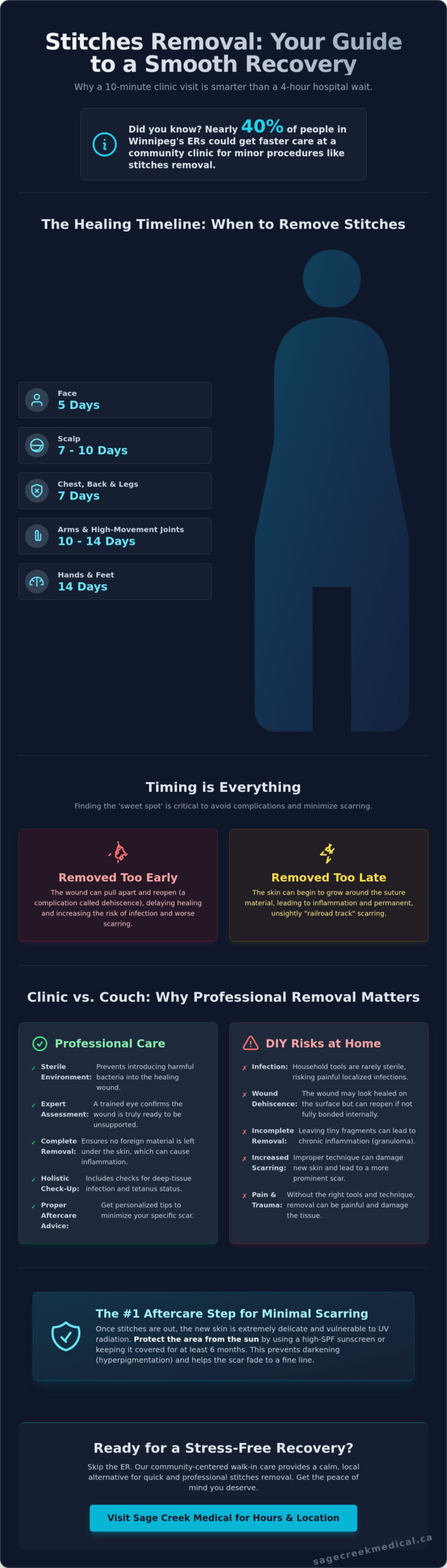
It’s common to feel that you can handle this at home with a pair of scissors, but DIY removal carries significant risks. Household tools, even when cleaned, are rarely sterile enough for medical procedures. Using unsterilized tweezers or sewing kits can introduce harmful bacteria into your skin, leading to painful localized infections. There is also the danger of wound dehiscence, where the wound edges pull apart because the internal healing wasn’t as advanced as it appeared on the surface. Additionally, incomplete extraction is a frequent issue. If even a tiny fragment of suture material remains under the skin, it can lead to a granuloma, which is a small area of chronic inflammation that may require a separate minor procedure to fix.
Clinical Assessment Beyond the Threads
A visit to our clinic involves much more than just removing threads. We use this time to perform a comprehensive assessment of your overall well-being. We look for subtle signs of deep-tissue infection that might not be obvious to the untrained eye. We also evaluate the quality of the scar and determine if specialized adhesive strips are needed to provide extra support for a few more days. Our team also checks your records to ensure your tetanus immunization status is current. This holistic check ensures that every aspect of your health is being looked after. We view this visit as an opportunity to strengthen our relationship with you and ensure you are supported through every phase of your recovery. Our goal is to make stitches removal winnipeg a simple, safe, and reassuring part of your journey back to health.
When to Get Your Stitches Removed: Timing and Signs
Timing is everything when your skin is in the process of healing. We often see patients who are unsure if they should wait another day or if they’ve already waited too long. There is a delicate balance to maintain for a healthy recovery. If sutures stay in too long, they can become embedded or cause “railroad track” scarring, where the skin grows around the thread. Conversely, removing them too early can cause the wound to reopen under tension, a complication known as dehiscence. Our goal is to help you find that perfect window for stitches removal winnipeg so your skin can heal smoothly and securely.
The general rule for when stitches are removed depends heavily on where the injury is located on your body. Generally, areas with high blood flow heal much faster. Your face, for example, has an incredible network of blood vessels that speed up cell turnover and recovery. In contrast, areas like your joints or the soles of your feet are under constant physical tension and have less circulation, requiring more time to secure the tissue. You’ll know your wound is likely ready when the edges are firmly closed, there is no active drainage, and the initial bright redness has begun to fade. If you’re ever uncertain about your progress, our team at Sage Creek Medical Center can provide a quick assessment during a walk-in visit.
Standard Removal Timelines by Body Part
Every part of the body follows its own clock based on its unique anatomy. For facial wounds, we typically look at 5 days to prioritize cosmetic results and minimize scarring. The scalp usually requires 7 to 10 days because of the tension created by hair follicles and head movement. If the injury is on your chest, back, or legs, 7 days is the standard timeframe. However, if the stitches are on your arms or near high-movement joints, they may need 10 to 14 days. Wounds on the palms, soles of the feet, or fingers also require 10 to 14 days because these areas endure significant daily use and pressure.
Warning Signs to Seek Care Early
While we follow these standard windows, your body might tell you it needs medical attention sooner. Watch for increased redness that spreads away from the wound site or feels warm to the touch. If you notice pus or a foul-smelling discharge between the stitches, it’s a sign of a localized infection. Systemic symptoms like fever or chills are also clear indicators that you should seek stitches removal winnipeg or a clinical evaluation immediately. We are here to help you monitor these changes and ensure your recovery stays on track, keeping you safe and comfortable throughout the process.
What to Expect During Your Visit to a Winnipeg Walk-In Clinic
Walking into a clinic for a medical procedure shouldn’t be a source of stress. We aim to make your experience as smooth as possible, starting with the fact that no appointment is typically necessary at a walk in clinic in Winnipeg. You can simply arrive when it’s convenient for you, knowing that we prioritize getting you back to your day quickly. We often hear from patients who feel anxious about potential pain during the process. It’s helpful to know that the removal is usually painless. Most people describe the sensation as a slight tugging or a tickle rather than anything sharp or uncomfortable.
When you arrive, our team will welcome you into a calm, professional space. A nurse or physician will first clean the area around your wound with a specialized antiseptic solution. This step is vital to ensure that no surface bacteria enter the small openings left behind by the threads. By choosing a professional setting for your stitches removal winnipeg, you’re ensuring that the procedure is performed with sterile tools in a safe environment. We take the time to answer any questions you have, helping you feel supported and informed before we begin the actual extraction.
The Removal Procedure Step-by-Step
Once the site is prepared, we use specialized suture scissors to carefully snip each loop. We cut the thread as close to the skin as possible. This technique prevents any part of the suture that was outside the body from being pulled through the healing tissue, which significantly minimizes the risk of contamination. After snipping, we gently slide the thread out. Our providers often reference established Suture removal timing guidelines to confirm the wound is ready for this step. Finally, we give the area a gentle wipe with sterile saline and check one last time to ensure the edges are holding firm.
Manitoba Health Coverage and Documentation
We want to ensure that accessing care is straightforward for everyone in our community. Stitches removal is a fully insured service under Manitoba Health, meaning there’s no out-of-pocket cost for residents with valid coverage. Please remember to bring your 9-digit Manitoba Health card to the clinic so we can process your visit correctly. Beyond the physical removal, our physicians take the time to document your healing progress. This information is added to your medical records, ensuring your primary care provider has a clear picture of your recovery journey. It’s our way of providing the consistent, reliable support you and your family deserve.
Aftercare: How to Minimize Scarring After Removal
Removing your sutures is a major milestone, but it’s not the end of your healing journey. Even though the surface appears closed, the underlying tissue is still quite delicate. In the days immediately following the procedure, the wound site only has a small fraction of its original strength. Taking active steps now can significantly influence how your skin looks and feels in the months to come. We want to ensure that your experience with stitches removal winnipeg leads to the best possible cosmetic outcome for your skin.
The single most important factor in preventing a permanent dark scar is sun protection. New scar tissue is extremely sensitive to ultraviolet rays. Exposure to the sun can cause the area to darken permanently, a process known as hyperpigmentation. We recommend applying a broad-spectrum SPF 30 or higher every single day for at least six months. If you can keep the area covered with clothing or a bandage when you are outdoors, that’s even better. Consistency is key to helping the scar eventually fade into your natural skin tone.
Once the surface of the skin is completely sealed, which usually happens two to three days after removal, you can begin gentle scar massage. Using a simple, unscented moisturizer, apply light pressure in circular motions for a few minutes twice a day. This practice helps break up dense collagen bundles that can make a scar feel ropey or hard. For those who want advanced care, silicone gels or sheets are excellent tools. These products create a protective barrier that keeps the tissue hydrated and helps flatten the scar over time.
Protecting the New Tissue
Your body needs a little more time before it’s ready for full activity. We suggest avoiding heavy lifting or any exercises that stretch the wound site for another five to seven days. If the wound was in a high-tension area, like a knee or an elbow, we may apply Steri-Strips after your stitches removal winnipeg. These small butterfly bandages provide an extra layer of structural support while the deeper layers of skin continue to knit together. Keep the area moisturized with a plain petroleum-based ointment to promote healthy cell turnover and prevent the skin from becoming dry or cracking.
Long-term Scar Management
Healing is a slow, methodical process that can take up to a full year to complete. During this time, it’s normal for a scar to look slightly pink or feel a bit raised. However, it’s important to recognize the difference between a standard scar and a keloid. Keloids are thick, puckered scars that grow larger than the original injury site. If you notice your scar becoming increasingly itchy, painful, or significantly raised, please reach out to a professional. If you have concerns about how a previous injury is healing, our team at Sage Creek Medical Center is available for consultations to ensure your recovery stays on the right path.
Professional Care at Sage Creek Medical Center
We believe that high-quality healthcare should be accessible right in your own neighborhood. For those seeking stitches removal winnipeg, we offer a professional and welcoming environment at Sage Creek Medical Center. Our location is designed to serve the families of Sage Creek and Southeast Winnipeg, providing a local alternative to the often overwhelming experience of larger medical institutions. Our team of experienced physicians is here to help you through every step of your recovery, from the initial repair of minor surgical procedures to the final removal of your sutures.
We understand that the healing process involves both physical care and emotional support. We’ve created a calm, empathetic environment where you are treated as a neighbor, not just a patient. This person-centered approach helps lower the anxiety often associated with medical visits, ensuring you feel comfortable from the moment you walk through our doors.
Why Choose Our Winnipeg Clinic?
One of the most significant advantages of visiting our clinic is the minimal wait time compared to major hospital emergency rooms. While hospitals are essential for emergencies, our walk-in services are optimized for minor procedures like suture extraction. We also offer integrated care that keeps your health history connected. If you are already seeing a Winnipeg family doctor at our facility, your removal visit is automatically linked to your existing medical files. We are deeply committed to the long-term health and well-being of every individual in the Sage Creek community. This continuity of care ensures that your recovery is monitored by professionals who understand your complete health journey.
How to Visit Us for Wound Care
Our center is located in the heart of Sage Creek, making it easy for local residents to find us without a long commute. We offer ample free parking, so you won’t have to worry about the stress of finding a spot or paying high fees during your visit. Before you head down for your stitches removal winnipeg, we recommend checking our current hours to ensure you receive the most timely service. Beyond wound care, we provide comprehensive health clinic services in Winnipeg for the whole family, including prescription dispensing and over-the-counter medications at our on-site pharmacy. We look forward to helping you move through the final stages of your healing with confidence and ease.
Moving Forward with Your Recovery
Healing is a gradual process that requires patience and the right professional support. We’ve discussed why timing your stitches removal winnipeg correctly is vital to avoid complications like embedded sutures or wounds reopening. It’s also important to remember that protecting your new tissue from the sun and following a gentle massage routine are the most effective ways to ensure your skin recovers beautifully over the coming months.
Our team is here to make this final step in your healing journey as simple as possible. We provide Manitoba Health insured services in a modern, welcoming facility located right in Southeast Winnipeg. With an on-site pharmacy available for any immediate prescriptions or dressings you might need, we ensure you have everything required for a successful recovery in one convenient stop. It’s our privilege to support our neighbors through every phase of their health journey.
Visit Sage Creek Medical Center for professional wound care and stitches removal today. We look forward to seeing you and helping you return to your daily life with complete peace of mind.
Frequently Asked Questions
Do I need an appointment for stitches removal at a walk-in clinic?
You don’t need an appointment for stitches removal winnipeg at our walk-in clinic. We understand that your time is valuable, so we offer these services on a first-come, first-served basis. Simply bring your Manitoba Health card and check our current hours before you arrive. This flexibility allows you to fit your follow-up care into your personal schedule without the stress of a fixed time or a long wait in a hospital setting.
Does it hurt to have stitches taken out?
Most patients find the removal process to be virtually painless. You’ll likely feel a mild tugging or pulling sensation as the threads are gently extracted, but it shouldn’t be sharp or distressing. Our team uses sterilized, specialized tools to ensure the procedure is as comfortable as possible. We take our time to make sure you feel relaxed and supported throughout the entire visit, prioritizing your comfort at every step.
What happens if I wait too long to get my stitches removed?
Leaving sutures in for too long can lead to “railroad track” scarring or cause the threads to become embedded in the new skin. When the skin grows over the sutures, removal becomes more difficult and may cause unnecessary irritation. It also increases the risk of localized infection. Following the specific timeline provided by your healthcare provider is the best way to ensure a smooth recovery and a clean, professional cosmetic result.
Is stitches removal covered by Manitoba Health?
Yes, professional stitches removal winnipeg is a fully insured service for residents with a valid 9-digit Manitoba Health card. You won’t have to pay out of pocket for the procedure at our clinic because it’s covered under the provincial health plan. Please ensure your card is current when you visit us so we can process your care through Manitoba Health correctly. This ensures that high-quality wound care remains accessible to everyone in our community.
Can a nurse remove my stitches, or does it have to be a doctor?
Both doctors and nurses are qualified to remove sutures, though a physician typically performs the clinical assessment of the wound first. At our clinic, we work as a collaborative team to ensure your healing is on track. A doctor will examine the site to confirm the tissue has gained enough strength before the threads are snipped. This ensures that your recovery is managed with the highest level of clinical oversight and care.
What if my wound starts to open after the stitches are removed?
If you notice the edges of your wound beginning to pull apart, you should seek medical attention right away. This is known as dehiscence and requires a professional evaluation to determine if the site needs further support. We may use adhesive strips to reinforce the area or provide specific instructions on how to protect the tissue. Quick action helps prevent infection and ensures the wound closes properly without further complications.
How long should I keep the area covered after removal?
You should generally keep the area clean and dry for the first 24 hours after the sutures are removed. After this initial period, you can usually leave the site uncovered unless your healthcare provider advises otherwise. Keeping the area moisturized with a plain ointment can help the skin remain flexible as it continues to strengthen. Always follow the specific aftercare plan provided by our team during your visit to ensure the best results.
Can I get my stitches removed at a different clinic than where I got them?
You can absolutely have your sutures removed at our clinic even if they were originally placed at a different facility. Whether you received care at a hospital or another clinic, we are happy to help you with the final stage of your recovery. If you have any paperwork or instructions from your initial visit, please bring them along. This helps our team understand the history of your injury and provide the most accurate care possible.