
Did you know that 9 in 10 Manitobans currently live with at least one risk factor for heart disease or stroke? It is a sobering statistic, especially when you’re trying to navigate heart disease prevention in Winnipeg while facing long wait times for specialists or confusion over which screenings Manitoba Health covers. We understand that maintaining heart-healthy habits can feel like a monumental task when it is -30°C outside, and the stress of managing high blood pressure shouldn’t be compounded by a lack of clear local information.
We believe that your cardiovascular health should not be a source of anxiety. You deserve a clear, manageable path toward a healthier heart that fits your life right here in our neighborhood. This guide will help you understand your current risk level and explain how to access essential local screenings, such as EKGs and non-invasive cardiac ultrasounds. We’ll also preview the community-based support available to you, helping you build a sustainable plan for your heart health that lasts through every season. We’re here to support you through every phase of life with reliable, person-centered care.
Key Takeaways
- Understand why heart disease is often called a “silent” threat and why identifying risk factors early is the most effective way to protect your health.
- Discover how to access essential screenings like blood pressure and cholesterol tests covered by Manitoba Health to support heart disease prevention in Winnipeg.
- Get practical tips for staying active throughout the year by utilizing local indoor walking paths and community wellness centers.
- Learn how your neighborhood pharmacist and primary care provider work together to help you manage medications and lifestyle changes safely.
- Explore the benefits of establishing a long-term relationship with a local clinic for proactive chronic disease management and personalized heart care.
Understanding Heart Disease Risks: The Silent Threat
Heart disease isn’t a single condition. It is a broad umbrella that covers various issues affecting your heart and blood vessels. We often refer to it as a “silent threat” because many of the most dangerous symptoms, like high blood pressure, don’t actually feel like anything at all. You might feel perfectly fine while your cardiovascular system is under significant strain. This is why Understanding Heart Disease Risks is the first step in protecting your long-term health. For many in our community, heart disease prevention in Winnipeg starts with recognizing that “feeling okay” isn’t always the same as “being healthy.”
The Impact of Cardiovascular Disease in Manitoba
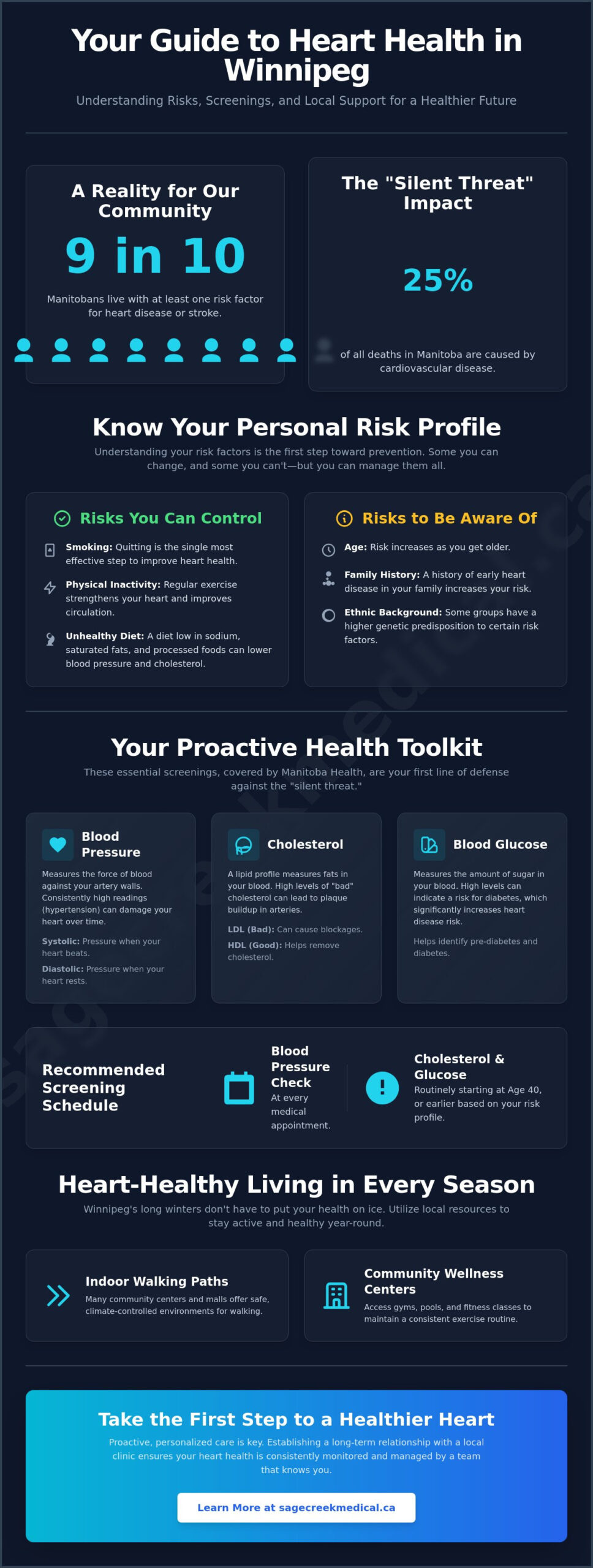
In Manitoba, the statistics are quite clear. According to data from April 2026, cardiovascular disease accounts for 25% of all deaths in our province. Even more striking is that 9 in 10 Manitobans have at least one risk factor for heart disease or stroke. We see these numbers not as a reason for fear, but as a call to action. Our local healthcare system is designed to support you, but the primary goal is always to prevent that first major cardiac event before it happens. Early detection through regular checkups allows us to manage conditions like hypertension or high cholesterol before they lead to serious complications. We want to help you stay ahead of the curve.
We generally divide these risks into two categories: things you can change and things you can’t. Non-modifiable risks include your age, ethnic background, and family history. Modifiable risks are the factors we can work on together. These include things like smoking, physical inactivity, and your daily diet. By focusing on what we can control, we create a stronger foundation for your future.
Identifying Your Personal Risk Profile
Your family history provides a valuable roadmap for your cardiovascular future. If your parents or siblings developed heart issues early in life, your own risk profile changes. However, your lifestyle choices often carry even more weight. In Winnipeg, our environment plays a role too. Our long winters can make it harder to stay active, which can lead to weight gain and higher blood pressure if we aren’t careful.
When should you start focusing on these screenings? While everyone is different, general guidelines for Winnipeggers suggest that adults should have their blood pressure checked at every medical visit. Comprehensive screenings for cholesterol and blood glucose typically become a regular priority once you reach age 40. We may recommend starting earlier if you have specific risk factors. Taking these steps early ensures that heart disease prevention in Winnipeg is a proactive part of your routine rather than a reactive response to a crisis. We are here to help you understand where you stand today so you can plan for a healthier tomorrow.
Primary Care Screenings: What Every Winnipegger Needs
While the concept of a “silent threat” might feel overwhelming, the tools for heart disease prevention in Winnipeg are both accessible and highly effective. You don’t need to wait for a specialist appointment to begin understanding your cardiovascular health. In fact, the most important work happens right in your neighborhood clinic. Essential screenings like blood pressure checks, cholesterol (lipid) profiles, and blood glucose tests are the standard tools we use to build a clear picture of your internal health.
We want to clear up a common point of confusion: these primary screenings are covered under Manitoba Health when performed at your family medicine clinic. There is no out-of-pocket cost for these fundamental tests. By visiting your primary care provider regularly, you help us create a baseline record. This long-term tracking is far more valuable than any single test result because it allows us to identify trends before they become problems. Your doctor acts as a guide, interpreting these metrics through the lens of your age, family history, and lifestyle.
Blood Pressure and Cholesterol: The Key Indicators
Understanding your numbers is a powerful way to lower health anxiety. Your blood pressure reading includes two numbers: systolic (the pressure when your heart beats) and diastolic (the pressure when your heart rests). Hypertension is a condition where the force of blood against artery walls is consistently too high. Similarly, a lipid profile measures different types of cholesterol. We look at LDL, often called “bad” cholesterol because it can lead to plaque buildup, and HDL, the “good” cholesterol that helps clear it away.
You might see blood pressure machines in local pharmacies, but regular monitoring at a clinic is superior to one-off kiosk tests. Clinical measurements are taken in a controlled environment, ensuring the accuracy required for a diagnosis. Resources from the Winnipeg Regional Health Authority can help you understand how these numbers connect to your daily nutrition, but your doctor remains the best person to explain what they mean for your specific future.
The Role of Chronic Disease Management
Heart health is often tied to other conditions. If you are living with diabetes or existing hypertension, proactive care is your best defense against future complications. We take a collaborative approach to chronic disease management winnipeg, working alongside you to keep these factors in check. This isn’t just about writing prescriptions; it’s about regular check-ins and adjustments that fit your life in Sage Creek. If you haven’t had these numbers checked recently, scheduling a family medicine consultation is a simple, proactive step toward peace of mind.
Heart-Healthy Living in the Winnipeg Climate
Winnipeg winters present a unique set of challenges that can make even the most dedicated person want to stay indoors. Cold temperatures cause blood vessels to constrict, which can increase blood pressure and put extra strain on the heart during physical activity. This is why heart disease prevention in Winnipeg requires a plan that adapts to our changing seasons. We don’t want you to stop moving just because the snow arrives; we simply want to help you move safely. By finding ways to stay active and eat well regardless of the temperature, you can maintain a steady course toward better cardiovascular health.
Winter Activity Strategies for Heart Health
If you enjoy being outdoors, it’s vital to dress in layers and cover your face to warm the air before it reaches your lungs. However, for many of us, the safest option during a deep freeze is moving indoors. We are fortunate to have several community resources like the Reh-Fit Centre or our local community clubs. Many Winnipeggers use “mall walking” at places like St. Vital Centre or Kildonan Place to get their steps in a climate-controlled, slip-free environment. These spaces offer a safe way to keep your heart rate up without the risks associated with icy sidewalks.
The Heart and Stroke Foundation of Canada notes that consistency is much more important than intensity. You don’t need to be an elite athlete to see benefits. A steady 30-minute walk most days of the week significantly improves your cardiovascular resilience. If you can’t make it to a facility, even small bouts of movement throughout the day at home or in the office can make a difference. We encourage you to focus on finding an activity you actually enjoy, as that’s the one you’re most likely to stick with through February.
Nutrition: Eating Well in the Prairies
Eating well in the prairies often means navigating a landscape of hearty comfort foods. While dishes like pierogies or creamy stews are local favorites, they can be high in sodium and trans fats. Since 2015, fruit and vegetable consumption has been declining across all age groups in Canada, making it even more important to focus on what’s on our plates. During the winter months, frozen vegetables are a fantastic, cost-effective alternative to fresh produce. They are often frozen at peak ripeness, ensuring you still get the vitamins your heart needs.
We suggest a few simple swaps to reduce your heart risk while still enjoying your meals. Try using low-sodium broths for your soups or replacing sour cream with Greek yogurt. Focusing on fiber-rich root vegetables like carrots, beets, and parsnips can also help manage cholesterol levels. Additionally, staying hydrated and limiting alcohol are simple but effective ways to maintain a healthy weight. Managing stress is the final piece of the puzzle. Our long winters can impact mental health, so taking time for social connection and relaxation is a core component of heart disease prevention in Winnipeg. We’re all in this together, and supporting each other’s well-being is part of our community’s strength.
The Role of Your Neighborhood Pharmacy in Prevention
While your family doctor sets the course for your health, your neighborhood pharmacist is the one who helps you stay on track every single day. They are far more than just professionals who fill prescriptions. They are accessible health advisors who play a critical role in heart disease prevention in Winnipeg. When you have questions about how a new medication might interact with your morning coffee or why you’re feeling a bit sluggish after a dose change, your pharmacist is often the most reachable expert in your corner. We believe that having a trusted face to talk to makes a significant difference in how you manage your long-term well-being.
Medication adherence is the cornerstone of managing chronic heart conditions. It is not enough to just have the pills in your cabinet; taking them exactly as prescribed is vital for keeping blood pressure stable and cholesterol levels in check. To make this easier, we support services like free prescription delivery across Winnipeg. This ensures that a busy schedule or a heavy snowstorm never stands between you and your health. By removing these small hurdles, we help you maintain the consistency your heart requires.
Medication Management and Consultations
Pharmacists specialize in helping you navigate the side effects that sometimes come with blood pressure or cholesterol medications. If a certain dose makes you feel dizzy or nauseated, your pharmacist can work with your doctor to find a better solution. This “one-stop” approach at a medical center allows for seamless communication between your care team. They can also provide evidence-based advice on over-the-counter supplements. Whether you’re curious about Omega-3 fatty acids for heart health or CoQ10 to support your energy levels, they will ensure these additions are safe for your specific profile.
Accessibility and Community Support
Having a dedicated pharmacy in Sage Creek, Winnipeg improves health outcomes by making care a natural part of your neighborhood routine. Beyond dispensing medication, pharmacists are frontline allies in smoking cessation programs. Given that tobacco use remains a primary risk factor for heart disease, having professional support to quit can be life-changing. Easy access to refills and professional guidance prevents gaps in critical heart medication, giving you the peace of mind that your health is always being monitored. If you have questions about your current heart medications, speak with our pharmacy team today to ensure your plan is working effectively for you.
Taking the First Step at Sage Creek Medical Center
We believe that the journey toward a healthier heart shouldn’t be a lonely or intimidating one. At Sage Creek Medical Center, we have built a space that feels like a natural extension of our local community. It’s a place where clinical expertise meets neighborly warmth, designed to lower the anxiety that often comes with medical visits. Whether you have lived in the area for decades or just moved into your new home, we’re here to help you navigate heart disease prevention in Winnipeg with clarity and confidence. Our goal is to replace clinical coldness with a partnership that values your individual story and your family’s well-being.
Walk-In Clinic vs. Family Practice for Heart Health
Sometimes you just need an answer quickly. If you have been feeling unusually stressed or simply want to check your blood pressure after a long week, our walk-in clinic is a convenient resource for those immediate, one-off concerns. We can provide a quick screening and give you the immediate feedback you need to breathe easier. However, for a truly sustainable and proactive plan, establishing a relationship with a primary care provider is essential. Continuity of care allows us to track your progress over years rather than minutes, identifying subtle changes in your health that a one-time visit might miss.
If you are currently looking for family doctors near me accepting new patients, we can help you find a permanent medical home right here in the neighborhood. We take an integrated approach to care, ensuring that any data gathered during a walk-in visit is seamlessly moved into your long-term medical records. This ensures your health story remains complete and accessible to your entire care team. Having a doctor who knows your history makes it much easier to manage risks effectively over time.
Your Heart Health Journey Starts Here
Preparing for your first consultation is a simple process. We suggest bringing a current list of any medications you’re taking and a brief summary of your family’s health history. This information acts as a roadmap, helping us tailor our approach to your specific needs. We pride ourselves on maintaining a supportive, non-judgmental environment. We know that life is busy and habits can be difficult to change, especially during a Manitoba winter. Our role is to provide you with the tools, screenings, and encouragement you need to succeed.
Proactive heart disease prevention in Winnipeg is about taking small, manageable steps with the support of a team that truly cares about your long-term success. We are here to listen, to explain, and to walk alongside you through every phase of life. When you’re ready to take that first step toward peace of mind, visit our walk in clinic in Winnipeg for your next screening. Let’s work together to keep your heart healthy for years to come.
Your Path to a Healthier Heart in Sage Creek
Managing your cardiovascular health is about more than just monitoring numbers; it is about building a partnership with a care team that understands the specific challenges of living in our city. We have explored how identifying silent risks and utilizing local indoor resources can make a significant difference in your long-term well-being. By combining regular primary care screenings with the accessible support of a neighborhood pharmacist, you can create a sustainable plan for heart disease prevention winnipeg that lasts through every season.
Book Your Heart Health Screening at Sage Creek Medical Center. We look forward to supporting you and your family on this journey toward a healthier, more confident future. You don’t have to navigate these health goals alone; we are here to help you stay healthy through every phase of life.
Frequently Asked Questions
Is heart disease prevention covered by Manitoba Health?
Yes, essential screenings for heart disease prevention in Winnipeg are covered by Manitoba Health when conducted at a primary care clinic. This includes regular blood pressure monitoring, cholesterol profiles, and blood glucose testing. These insured services ensure that every resident has access to the basic tools needed to monitor their cardiovascular health without out-of-pocket costs. We encourage you to use these resources as part of your proactive health routine.
How often should I have my cholesterol and blood pressure checked in Winnipeg?
We recommend having your blood pressure checked at every medical appointment, regardless of your age. For cholesterol and blood glucose, general guidelines suggest starting annual screenings at age 40. However, if you have a family history of heart disease or other modifiable risk factors, we may suggest beginning these tests much earlier. Establishing a baseline early helps us track changes in your health over several years.
Can I get heart health screenings at a walk-in clinic?
Yes, you can access immediate screenings like blood pressure checks and heart rate monitoring at our walk-in clinic. This is a convenient option for addressing specific concerns or getting a quick update on your numbers when you can’t wait for a scheduled appointment. While the walk-in clinic is excellent for immediate needs, we recommend establishing a relationship with a family doctor for long-term cardiovascular history tracking and management.
What are the early warning signs of heart disease I should look for?
Many risk factors, such as high blood pressure, are asymptomatic and offer no obvious warning signs until a complication occurs. However, you should watch for symptoms like shortness of breath during light activity, persistent chest discomfort, or unusual fatigue that does not improve with rest. If you notice these changes, it is important to schedule a consultation to discuss your heart disease prevention in Winnipeg and rule out underlying issues.
Are there local heart health support groups in Winnipeg?
Winnipeg offers several community-based resources, including “Heart Health” sessions organized by the Winnipeg Regional Health Authority (WRHA). These sessions are held at various locations, such as Access River East and Access Winnipeg West, throughout the year. Additionally, facilities like the Reh-Fit Centre provide specialized programs and peer support for individuals looking to manage or prevent cardiovascular conditions in a supportive, social environment focused on wellness.
How can I stay active in Winnipeg during the winter to protect my heart?
Staying active during our long winters often involves moving your routine indoors to avoid the strain that extreme cold puts on your heart. You can utilize indoor walking programs at local malls or join community fitness centers that offer climate-controlled tracks. Even consistent, low-impact activities like following a home workout or walking through the city’s skywalk system can provide the cardiovascular benefits your heart needs to stay resilient.
Does the Sage Creek pharmacy deliver heart medications city-wide?
Yes, our on-site pharmacy provides free prescription delivery across the entire city of Winnipeg. We understand that winter weather or a busy schedule can make it difficult to pick up your medications in person. This service ensures you never have a gap in your heart medication, supporting your adherence to the treatment plan developed by your healthcare team. We are committed to making your care as accessible as possible.
Can a family doctor help me quit smoking to reduce heart risk?
Absolutely, our family physicians and pharmacists work together to provide comprehensive smoking cessation support. We can offer personalized counseling, suggest over-the-counter aids, or prescribe medications to help manage cravings. Quitting smoking is one of the most impactful steps you can take for your heart, and we are here to provide a supportive, non-judgmental environment to help you succeed in this vital lifestyle change.