
Did you know that approximately half of all Canadian adults are currently living with high cholesterol? It is a startling figure, but it highlights just how common this journey is for many of our neighbors here in Manitoba. If you’ve recently looked at a lab report and felt overwhelmed by the sea of numbers, or if you’re feeling anxious about what a diagnosis means for your daily routine, please know that you aren’t alone. We understand that the confusion between LDL and HDL can make it hard to feel in control of your own heart health.
Finding a clear path for cholesterol management winnipeg residents can rely on shouldn’t be a source of stress, especially when you have a local team ready to support you. In this guide, we’ll simplify your lipid profile and explain why current Manitoba guidelines recommend routine screening starting at age 40. We’ll also explore how to build a manageable plan that fits your lifestyle, whether that involves dietary changes, medication, or a combination of both. By focusing on reliable, community-based care, we can work together to ensure you have the clear answers and consistent follow-up you deserve for a healthy future.
Key Takeaways
- Learn the difference between “good” and “bad” cholesterol and why monitoring these lipids is essential for long-term heart health.
- Discover the latest Manitoba screening standards and how to access professional cholesterol management winnipeg residents can use to stay ahead of chronic conditions.
- Understand how to properly prepare for your lipid panel test, including the distinction between fasting and non-fasting blood work.
- Explore the balance between lifestyle changes and medical support, acknowledging the significant role genetics play in your cholesterol levels.
- Navigate the local healthcare system to find consistent follow-up care and chronic disease management right in your neighborhood.
Understanding Cholesterol Management in Winnipeg
Cholesterol is often talked about as a health villain, but it is actually a vital lipid that your body needs to build cells and produce hormones. This waxy substance travels through your bloodstream in small packages called lipoproteins. Effective cholesterol management winnipeg families can trust begins with understanding that not all cholesterol is the same. We generally categorize these into two main types: high-density lipoprotein (HDL) and low-density lipoprotein (LDL). While your body requires a balance, having too much of the wrong kind can lead to significant health challenges over time.
In 2026, managing these levels has become a top priority for Manitobans. Recent health reports from 2024 indicate that nearly 40% of chronic conditions in our province could be delayed or managed more effectively with early detection. High cholesterol is a “silent” issue because it doesn’t usually cause symptoms until it has already impacted your cardiovascular system. For those looking for a deeper dive into the biology of these lipids, Understanding High Cholesterol provides a foundational look at how these fats circulate. In our local clinics, we use a diagnostic tool called a “Lipid Profile” to get a clear picture of your heart health and identify risks before they become emergencies.
LDL vs. HDL: Why Your Numbers Matter
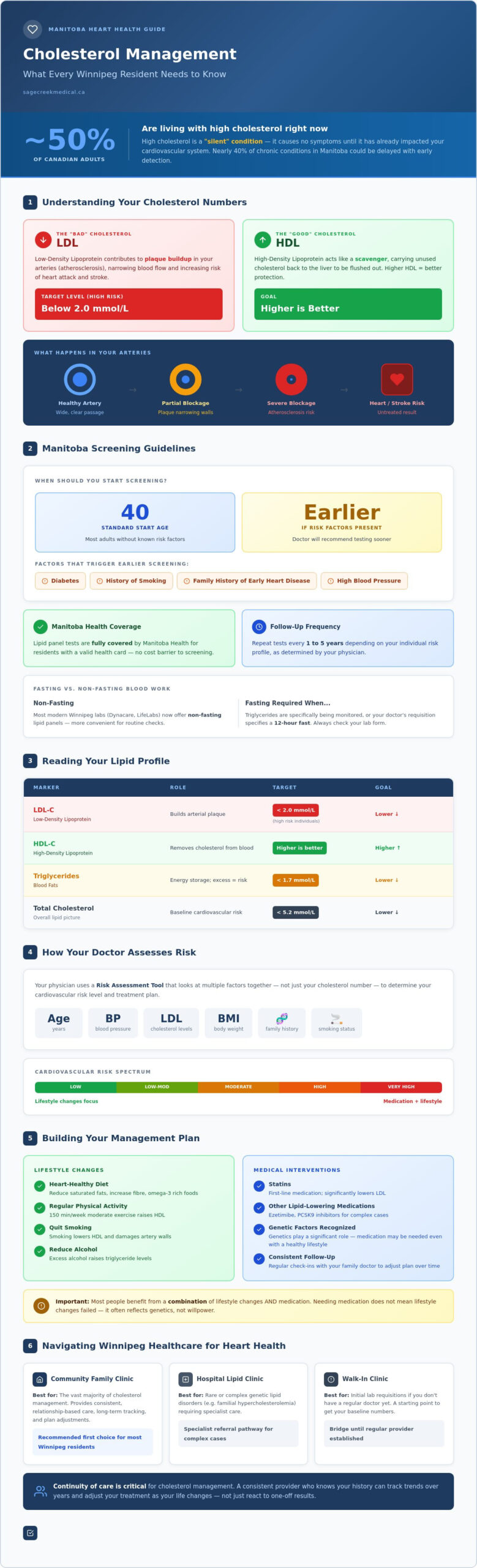
When we talk about “lowering cholesterol,” we’re almost always focusing on your LDL levels. LDL is known as the “bad” cholesterol because it contributes to plaque buildup in your arteries, a process called atherosclerosis. This buildup narrows the pathways for blood flow, which increases the risk of heart disease and stroke. On the other hand, HDL acts like a scavenger, carrying unused cholesterol back to your liver to be flushed out. A healthy lipid range is generally defined by an LDL-C level below 2.0 mmol/L for individuals at elevated cardiovascular risk, though your personal target may vary based on your overall health history.
The Role of Primary Care in Winnipeg
While specialized hospital lipid clinics exist for rare or complex genetic disorders, the vast majority of cholesterol management winnipeg residents need happens right in their own neighborhood. Your family doctor is the best person to anchor your heart health plan. They understand your family history, your lifestyle, and your long-term health goals. Choosing a community-based practice ensures you receive consistent follow-up care rather than one-off consultations. This continuity is essential for chronic disease management, as it allows us to track your progress over years and adjust your plan as your life changes. It’s about building a relationship with a provider who sees you as a person, not just a set of lab results.
Cholesterol Screening Guidelines for Manitobans
Standard health guidance in Manitoba recommends that most adults begin routine screenings at age 40. However, your personal health story might require an earlier start. If you have risk factors such as diabetes, a history of smoking, or a family history of early heart disease, your doctor will likely suggest testing much sooner. Because these tests are considered essential preventative care, the cost is covered by Manitoba Health for residents with a valid health card. This ensures that cholesterol management winnipeg families can access vital data without financial barriers.
Preparing for your lipid panel used to mean a strict 12-hour fast. Today, many labs in Winnipeg, including Dynacare and LifeLabs, often perform non-fasting tests unless your triglycerides are specifically being monitored. It’s always best to double-check the instructions on your lab requisition or ask your healthcare provider during your visit. For more detailed information on how these lifestyle factors intersect with your heart, the Heart and Stroke Foundation cholesterol guide offers excellent Canadian-specific resources. Once your initial baseline is established, we typically repeat these tests every one to five years, depending on your individual risk profile.
When to Start Screening
Your doctor uses a “Risk Assessment” tool to determine when you should start testing and how aggressive your treatment should be. This process looks at your age, blood pressure, and smoking status alongside your cholesterol numbers. If you don’t have a regular provider yet, Winnipeg walk-in clinics can often help with the initial blood work requests to get you started. Early detection is the most effective way to prevent long-term complications, making those first results a cornerstone of your wellness plan.
Understanding Your Lab Results
When you receive your report from a Manitoba lab, the numbers can look like a confusing grid of data. It’s important to remember that “normal” ranges are not one-size-fits-all. A level that is safe for a young adult with no risk factors might be considered high for someone managing hypertension. Your cholesterol management winnipeg plan will be tailored specifically to your needs. When you sit down to review your results, consider using this checklist of questions:
- What is my non-HDL cholesterol level, and why does it matter?
- How do my other health conditions, like diabetes, influence these targets?
- Do these results suggest I need to make immediate lifestyle changes?
- Based on these numbers, when should we schedule our next follow-up?
Having these answers helps you feel more confident in your care. If you have questions about your recent lab work, our team is here to provide personalized family medicine consultations to help you interpret the data clearly.
Balancing Lifestyle Changes and Medical Interventions
One of the most frequent questions we hear in our clinic is whether lifestyle changes alone can resolve high numbers. It’s a natural desire to want to manage your health through diet and exercise. For some, these changes are enough to bring levels into a healthy range. However, it’s also true that genetics often dictate how your body processes fats. Even with a perfect diet, your liver might still produce more cholesterol than it should. Taking a holistic but realistic approach means acknowledging that while your habits matter, they are only one piece of the puzzle.
Effective cholesterol management winnipeg residents can stick to requires looking at the whole person. We don’t just look at the lab report; we look at your family history and your daily environment. This balanced view helps lower the anxiety that often comes with a new diagnosis. It’s about finding a rhythm that works for you, rather than following a rigid set of rules that don’t fit your life.
Heart-Healthy Living in a Winnipeg Climate
Staying active in our city presents unique challenges, especially during the long months of winter. When the temperature drops, outdoor walks might not be feasible for everyone. We often suggest indoor alternatives like walking the loops at local community centers or utilizing the indoor paths at The Forks. Diet also plays a massive role. Living in the heart of the prairies gives us access to incredible, fiber-rich pulses like lentils and beans. These local crops are excellent for heart health because they help bind to cholesterol in the digestive tract; for individuals who prioritize comprehensive internal health, specialized facilities like Digestive Centre provide advanced diagnostic services including gastroscopy and colonoscopy Singapore as part of a proactive wellness strategy. Managing stress and working toward smoking cessation are also critical steps that significantly improve your lipid profile.
When Medication Becomes Necessary
Doctors use a specific 10-year cardiovascular risk score to determine if medication is the right step for you. This calculation considers your age, blood pressure, and cholesterol levels to predict the likelihood of a heart event. If your risk is high, medication becomes a vital tool in your preventative toolkit. While statins are the most common choice, there are other classes of drugs available for those who need them. For very complex cases, your family doctor might coordinate care with specialists at Winnipeg’s Dr. David Mymin Lipid Clinic at St. Boniface Hospital.
It’s important to remember that starting medication isn’t a failure of your lifestyle efforts. It is a proactive decision to protect your long-term health. Our goal for cholesterol management winnipeg is to find the right combination of tools that work for your specific biology and lifestyle, ensuring you feel supported at every step of your journey.
This proactive approach also includes understanding how heart health influences other areas of physical function, such as vascular-related wellness; for specialized support in this field, ED Health Clinic offers a doctor’s perspective on managing these interconnected health concerns.
Navigating Winnipeg Healthcare for Heart Health
Finding your way through the medical system can often feel like a full-time job. We want to make that process simpler for you. Many of our neighbors begin their journey with a visit to a walk-in clinic after seeing a headline about heart health or feeling a bit of worry. While a walk-in is a great place to start, effective cholesterol management winnipeg residents can rely on requires a transition to long-term, consistent care. This is where the coordination between family physicians and our broader support staff becomes so valuable. We ensure that your initial screening leads to a clear plan rather than a dead end.
Our goal is to bridge the gap between a simple blood test and a healthier life. While some resources focus heavily on specialized hospital clinics, the truth is that most heart health journeys are successfully managed right in your local neighborhood. Staying close to home for your appointments makes it much easier to stay consistent. When your clinic is just down the street, those essential follow-up visits feel like a natural part of your routine rather than a stressful cross-town trek. This local continuity is the backbone of a successful long-term health strategy.
The Integrated Pharmacy Advantage
Having an on-site pharmacy changes the way you experience care. Instead of driving across the city to drop off a prescription, you can speak with a pharmacist who already knows your medical history and works directly with your doctor. Our pharmacists do more than just dispense pills; they provide vital counseling on how to manage potential side effects and ensure your treatment is working as intended. They’re also experts in over-the-counter support, helping you understand if supplements like Omega-3s are right for your specific profile. For added convenience, we offer free city-wide delivery for medications, ensuring you never miss a dose because of a busy schedule or a Manitoba blizzard.
Chronic Disease Management Support
Heart health isn’t a one-time conversation. It’s a process that spans years and decades. Our approach to chronic disease management involves tracking your progress through regular follow-ups and updated blood work. We take a team-based approach, often looking at how your cholesterol interacts with other factors like hypertension. By choosing a Winnipeg clinic that offers these integrated services, you’re investing in a support system that stays with you through every phase of life. We’re here to help you understand every update to your health profile with clarity and confidence.
If you’re ready to start a personalized plan for your heart, we invite you to book a consultation with our primary care team today.
Comprehensive Cholesterol Support at Sage Creek Medical Center
Sage Creek Medical Center isn’t just a clinical environment; it’s a space designed with your comfort and peace of mind in mind. We believe that effective cholesterol management winnipeg residents can rely on starts with a feeling of safety and belonging. Our team balances clinical authority with a neighborly warmth, ensuring that every visit feels like a conversation with a trusted partner rather than a cold, institutional appointment. We are deeply committed to the Sage Creek community and the greater Winnipeg area, providing a stable anchor for your long-term heart health journey.
Our approach to chronic disease management and preventive care is methodical and thorough. We understand the anxiety that comes with managing a lifelong condition, which is why we prioritize clear, organized communication at every step. By integrating our professional medical team with an on-site pharmacy, we offer a seamless experience where your doctor and pharmacist work in tandem to support your goals. This collaborative care model ensures that your treatment plan is not only clinically sound but also practical for your daily life. We focus on the individual, helping you navigate your health journey with quiet confidence and reliable support.
Why Manage Your Heart Health With Us?
Choosing a provider is about more than just finding a doctor; it’s about finding a home for your health. At our clinic, we make it easy to transition from a simple walk-in consultation to a comprehensive family medicine plan. Our modern facility is equipped with the latest technology, yet we maintain a steady, calm rhythm that respects your time and your individual needs. We take the time to listen, ensuring that your concerns about medication or lifestyle changes are addressed with empathy and clinical expertise. This neighborly approach strips away the coldness often found in larger institutions, replacing it with a person-centered experience that values your unique story.
Getting Started Today
Taking the first step toward better heart health doesn’t have to be overwhelming. Whether you need an initial screening because you’ve reached age 40, or you are looking for a new partner in your cholesterol management winnipeg journey, we are here to help. You can book your appointment by calling our front desk or visiting us in person to speak with our welcoming staff. We invite you to experience the difference of a contemporary medical space that remains a trusted pillar of the local neighborhood. We look forward to supporting you and your family through every phase of life.
Book your cholesterol screening at Sage Creek Medical Center today.
Your Path to a Healthier Heart Starts Here
Taking control of your cardiovascular wellness is a powerful commitment to your long-term quality of life. We’ve explored how understanding your unique lipid profile and following Manitoba’s screening guidelines provide the clarity you need to move forward. Whether your journey involves subtle dietary adjustments or a personalized medical plan, the key is finding a rhythm that works for your specific needs. Reliable cholesterol management winnipeg residents can trust is built on these small, manageable steps taken with a supportive team by your side.
Our experienced family physicians are here to guide you through our comprehensive chronic disease management programs. We make accessing care simpler with our on-site pharmacy and free city-wide delivery, ensuring your health remains a priority even during your busiest weeks. It’s our privilege to serve as a steady, caring pillar in your neighborhood. Book your heart health consultation at Sage Creek Medical Center today. We look forward to helping you protect your heart for many years to come.
Frequently Asked Questions
Is cholesterol testing covered by Manitoba Health?
Yes, cholesterol testing is a covered benefit under Manitoba Health for residents with a valid health card. Your family physician or a walk-in doctor can provide a lab requisition for this essential preventative screening. You won’t have to pay out-of-pocket at community labs like Dynacare or LifeLabs when the test is ordered for clinical reasons. This ensures that every member of our community has access to vital information about their heart health.
Do I need to fast before my cholesterol blood test in Winnipeg?
Most modern cholesterol tests in Winnipeg do not require you to fast. Current guidelines allow for non-fasting lipid panels, which are often more convenient for your schedule. However, your doctor might still request a fasting test if they need to measure your triglycerides with high precision. It’s always best to check the specific instructions on your lab requisition or confirm with our team before you head to the lab for your blood work.
How often should I have my cholesterol checked if I am healthy?
If you are healthy and have no major risk factors, standard Canadian guidelines recommend a cholesterol check every five years once you reach age 40. For those with existing conditions like diabetes or a family history of heart disease, we may suggest more frequent monitoring. Regular check-ins allow us to track your levels over time and adjust your wellness plan as you age, ensuring your heart remains protected through every phase of life.
Can I manage high cholesterol at a walk-in clinic?
You can certainly begin your journey for cholesterol management winnipeg at a walk-in clinic. A walk-in doctor can order your initial blood work and discuss the immediate results with you. For long-term success, we recommend transitioning to a family medicine plan. This provides the continuity of care needed to monitor your progress over many months and years, which is essential for managing chronic conditions effectively and safely in a familiar environment.
What is the difference between ‘good’ and ‘bad’ cholesterol?
The main difference lies in how these lipids affect your arteries. LDL, or “bad” cholesterol, can lead to waxy plaque buildup that narrows your blood vessels and increases heart risk. HDL, the “good” cholesterol, acts as a scavenger by carrying excess fats back to your liver to be removed from your body. We aim for a balance where your HDL is high enough to protect you while keeping your LDL within a safe, personalized range.
Are there side effects to cholesterol-lowering medications like statins?
While many people tolerate cholesterol-lowering medications well, some may experience mild side effects like muscle aches or digestive changes. It’s important to remember that these medications are tools to lower your long-term risk of heart attack and stroke. If you do notice discomfort, please speak with us. We can often adjust the dosage or try a different class of medication to ensure you feel your best while still protecting your heart with clinical precision.
Can my Winnipeg pharmacist help me manage my heart medications?
Yes, your Winnipeg pharmacist is a key member of your heart health team. They provide expert counseling on your medications, help you understand how to manage side effects, and check for any potential drug interactions. Our on-site pharmacy also offers city-wide delivery to make staying on track as easy as possible. Having your doctor and pharmacist working together ensures your care is coordinated, organized, and focused entirely on your individual well-being.
What happens if my cholesterol levels are still high after changing my diet?
If your levels remain high after improving your diet, it is often because of your genetic makeup. Your liver produces the majority of the cholesterol in your body, and for some people, lifestyle changes aren’t enough to overcome hereditary factors. This isn’t a failure on your part; it is simply how your biology works. In these cases, we may recommend a cholesterol management winnipeg plan that includes medication to help reach your heart health targets.