
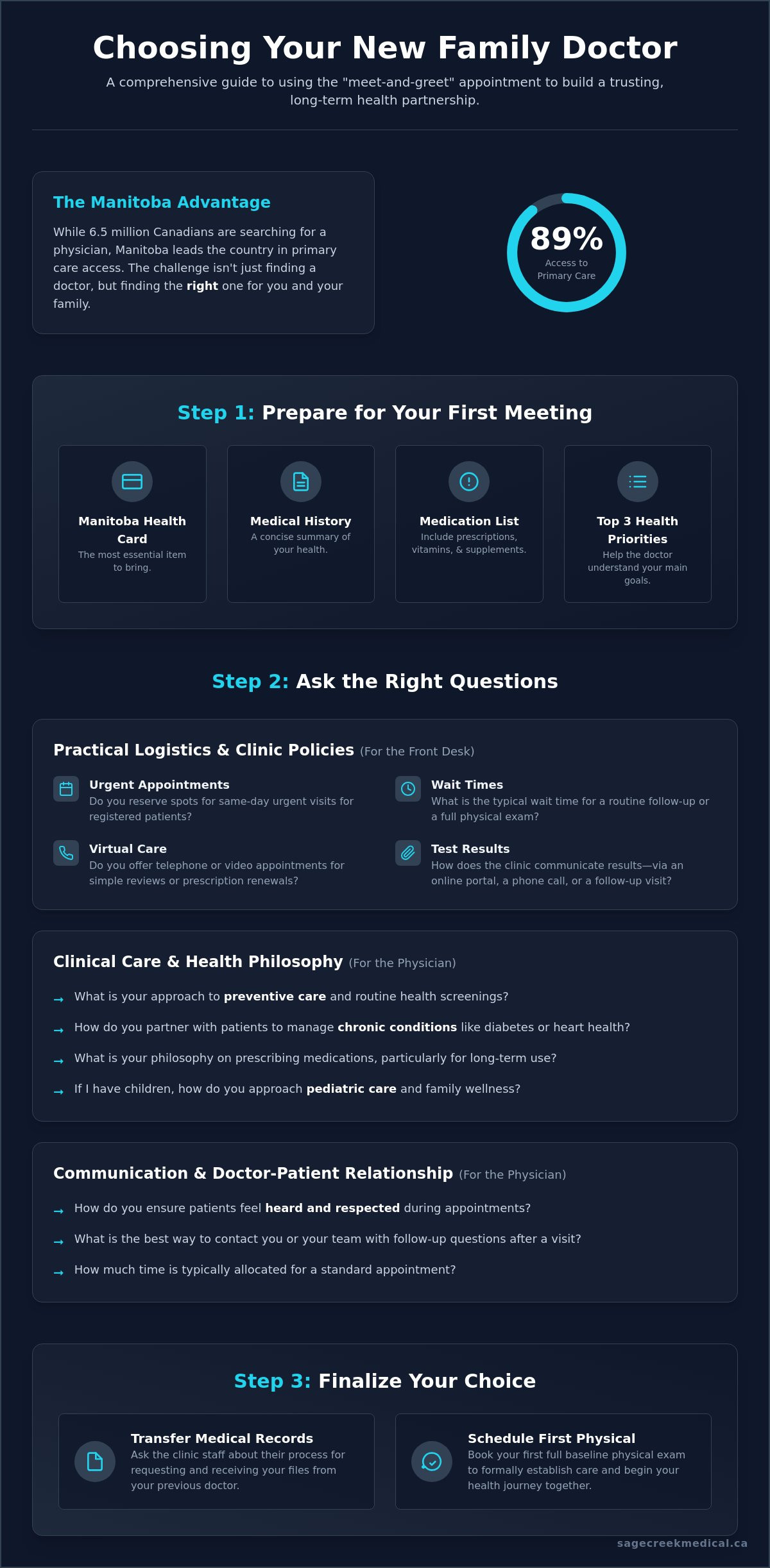
Did you know that while 6.5 million Canadians are currently searching for a regular physician, Manitoba leads the country with nearly 89 percent of our neighbors having access to primary care? Even with these encouraging numbers in Winnipeg, finding a provider who truly listens and understands your family’s unique needs can feel like a daunting task. You want more than just a name on a medical card. You deserve a partner who values your long-term well-being. It’s common to feel rushed during those first few minutes in a clinic, which is why having a prepared list of questions to ask a new family doctor is the best way to protect your peace of mind.
We understand the anxiety that comes with navigating modern healthcare and the confusion surrounding recent Manitoba Health updates. This guide will empower you to take control of your journey by ensuring your next visit isn’t just a formality, but the start of a trusting relationship. We’ve compiled a comprehensive checklist that covers everything from clinic policies and pediatric care to how your specific chronic disease management needs will be met in 2026. By the end of this article, you’ll have the tools to turn a simple consultation into a lifelong health partnership.
Key Takeaways
- Understand how a dedicated meet-and-greet appointment serves as a vital blueprint for building a collaborative and trusting medical partnership.
- Identify the essential questions to ask a new family doctor to ensure their approach to chronic disease management and preventive care aligns with your personal health goals.
- Gain insights into clinic operations, such as policies for same-day urgent visits and the typical wait times for routine follow-up exams.
- Learn how to evaluate a physician’s communication style to ensure you always feel heard and respected during your appointments.
- Master the final steps of transitioning your care, including the practical details of transferring medical records and scheduling your first full baseline physical.
Understanding the Purpose of a Meet-and-Greet Appointment
Entering a new medical clinic should feel like finding a supportive home for your health journey. In Winnipeg, the meet-and-greet is a foundational step. It’s a dedicated session designed to help you and the physician assess compatibility before you commit to a long-term partnership. Think of it as an interview where you’re the one hiring a vital member of your support team. This first interaction is particularly vital if you’re managing chronic conditions like diabetes or heart health, or if you have complex family care needs that require a nuanced, personalized approach. It’s about ensuring the clinic’s environment feels safe and person-centered for you.
Establishing a strong foundation for the doctor-patient relationship starts here. It’s the moment where you set mutual expectations and determine if the physician’s philosophy aligns with your values. When you’re finding family doctors near me accepting new patients, this meeting helps you move beyond a simple name on a list to a person you can trust. Having a specific list of questions to ask a new family doctor ready ensures you cover the practicalities of your care without feeling rushed. It allows you to gauge whether the physician takes the time to listen or if they seem focused only on the clock.
What to Bring to Your First Meeting
To make the most of this time, preparation is your best friend. Your Manitoba Health card is the first and most essential item to have ready. Beyond that, we recommend preparing a concise summary of your medical history and a current list of all medications, including vitamins and supplements. It’s incredibly helpful to write down your top three health priorities or concerns. This clarity helps the doctor understand what matters most to you right from the start, whether it’s managing a specific symptom or focusing on preventive wellness for your children.
Setting Realistic Expectations for the Visit
It’s helpful to remember that a meet-and-greet is typically shorter than a standard physical or consultation. The primary goal is connection and information gathering, not immediate clinical intervention. Because this is an introductory session, the doctor may not provide new prescriptions or specific treatments during this visit. Staying organized with your questions to ask a new family doctor will help you stay focused. You might want to use a notebook or a notes app to keep track of the answers. This methodical approach ensures you leave the clinic feeling confident in your choice, rather than wondering if you missed a major detail. We want your first step into our community of care to be as smooth and reassuring as possible.
Practical Logistics: Questions for the Front Desk and Clinic Staff
While the physician provides clinical expertise, the support staff manages your access to that care. A strong medical partnership is only effective if you can reach your provider when it matters most. When you are narrowing down your list of questions to ask a new family doctor, remember that the administrative flow of the office is just as important as the bedside manner. These logistical details will help guide your search for a medical home that fits your family’s schedule and lifestyle.
We recommend asking the front desk about their specific protocols for urgent needs. Do they reserve spots for same-day appointments, or do they offer walk-in clinic services for registered patients? Understanding the typical wait time for a routine follow-up or a full physical exam helps you plan your healthcare year without frustration. You should also inquire about how they handle virtual care. With most virtual appointments in Canada now conducted by telephone, it is helpful to know if your doctor offers this convenience for simple result reviews or prescription discussions. Finally, ask how the clinic communicates test results. Whether they use a secure online portal, phone calls, or require a follow-up visit, knowing the process lowers the anxiety of waiting for news.
Navigating Clinic Policies and Accessibility
Every clinic has its own rhythm for administrative tasks. Ask about the process for prescription renewals and the expected timeline for completion. It is also wise to determine if the clinic uses a team-based approach. Some practices include nurse practitioners or specialized nurses who can provide quicker care for minor issues. Don’t forget to ask about after-hours coverage or who handles patient needs when the doctor is on vacation. Understanding the clinic’s fee structure for uninsured services, such as the standard $25 fee for sick notes or charges for missed appointments, ensures there are no surprises on your journey.
The Integrated Care Advantage
One of the most significant ways to streamline your health management is by choosing a clinic with on-site services. Finding a pharmacy in Sage Creek Winnipeg that is integrated with your doctor’s office can save you hours of travel time and improve medication safety. When the clinic and pharmacy share a communication loop, it reduces errors and ensures your prescriptions are ready when you arrive. You should also ask if other essential services, such as immunizations or minor surgical procedures, are performed on-site. This holistic approach keeps your care localized and efficient. To see how we prioritize these seamless connections for our community, you can explore our full range of family medicine services.
Clinical Care and Specialized Health Questions for the Physician
Your clinical needs are unique, and the right provider should offer more than just a quick diagnosis. When preparing your questions to ask a new family doctor, start with their medical philosophy. Do they prefer a proactive approach focused on prevention, or is their style more reactive? This distinction matters for your long-term health. We also encourage you to ask about how they manage chronic conditions like hypertension or diabetes. It’s helpful to understand the administrative side of Manitoba Health as well. While your medical assessments are typically covered, certain services like medical certificates or sick notes often require a direct fee. This is a standard practice in Winnipeg clinics to cover administrative costs, and knowing these details early prevents confusion later.
In our local healthcare system, referrals to specialists can sometimes involve wait times. Ask your doctor how they handle this process and how they follow up once you’ve seen a specialist. Knowing how they coordinate with other providers in Winnipeg ensures your care remains seamless across different offices. You should also confirm if the physician provides specialized services on-site, such as paps, prenatal care, or minor surgical procedures. Having these services available in one trusted location creates a more person-centered experience for you and your family.
Tailoring Care to Your Life Stage
Every member of your household has different requirements. For parents, it’s essential to ask how pediatric care in Winnipeg is integrated into the practice. You want to know if the clinic is a welcoming space for children and how they handle immunizations. Women should inquire if the doctor performs routine screenings and manages reproductive health internally. If you’re a senior or caring for one, ask how the clinic handles complex medication lists and mobility concerns. This ensures every generation receives the reliable, empathetic support they need.
Managing Preventive and Chronic Care
Staying healthy is a methodical process. We suggest asking about the frequency of preventive health checks and routine blood work they recommend for your age group. It’s also vital to understand the clinic’s approach to chronic disease management in Winnipeg. Ask how the doctor stays current with the latest medical guidelines and technology. A provider who is technologically current but still treats you as an individual offers the best of both worlds. This grounded approach helps lower the anxiety often associated with managing long-term health issues.
Evaluating the Doctor-Patient Relationship and Communication Style
Pay close attention to the pace of the visit. Do you feel rushed, or does the physician give you space to ask follow-up questions? In a busy clinic environment, it’s easy for a visit to feel transactional. However, a person-centered provider will ensure you feel heard before you leave the room. It’s also revealing to see how a doctor reacts when you mention your own health research. In 2026, many patients are proactive about their wellness. A supportive doctor will welcome your curiosity and help you navigate the information you’ve found online, rather than dismissing it. This openness signals a collaborative partnership rather than a top-down approach.
The “Vibe” Check: Intuition in Healthcare
Sometimes, the most important information comes from your intuition. Notice the small details during your visit. Does the doctor make eye contact, or do they spend the entire time looking at a screen? Feeling comfortable discussing sensitive or “embarrassing” health topics is a non-negotiable part of high-quality care. Choosing a Winnipeg clinic that feels like a welcoming community hub rather than a cold, institutional space can significantly improve your overall experience and health outcomes. When you feel safe and supported, you’re more likely to be honest about your health concerns, leading to better diagnoses and more effective treatment.
Shared Decision-Making
We encourage you to ask directly: “How do you involve patients in creating their own treatment plans?” A doctor who respects your personal health goals and lifestyle choices will work with you to find solutions that fit your daily life. This shared decision-making process ensures that you are an active participant in your journey, rather than a passive recipient of instructions. It’s this methodical and thorough approach to care that defines a truly professional medical practice. If you are ready to find a provider who values this level of connection, we invite you to book a consultation with our team today to see how we can support your family’s long-term health.
Finalizing Your Choice: Transitioning to Your New Winnipeg Medical Home
Once you’ve worked through your list of questions to ask a new family doctor and found a physician who feels like the right fit, the next phase is making the transition official. This process is more than just a paperwork exercise; it’s about establishing the clinical baseline for your future care. The first practical step involves requesting a transfer of your medical records from your previous provider. It’s common for clinics to charge a fee for this service to cover the time required to securely compile and transmit your history. Understanding this administrative cost upfront helps you manage the transition without surprises.
After your records arrive, we recommend booking your first “official” full physical or baseline assessment. Unlike the shorter meet-and-greet, this visit allows your new doctor to perform a thorough review of your current health status and update any necessary screenings. This is also the perfect time to address any remaining questions to ask a new family doctor regarding your long-term wellness plan. If your new medical home has an integrated pharmacy, this is the ideal moment to transfer your active prescriptions. Having your doctor and pharmacist working together ensures that your medication management is seamless, reducing the risk of errors and saving you time during your week. Finally, consider introducing the rest of your family to the practice to ensure everyone receives the same high standard of holistic care.
Administrative Next Steps
To ensure your care begins on the right note, take the time to fill out new patient registration forms accurately. Double-check that your Manitoba Health card information is current in the clinic’s system; this is essential for seamless billing and coverage. Many modern clinics now offer online booking portals or communication apps. Setting these up early allows you to manage your appointments and communicate with the staff with ease, reflecting the contemporary nature of high-quality professional practice. These tools are designed to lower the anxiety of scheduling and keep you connected to your care team.
Building a Long-Term Connection
Consistency is a cornerstone of better health outcomes as you age. When you maintain a relationship with one medical home, your physician gains a deep understanding of your history and your family’s unique needs. At Sage Creek Medical Center, we prioritize this local connection, treating every consultation as an opportunity to support our neighbors through all phases of life. There’s a profound peace of mind that comes from having a “neighbourhood” doctor who truly knows you. This grounded approach strips away the coldness often found in larger institutions, replacing it with the reliability and emotional support your family deserves. We are honored to be part of your social fabric and look forward to growing with you.
Empowering Your Future Health
Finding a physician who truly aligns with your family’s needs is one of the most important decisions you’ll make for your long-term well-being. By coming prepared with specific questions to ask a new family doctor, you transform a standard appointment into a meaningful conversation about your future. We’ve explored how understanding clinic logistics and evaluating a provider’s communication style can lower the anxiety of starting fresh. A successful partnership is built on trust, shared decision-making, and a mutual commitment to your health goals.
Our experienced team of physicians and pharmacists is here to support you at every life stage. From pediatric care for your little ones to comprehensive chronic disease management, we provide person-centered care in a modern facility in the heart of Sage Creek. We believe in treating our neighbors as individuals, ensuring you never feel like just another number. Join the Sage Creek Medical family; book your meet-and-greet today. We look forward to welcoming you into our community and helping you feel confident in your healthcare journey.
Frequently Asked Questions
What is a meet-and-greet appointment with a family doctor?
A meet-and-greet is an introductory session that allows you and a physician to determine if you’re a good fit for a long-term partnership. It’s a dedicated time to discuss your health history and expectations without the pressure of an immediate clinical procedure. This visit helps you decide if the clinic’s environment feels right for your family before you officially join the practice.
Is a meet-and-greet covered by Manitoba Health?
Yes, a meet-and-greet appointment is covered by Manitoba Health for residents with a valid provincial health card. While the consultation itself is covered, remember that administrative items like sick notes or certain forms require a separate fee. We recommend bringing your card to every visit to ensure your coverage is processed correctly without any delays.
Can I have two family doctors at the same time in Winnipeg?
No, you shouldn’t have two family doctors at the same time. The system works best when you have a single medical home where all your health information is centralized. Having one provider ensures that your care is coordinated and that there’s no confusion regarding your medications or treatment plans. It also prevents billing conflicts with Manitoba Health.
What should I do if the doctor I like is not accepting new patients?
If your preferred physician isn’t accepting new patients, you can ask the front desk if there’s a waitlist or if another provider in the clinic is available. Many clinics have several experienced physicians who share a similar philosophy of care. You can also use the Family Doctor Finder service provided by the province to locate other nearby options in your neighborhood.
How do I transfer my medical records to a new clinic?
You can transfer your records by signing a release of information form at your new clinic. The staff will coordinate with your previous office to have your files sent over securely. Most clinics charge a standard administrative fee for this service to cover the resources required for the secure transfer. This ensures your new physician has a complete picture of your history.
What is the difference between a family doctor and a walk-in clinic?
A family doctor provides comprehensive, long-term care and knows your full medical history, whereas a walk-in clinic handles acute, non-emergency issues on an episodic basis. While walk-in services are excellent for sudden illnesses, your family doctor is your partner for preventive health and chronic disease management. Having a consistent provider leads to better health outcomes as you age.
Can a family doctor prescribe medication during the first meet-and-greet?
Typically, a physician won’t provide new prescriptions or treatments during a meet-and-greet visit. This initial meeting is focused on connection and information gathering rather than clinical intervention. Having your list of questions to ask a new family doctor ready helps you focus on compatibility during this time. Once you’re officially registered as a patient, your doctor can begin managing your clinical needs.
How often should I see my family doctor if I am generally healthy?
Even if you’re generally healthy, we recommend seeing your family doctor at least once a year for a routine check-up. These annual visits are vital for preventive screenings and catching potential issues before they become serious. Your doctor will help you decide on the right frequency for blood work or exams based on your age and personal health goals.