
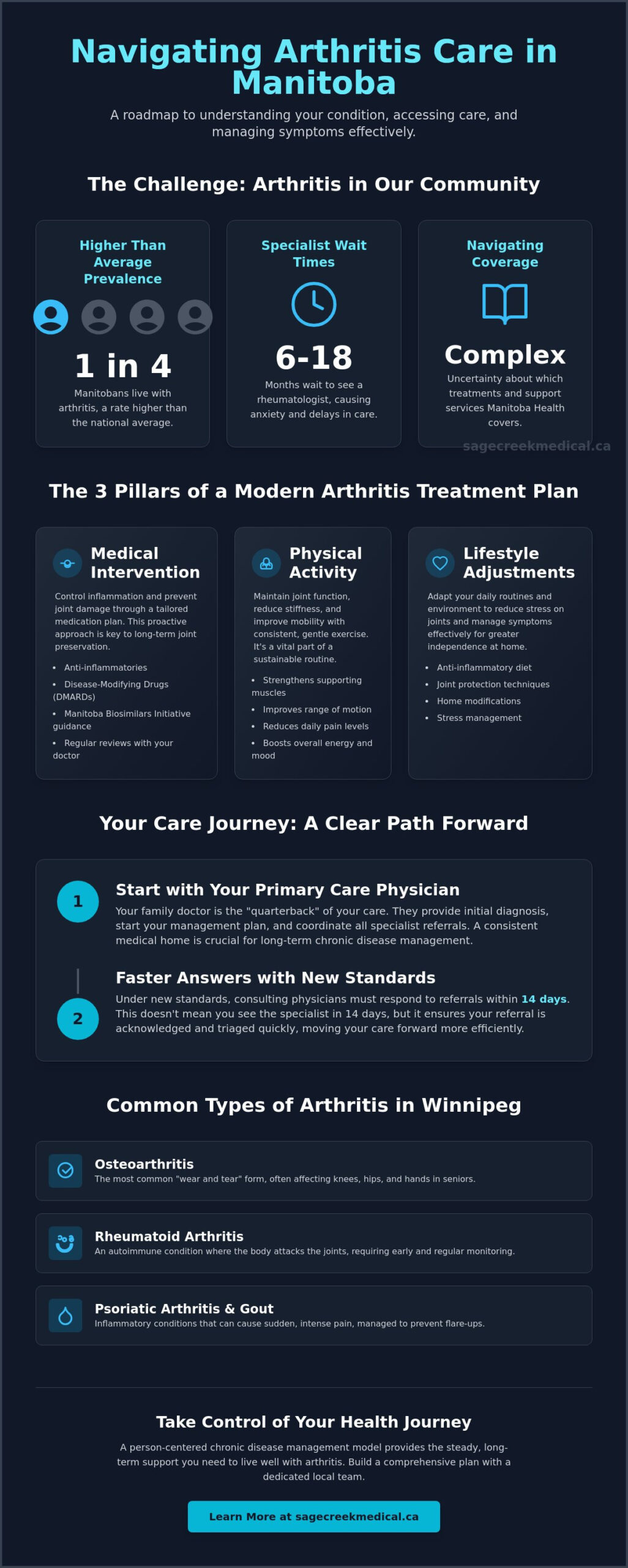
Did you know that one in four Manitobans lives with the daily reality of arthritis? This rate is higher than the national average, yet finding effective arthritis management in Winnipeg often feels like an uphill battle against long wait times and complex coverage rules. We know how discouraging it is to wake up with stiff joints that hinder your morning routine. It’s natural to feel anxious when you hear that seeing a rheumatologist might take six to eighteen months, or when you’re unsure which treatments Manitoba Health actually covers.
You deserve a healthcare journey that feels like a partnership rather than a series of hurdles. We’ve created this guide to help you build a personalized plan that prioritizes your independence and comfort. We will walk through the new 14 day referral response standards, explain the provincial shift toward biosimilar medications, and show you how a dedicated local team can help you manage your symptoms right here in our neighborhood. By the end of this article, you will have a clear roadmap for accessing the care you need to stay active in the home you love.
Key Takeaways
- Learn why a multidisciplinary approach is the foundation for effective arthritis management winnipeg and how to begin your care journey with a primary doctor.
- Understand how to navigate specialist wait times and use the new 14-day referral response standards to help you get answers faster.
- Discover practical ways to adjust your daily routine at home to reduce joint stiffness and maintain your independence.
- Find out how to bridge the gaps in Manitoba Health coverage to build a comprehensive plan that includes both medical and physical support.
- See how a person-centered chronic disease management model provides the steady, long-term support you need to live well with arthritis.
Defining Arthritis Management and the Manitoba Healthcare Context
Effective arthritis management winnipeg starts with the understanding that your care isn’t just about a single pill or a one-time appointment. It is a multidisciplinary approach designed to reduce daily pain and improve how your joints function over the long term. This journey involves a careful balance of medical interventions, lifestyle adjustments, and consistent monitoring. Arthritis management is a collaborative, lifelong process of care where you and your medical team work together to protect your mobility.
Living with arthritis in Manitoba presents unique challenges, from our cold winters that can aggravate joint stiffness to the complexities of our healthcare system. Management is about more than just reacting to a flare-up; it’s about building a sustainable routine that keeps you moving within your own home and community. By focusing on a person-centered model, we can look at your health holistically rather than just treating a single symptom.
The Role of Primary Care in Winnipeg
In our local healthcare system, your family physician acts as the “quarterback” for your care team. They are the first point of contact for diagnosing new symptoms and the central hub for coordinating with any needed specialists. Having a consistent “medical home” at a medical center allows for better tracking of chronic diseases over years, not just weeks. This consistency is vital because Manitoba Health covers your diagnostic assessments and routine consultations with your primary provider. Your doctor can start you on a management plan immediately while managing the logistics of specialist referrals. Under the 2026 standards set by the College of Physicians and Surgeons of Manitoba, consulting physicians now strive to respond to these referrals within 14 days, helping us move your care forward more efficiently than in previous years.
Common Types of Arthritis Seen in Our Community
While there are many variations of the condition, our community members most often seek help for a few specific types. To understand the broader scope, you can explore What is Arthritis? for a full breakdown of the 100+ related conditions that fall under this umbrella.
- Osteoarthritis: This is the most common form, often described as “wear and tear.” It frequently affects Winnipeg seniors in the knees, hips, and hands, making daily domestic tasks more difficult.
- Rheumatoid Arthritis: This is an autoimmune condition where the body’s immune system attacks the joints. It requires early intervention and regular monitoring to prevent long-term damage.
- Psoriatic Arthritis and Gout: These conditions also involve significant inflammation and can cause sudden, intense pain. We manage these at the primary care level through medication and lifestyle guidance to prevent painful flare-ups.
By identifying the specific type of arthritis you are facing, we can tailor a management strategy that addresses your unique needs and goals.
The Three Pillars of a Modern Arthritis Treatment Plan
Modern care has evolved far beyond simply reacting to a painful morning. We now focus on a proactive strategy that emphasizes joint preservation and long-term function. A sustainable plan for arthritis management winnipeg rests on three essential pillars: medical intervention, physical activity, and lifestyle adjustments. By balancing these areas, we move beyond temporary relief to create a foundation for lasting mobility. This approach is a partnership between you and your care team, ensuring that every decision respects your personal goals and your life at home.
Medical and Pharmacological Management
Medication is often a necessary tool to control inflammation and prevent permanent joint damage. We utilize a variety of options, from standard anti-inflammatories to disease-modifying antirheumatic drugs (DMARDs). It’s essential to stay informed about provincial changes, such as the Manitoba Biosimilars Initiative, which transitioned coverage for biologic medications to biosimilar versions to maintain provincial drug plan eligibility. We also monitor local diagnostic trends; for instance, as of June 2026, on-site Rheumatoid Factor testing at the Health Sciences Centre is facing temporary delays, requiring us to coordinate testing with out-of-province labs. Regular medication reviews with your doctor and pharmacist ensure your treatment remains safe and effective while minimizing side effects. If you have questions about your current prescription, our team is here to provide chronic disease management support tailored to your needs.
Physical Activity and Joint Protection
Movement is medicine, but it must be the right kind of movement. In our Winnipeg climate, we often look for indoor alternatives during the colder months, such as swimming in heated community pools or walking in local malls. Low-impact exercises help maintain the range of motion and muscle strength required to support your joints. While Manitoba Health does not typically cover physiotherapy in private clinics, these specialists are invaluable for teaching you how to use assistive devices or ergonomic tools that reduce stress on your joints during domestic tasks. You can find more detailed strategies for balancing activity and rest in this Arthritis Pain Management Guide.
Lifestyle and Self-Care Strategies
What happens outside the clinic is just as vital as what happens inside. Small, consistent changes to your daily routine can yield significant results. We focus on three main areas:
- Nutrition: Incorporating anti-inflammatory foods can help reduce systemic swelling and improve overall energy levels.
- Weight Management: Reducing even a small amount of weight significantly lowers the mechanical pressure on your hips and knees.
- Sleep and Stress: Chronic pain often disrupts sleep, which in turn makes pain harder to manage. Establishing a calm evening routine helps break this cycle.
Consistency in these three pillars leads to the best outcomes for arthritis management winnipeg. When we address medical needs, physical strength, and daily habits together, we build a comprehensive shield against the progression of the condition.
Navigating the Winnipeg Healthcare System: Who Should You See First?
The path to effective arthritis management winnipeg often feels clouded by concerns over specialist wait times. In 2025, reports from Doctors Manitoba indicated that while about 60% of patients see a specialist within three months, some may wait a year or longer. These statistics can be daunting, especially when you are dealing with daily discomfort. However, your journey doesn’t have to be on hold while you wait for a referral. Your primary care provider is your first and most important partner, capable of initiating diagnostic tests and starting early treatment protocols that protect your joints today.
According to Osteoarthritis statistics in Canada, the prevalence of this condition continues to rise, making a proactive approach essential. If you don’t currently have a consistent provider, finding a family doctor in Winnipeg is the vital first step in establishing a “medical home.” For those moments when your regular doctor is unavailable and a sudden flare-up occurs, walk-in clinics provide a reliable safety net for acute help. This ensures that your care remains steady and accessible, regardless of how the broader system is moving.
When to See a Rheumatologist
While we can manage many aspects of arthritis at the primary care level, certain “red flags” suggest it’s time for a specialist’s expertise. These include rapid joint swelling, unexplained fever, or symptoms that don’t respond to initial treatments. We coordinate closely with Winnipeg specialists to ensure they have the full picture of your health. To make your eventual visit as productive as possible, we recommend keeping a simple diary of your symptoms and a current list of all medications. This preparation allows the rheumatologist to focus on fine-tuning your plan rather than gathering basic data.
Integrating Allied Health Professionals
A complete management plan often extends beyond the doctor’s office. Physiotherapists and occupational therapists are key allies in maintaining your range of motion and adapting your domestic environment to your needs. Choosing a health clinic Winnipeg residents trust means finding a team that understands how to bridge the gap between medical prescriptions and physical rehabilitation. In our local Sage Creek area, we also encourage patients to explore community resources and support groups. Connecting with neighbors who share similar experiences can significantly lower the anxiety of managing a chronic condition, reminding you that you are part of a supportive local fabric.
5 Practical Steps to Manage Arthritis Pain at Home
Successful arthritis management winnipeg relies on the small choices you make every day within your own four walls. While clinical visits provide the overall strategy, the real work of maintaining joint health happens in your kitchen, living room, and bedroom. Management is a 24/7 process that continues long after you leave the medical center. By making minor adjustments to your domestic routine, you can significantly lower your daily pain levels and preserve your energy for the things you love most.
One of the most accessible tools you have is temperature therapy. You should apply heat to soothe stiff joints and improve flexibility before activity; conversely, use cold therapy to reduce inflammation and numb sharp pain following a period of movement. Alongside this, using ergonomic tools like jar openers, reachers, or padded utensil grips can protect the smaller joints in your hands from unnecessary strain.
Daily Movement and Pacing
Joints rely on movement to stay lubricated, a principle often summarized as “motion is lotion.” However, the key to long-term success is consistency rather than intensity. We often see patients fall into a “boom and bust” cycle where they overexert themselves on a good day and spend the next three days recovering. Learning to pace your activities ensures you don’t cross that pain threshold. You can incorporate simple stretches while watching the evening news or reading a book to keep your range of motion intact without needing a gym or specialized equipment.
Optimizing Your Medication Routine
Your local pharmacy is a powerful ally in your care plan. Managing multiple prescriptions can be confusing, but utilizing tools like pill organizers or blister packs from a trusted Winnipeg pharmacy makes adherence much simpler. It’s vital to understand the difference between “scheduled” medications, which maintain a steady level of relief in your system, and “as needed” options for breakthrough pain. Many local pharmacies now offer free city-wide delivery, removing the stress of a commute when your joints are particularly stiff.
Staying hydrated and maintaining a balanced, anti-inflammatory diet also play supportive roles in reducing systemic swelling. These habits, when combined with professional guidance, form a robust defense against the progression of the condition. If you’re ready to refine your home care strategy, we invite you to contact us to schedule a review of your management plan.
Comprehensive Arthritis Support at Sage Creek Medical Center
We believe that effective arthritis management winnipeg is best achieved when you have a reliable team right in your own backyard. At Sage Creek Medical Center, we view chronic disease management as a long-term conversation rather than a series of isolated appointments. Our goal is to provide a safe, accessible space where you feel heard as an individual. By grounding our care in the local community, we ensure that you have the professional support needed to navigate the complexities of arthritis while staying active in the home you love.
Our contemporary clinic is designed to be a “medical home” for our neighbors. This means we don’t just treat symptoms as they arise; we work with you to track your progress over years. This steady, methodical approach is vital for managing a condition that changes through different phases of life. We take the time to treat people as individuals, stripping away the coldness often found in larger institutional settings to reveal a brand that values long-term relationships.
Our Multidisciplinary Approach
When your physicians and pharmacists work in a collaborative environment, your care becomes much more cohesive. Our team ensures that your medical records and pharmacy history are handled with professional care in one central location. This integration allows us to monitor your medication routine closely, making it easier to spot potential interactions or suggest adjustments during regular family medicine consultations. It’s a level of coordination that provides quiet confidence for patients managing multiple prescriptions.
Beyond clinical treatment, we assist with the practical side of living with a chronic condition. We provide support for “uninsured services” that are often necessary but stressful to navigate. This includes the preparation of insurance forms, disability tax credit applications, and specialized medical certificates or sick notes. We handle these administrative tasks with polite directness, ensuring you have the documentation you need for your employer or insurance provider without any ambiguity.
Join Our Community of Care
We are always ready to welcome new neighbors into our practice. Registering for regular family medicine consultations allows us to build a comprehensive history of your joint health, which is the foundation of any successful management plan. However, we also recognize that arthritis doesn’t always follow a schedule. If you experience an unexpected flare-up or sudden joint pain when your regular doctor is unavailable, you can access our walk-in clinic Winnipeg services for immediate, person-centered help.
Our commitment is to provide a welcoming, low-anxiety environment for every visit. Whether you are coming in for a routine check-up, prescription dispensing, or a minor surgical procedure, you will find a team that is highly competent and technologically current, yet still neighborly and warm. We invite you to join our community of care and discover how a local, dedicated team can help you maintain your independence and comfort for years to come.
Step Into a More Mobile Future
Building a sustainable plan for arthritis management winnipeg is about more than just reacting to a flare-up; it’s about protecting your quality of life for years to come. We’ve discussed how prioritizing primary care and integrating home-based pacing strategies can help you maintain your independence. By focusing on the three pillars of care, you can move forward with less anxiety and more clarity about your treatment options.
Our clinic is proud to serve as a reliable resource for our neighbors. We provide comprehensive chronic disease management programs supported by an experienced team of family physicians and walk-in care providers. To make your routine even simpler, our on-site pharmacy offers free city-wide delivery, ensuring your prescriptions arrive at your door without the stress of a commute. You don’t have to navigate this path alone. Contact Sage Creek Medical Center to begin your arthritis management journey today. We look forward to helping you stay active and comfortable in the community we share.
Frequently Asked Questions
Do I need a referral to manage my arthritis at your Winnipeg clinic?
No, you don’t need a formal referral to schedule a family medicine consultation or visit our walk-in clinic for arthritis concerns. We can begin your diagnostic assessments and initial treatment plan immediately. If specialized care from a rheumatologist is eventually required, our team will coordinate the referral process and provide all necessary medical history to the specialist for you.
Is arthritis management covered by Manitoba Health?
Yes, Manitoba Health covers medically necessary physician consultations and diagnostic tests like X-rays or blood work. While these foundational services are insured, other supportive treatments such as private physiotherapy, massage therapy, and occupational therapy usually require out-of-pocket payment or private insurance coverage. We help you navigate these details so you understand which parts of your plan are covered by the province.
What is the difference between osteoarthritis and rheumatoid arthritis?
Osteoarthritis is a degenerative condition often caused by “wear and tear” on joint cartilage over time, whereas rheumatoid arthritis is an autoimmune disease where the body attacks its own joint linings. Osteoarthritis typically affects specific, high-use joints like the knees or hips. Rheumatoid arthritis often involves symmetrical pain in smaller joints and can cause systemic symptoms like fatigue and fever.
How can a pharmacist help me with my arthritis management?
A pharmacist is a vital partner in arthritis management winnipeg by performing regular medication reviews and ensuring you use your prescriptions safely. They can organize your medications into blister packs to make your daily routine simpler and more reliable. Our pharmacy team also provides guidance on over-the-counter options and helps you manage any potential side effects from your prescribed treatments.
Can I still exercise if my joints are painful and stiff?
Yes, gentle movement is one of the most effective ways to keep your joints lubricated and maintain the muscle strength needed for support. The key is to choose low-impact activities like swimming, cycling, or walking on level indoor surfaces. We encourage you to listen to your body and pace your activities to avoid the “boom and bust” cycle of overexertion and pain.
What should I do if I have a sudden arthritis flare-up?
You should contact your family physician or visit our walk-in clinic for an assessment if you experience a sudden increase in pain or swelling. We can provide immediate help to manage the acute inflammation and determine if your long-term treatment plan needs adjustment. At home, applying cold packs to the affected joint can help numb the area and reduce the initial swelling.
How often should I see my doctor for arthritis check-ups?
Most patients benefit from a scheduled review every three to six months to ensure their arthritis management winnipeg plan remains effective. These regular check-ups allow us to monitor your joint function, update your prescriptions, and order any necessary follow-up tests. Consistent monitoring is the best way to prevent long-term joint damage and adapt your care as your needs change over time.
Are there specific vitamins or supplements that help with arthritis?
Some individuals find support through supplements like Omega-3 fatty acids, Vitamin D, or glucosamine, but it’s essential to discuss these with your doctor before starting. We review these options as part of your holistic care plan to ensure they don’t interact with your other medications. Supplements work best when they complement a foundation of medical treatment, healthy nutrition, and regular physical activity.