
It’s 3:00 AM in a quiet Winnipeg neighborhood, and you’re staring at your sleeping baby, wondering if that tiny sneeze is normal or a reason to call the doctor. That sudden wave of “am I doing this right?” is a feeling almost every new parent in our community shares. We understand that those first few weeks are a whirlwind of deep joy mixed with the pressure to navigate a complex healthcare system. When you’re managing sleepless nights, worrying about Manitoba Health card processing times or missing early signs of illness shouldn’t be your primary focus.
We’re here to help you master newborn care winnipeg with expert guidance and a clear roadmap for your baby’s health. You’ll learn exactly what to expect during your first medical milestones, including the expanded universal screening for congenital cytomegalovirus (cCMV) and the latest 2026 updates to provincial benefits. This guide provides a steady, organized look at daily care routines like sleep safety and feeding. By the end, you’ll have the confidence to transition from hospital support to a trusted local medical home where your family is treated with the individual care you deserve.
Key Takeaways
- Master the first six weeks of newborn care winnipeg with a clear roadmap of medical milestones and “Well Baby” checkups.
- Learn how to implement hospital-standard care at home, from safe sleep practices to the restorative benefits of skin-to-skin contact.
- Identify the specific “red flag” symptoms that require emergency intervention versus those that can be managed at a local walk-in clinic.
- Discover how to simplify your healthcare journey by establishing a centralized medical home for your family’s pediatric and primary care needs.
- Understand why the first 28 days are vital for monitoring your baby’s growth and ensuring successful breastfeeding habits.
What is Newborn Care and Why is the First Month Critical?
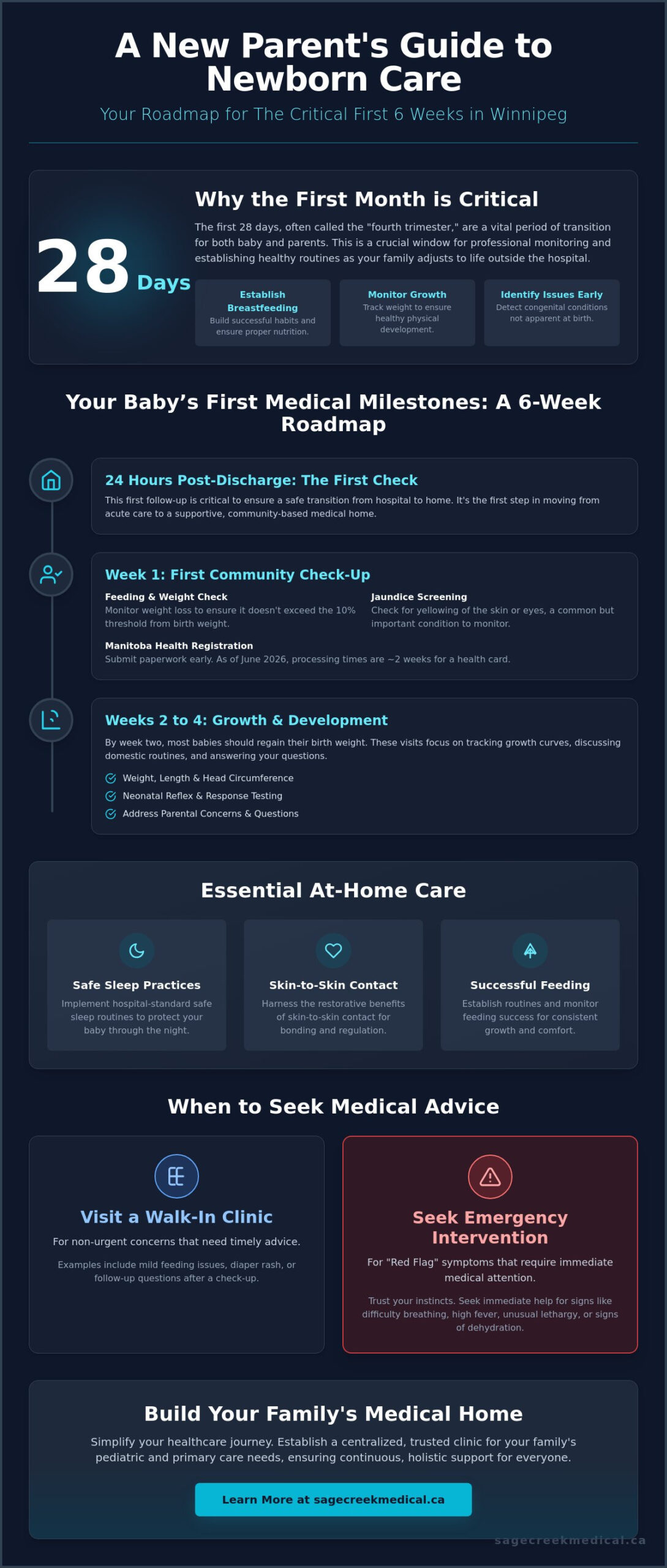
Newborn care is the specialized medical and domestic support provided during the first 28 days of your baby’s life. While the initial hours in the hospital are vital for immediate safety, the transition back to your neighborhood is where the long-term journey of parenthood truly begins. This first month represents a critical window for establishing successful breastfeeding, monitoring consistent physical growth, and identifying any congenital issues that might not have been apparent at birth. As you move away from the 24-72 hour support of hospital staff, the responsibility shifts to a parent-led, clinic-supported model of care. Mastering newborn care and safety means understanding that your baby is still adjusting to life outside the womb.
This period is often called the “fourth trimester.” It’s a concept that recognizes that both the infant and the parents are in a state of intense physiological and emotional transition. For the baby, it’s about learning to regulate temperature and digestion. For you, it’s about recovering from birth and adapting to new rhythms. Having a clear roadmap for newborn care winnipeg helps manage this transition by replacing uncertainty with professional, community-based support.
The Role of Your Healthcare Team
Your journey often starts with a midwife or obstetrician, but as you settle into your home routine, your family physician becomes your primary partner. These early weeks involve essential “Well Baby” checks to track weight gain and developmental milestones. In our province, Manitoba Health covers these essential visits for residents, ensuring every child has access to professional medical oversight. These appointments aren’t just for measurements; they’re a chance to build a relationship with a provider who knows your family’s history.
Holistic Support for the Whole Family
We believe that newborn care winnipeg must extend beyond the infant to include the entire domestic unit. The birthing parent’s health is a priority, particularly regarding postpartum physical recovery and mental wellness. It’s normal to feel a mix of emotions, and having a dedicated “medical home” ensures that everyone is supported. By choosing a clinic that offers both pediatric care and family medicine, you create a sense of continuity. This approach treats the family as a single, interconnected unit rather than a collection of separate patients, which is vital for long-term health and peace of mind.
Your Baby’s First Medical Milestones: A 6-Week Roadmap
Leaving the hospital is a major milestone, but it’s just the beginning of your baby’s clinical journey. We focus on bridging the gap between acute hospital discharge and long-term pediatric care in Winnipeg by providing a structured schedule of check-ups. The 24-hour follow-up is the first critical check after leaving the hospital, ensuring your infant is transitioning safely to the home environment. These early touchpoints allow us to monitor the transition from specialized hospital oversight to a consistent, community-based medical home.
During a typical “Well Baby” visit, we conduct a thorough physical assessment to ensure your infant is thriving. We track weight, length, and head circumference to ensure your baby is following a healthy growth trajectory. We also test neonatal reflexes and physical responses to confirm neurological development is on track. These visits are essential for newborn care winnipeg, allowing us to catch subtle changes early and provide you with data-driven peace of mind.
Week 1: The First Community Check-Up
Your first clinic visit focuses on two main priorities: feeding success and jaundice screening. It’s normal for newborns to lose a small percentage of their birth weight in the first few days, but we monitor closely to ensure they don’t exceed the 10% threshold. We also check for yellowing of the skin or eyes, which can indicate jaundice. This is also the time to ensure your newborn is registered with Manitoba Health. As of June 2026, processing times for health cards are approximately two weeks, so submitting paperwork early is vital for seamless access to services.
Weeks 2 to 4: Monitoring Growth and Development
By the second week, most babies should return to their original birth weight. We use this time to discuss domestic routines and the Manitoba Government’s Baby Care Guidelines regarding safe sleep and nutrition. Following the “Back to Sleep” protocol is the most effective way to reduce the risk of SIDS in the home. If you’re struggling with common concerns like colic, cradle cap, or newborn skin rashes, these mid-month visits provide a safe, professional space to receive clinical reassurance.
Week 6: Immunizations and the Postpartum Review
The six-week mark is a significant turning point for the health of the entire family. Your baby will receive their first round of provincial immunizations, which are essential for long-term protection. This includes the updated Hepatitis A program, which as of June 2026 covers children born on or after January 1, 2010, who meet eligibility criteria. We don’t just focus on the baby during this visit; it also includes a postpartum review for the birthing parent. We check physical healing and emotional well-being to ensure the domestic unit is supported as you move out of the newborn phase. If you’re ready to establish a permanent routine, you can connect with our team to discuss ongoing family medicine.
Essential Daily Care Tips for Winnipeg Parents
Daily care is where the clinical advice you receive at our clinic meets the reality of life in your home. Transitioning to newborn care winnipeg involves adapting to our unique local environment while maintaining the high medical standards established during your hospital stay. One of the most effective ways to support your baby’s transition is through continued skin-to-skin contact, often called Kangaroo Care. While this is a hospital standard, we encourage you to continue it at home. It helps regulate your baby’s body temperature, stabilizes their heart rate, and fosters a deep emotional connection through the release of oxytocin.
Our local climate requires special attention when it comes to dressing your infant. Winnipeg summers can be humid and hot, making overheating a genuine concern. We recommend dressing your baby in a single layer of breathable cotton. In contrast, our winters require careful layering to prevent hypothermia. A good rule of thumb is to dress your baby in one more layer than you are wearing yourself. However, always remove heavy snowsuits or bulky blankets once you are inside a warm vehicle or home to ensure their core temperature remains stable. You can find more specific seasonal advice through the Parenting in Manitoba resource, which offers localized guidance for our province’s families.
Safe Sleep and the Home Environment
Creating a safe sleep environment is a cornerstone of domestic newborn care. We advocate for the “ABC” of safe sleep: infants should sleep Alone, on their Back, and in a Crib that meets current safety standards. This means the sleep surface should be firm and free of soft bedding, pillows, or bumper pads, which are known suffocation risks. Because Winnipeg homes can become very dry during the winter heating season, maintaining proper humidification is essential. Aim for a humidity level between 30% and 50% to prevent your baby’s nasal passages from becoming irritated and to help them breathe more comfortably during the night.
Feeding and Hydration Basics
We believe that “fed is best,” and our primary goal is ensuring your infant receives the nutrition they need to thrive. Learning to recognize early hunger cues, such as rooting, sucking on hands, or increased alertness, allows you to begin feeding before the baby becomes distressed and starts crying. To track hydration, we recommend monitoring “wet and dirty” diaper counts. By the end of the first week, you should expect at least six heavy wet diapers every 24 hours. Additionally, because of our northern latitude and limited winter sunlight, vitamin D supplementation is essential for Manitoba infants. We suggest speaking with our team or your pharmacist to ensure you are providing the correct daily dosage for your baby’s specific needs.
When to Seek Medical Advice: Walk-In vs. Emergency
One of the most common challenges in newborn care winnipeg is distinguishing between a normal developmental stage and a medical concern that needs professional attention. It’s completely natural to feel a wave of anxiety when your baby seems “off,” but we want to help you triage these moments with confidence. Most daily concerns are part of the learning curve of parenthood, yet knowing when to escalate care is vital for your baby’s safety. While having a family doctor who knows your baby’s clinical history is the ideal long-term solution, our city offers various layers of support to ensure you’re never navigating these worries alone.
Certain “Red Flag” symptoms require immediate evaluation at a hospital emergency department. If your infant shows signs of respiratory distress, such as grunting sounds, visible rib pulling, or flared nostrils during breathing, seek emergency care immediately. Similarly, any significant change in skin color or prolonged periods of lethargy where the baby is difficult to wake should be treated as an emergency. For less urgent issues, like a persistent diaper rash, mild congestion, or minor eye discharge, a walk-in clinic in Winnipeg is an appropriate and accessible choice for professional reassurance.
Recognizing Fever and Illness
A fever in a newborn is defined as any rectal temperature of 38.0°C (100.4°F) or higher. Because young infants have developing immune systems, a fever in a baby under three months old is always a reason to seek medical advice promptly. Alongside temperature, you should monitor for signs of dehydration, such as a sunken soft spot (fontanelle) on the head, a lack of tears when crying, or a dry mouth. Observe your baby’s behavior closely; unusual lethargy or inconsolable crying that differs from their normal fussiness are important indicators that they may be feeling unwell.
Navigating the Winnipeg Healthcare System
If you’re unsure whether a situation requires a visit, you can call Health Links – Info Santé at 204-788-8200 for 24/7 guidance from a registered nurse. When a concern is urgent but not life-threatening, our walk-in services at Sage Creek Medical Center provide a person-centered environment where you can receive timely care. To make your visit as smooth as possible, we recommend bringing a fully stocked diaper bag, your baby’s Manitoba Health card, and a written list of any questions you have. This organization helps us provide the most thorough support for your domestic unit. If you’d like to establish a consistent point of contact for your baby’s health, you can schedule an appointment with our family medicine team to create a dedicated medical home.
Building Your Family’s Medical Home at Sage Creek Medical Center
Establishing a medical home for your baby is one of the most significant steps you’ll take during those first few weeks. At Sage Creek Medical Center, we’ve designed our practice to be a safe, accessible, and person-centered space for newborn care winnipeg. We believe that the best care happens when clinical expertise meets neighborly empathy. By bringing family medicine consultations and pediatric care under one roof, we simplify the journey for new parents. This integrated approach ensures that your baby’s medical history is centralized, allowing our team to provide thorough and consistent support through every developmental phase.
Our staff understands the specific anxieties that come with parenthood. We prioritize clarity and ease of navigation, ensuring you understand every step of your baby’s health journey without intimidating jargon. Whether you’re visiting us for a scheduled immunization or a minor concern, you’ll find a team that treats you as an individual. We strive to be a trusted pillar of our local neighborhood, combining contemporary medical technology with the patient, methodical care that values long-term relationships.
Comprehensive Primary Care for Newborns
We are deeply committed to the Sage Creek community and the broader Winnipeg area. We know that finding a provider can be one of the biggest hurdles for new parents in Manitoba. That is why we provide clear pathways for family doctors accepting new patients. Choosing a clinic that offers continuity of care means your child can see the same trusted team from their very first check-up through to adulthood. This long-term relationship allows us to understand your family’s unique needs and domestic context on a deeper level.
Pharmacy and Support Services
A critical part of our support system is the Sage Creek Pharmacy, located right on-site for your convenience. We know that leaving the house with a newborn can be a challenge, so the pharmacy offers free city-wide delivery for your prescriptions and health essentials. Our pharmacists are always available to provide expert advice on over-the-counter pediatric products. If you’re unsure which thermometer is most accurate for a newborn or need guidance on the vitamin D drops required for Manitoba infants, our team is ready to help. You aren’t alone in this journey. Our entire team is here to support your family with the professional and empathetic care you deserve.
Supporting Your Family’s Next Chapter
Navigating the first few weeks of your baby’s life is a journey of constant learning and adjustment. We’ve explored the essential medical roadmap for those first six weeks and shared practical daily care strategies tailored for our local climate. By understanding the difference between urgent clinic visits and emergency situations, you can lower the anxiety that often accompanies those quiet middle-of-the-night worries. Establishing a reliable foundation for newborn care winnipeg ensures that your family is supported by a community-focused team from day one.
Our modern, welcoming facility in the heart of Sage Creek is designed to be your family’s medical home. We offer access to experienced family physicians specializing in pediatric care, ensuring your infant receives thorough and personalized attention. To make those early days even easier, our on-site pharmacy provides free city-wide delivery for all your domestic health needs. Book your newborn’s first “Well Baby” visit at Sage Creek Medical Center today. We’re honored to be part of your baby’s story and look forward to growing alongside your family.
Frequently Asked Questions
How soon should I book my baby’s first doctor appointment in Winnipeg?
You should book your baby’s first appointment within 24 to 48 hours of leaving the hospital. This initial checkup is a critical milestone for newborn care winnipeg, ensuring that your infant is feeding well and transitioning safely to the home environment. We recommend calling your family physician as soon as you have your discharge date to ensure a timely slot in the clinical schedule.
Do I need a pediatrician, or can a family doctor care for my newborn?
A family doctor is fully qualified to provide comprehensive pediatric care for your newborn. Many families prefer this model because it allows for continuity of care where the same provider treats both the child and the parents. Our clinic offers family medicine consultations that prioritize the health of the entire domestic unit, building a long-term relationship that grows alongside your baby.
What should I bring to my newborn’s first clinic visit?
Please bring a fully stocked diaper bag, your baby’s Manitoba Health information, and any discharge paperwork from the hospital. If your physical health card hasn’t arrived yet, bring the temporary registration numbers. It’s also helpful to have a written list of questions regarding feeding, sleep, or skin care so we can address your concerns thoroughly during the visit.
Is my newborn’s care covered by Manitoba Health?
Yes, standard medical checkups and provincial immunizations for newborns are fully covered by Manitoba Health. As of June 2026, the processing time for new health card applications is approximately two weeks. We ensure that these essential visits remain accessible and stress-free, allowing you to focus on your baby’s growth rather than administrative hurdles.
How do I know if my baby is getting enough milk?
Tracking wet and dirty diapers is the most reliable way to know if your baby is receiving enough nutrition. By the end of the first week, you should see at least six heavy wet diapers every 24 hours. We also monitor your baby’s weight gain during clinic visits to ensure they are following their growth curve, which provides clinical confirmation that feeding is successful.
What is the provincial immunization schedule for infants in Manitoba?
The provincial schedule typically begins with the first round of immunizations at two months of age. This includes protection against several childhood illnesses and follows the latest updates to the Manitoba Health immunization program. During your six-week visit, we’ll discuss the upcoming schedule, including the June 2026 Hepatitis A program updates, so you can prepare for these protective milestones.
Can I use a walk-in clinic if my baby has a minor rash or cold?
You can certainly use our walk-in clinic for minor issues like a mild cold, diaper rash, or small skin irritations. These services are designed to provide quick, professional reassurance for non-emergency concerns. If you’re ever unsure if a symptom is urgent, our walk-in team is available to assess your baby and provide the appropriate care or referral.
What should I do if my newborn has a fever after hours?
If your newborn is under three months old and has a rectal temperature of 38.0°C or higher, seek immediate medical attention. After hours, you should call Health Links – Info Santé at 204-788-8200 for guidance or visit the nearest pediatric emergency department. For non-fever concerns that aren’t life-threatening, you can visit our walk-in clinic during our regular operating hours.