
What if that new red patch on your skin is actually a signal that your entire body is under stress? Most of us have spent time staring in the mirror, asking ourselves is this rash serious or just a minor irritation from a new laundry detergent. It is completely natural to feel a sense of unease when your skin changes unexpectedly, especially when you’re worried about contagious conditions or the prospect of waiting for hours in a busy emergency room just for a quick look.
At Sage Creek Medical Center, we believe that everyone deserves clear answers and accessible care right in their own neighborhood. We want to help you find peace of mind by showing you exactly how to identify the red flags that distinguish a common skin flare-up from a potentially dangerous medical situation. This guide provides a clear list of symptoms that require a doctor’s evaluation, explains the difference between mild and severe conditions, and outlines the simple steps you can take to visit our Winnipeg walk-in clinic for a professional assessment.
Key Takeaways
- Identify the “red flag” symptoms, such as fever or rapid spreading, that signal when a skin condition needs professional medical attention.
- Learn the specific diagnostic markers that help you answer the question, “is this rash serious,” before symptoms worsen.
- Distinguish between common, localized irritations and systemic conditions that may require specialized care or prescriptions.
- Gain practical tips for documenting skin changes and managing discomfort safely at home while preparing for a clinic visit.
- Understand how visiting a community walk-in clinic provides a faster, more personal path to diagnosis and immediate on-site treatment.
Is This Rash Serious? Recognizing the ‘Wait and See’ Dilemma
A medical rash is far more than just a patch of itchy skin; it is an inflammatory response where your body reacts to internal or external triggers. These triggers can range from simple contact with a new laundry soap to complex internal infections. When you first notice a change in your skin, it’s natural to wonder, is this rash serious, or can it wait until tomorrow? Your skin is your body’s largest organ, and it often acts as an early warning system. Validating your concern is the first step toward proper care because skin changes are the body’s way of signaling that something isn’t quite right.
The temptation to search for answers online is strong, but “Googling symptoms” often leads to a frustrating cycle of unnecessary panic or dangerous complacency. You might see a photo of a harmless heat rash that looks terrifyingly similar to a rare autoimmune disorder, or conversely, dismiss a serious infection as a simple bug bite. We often encourage our patients to follow the “Systemic Rule” when evaluating their skin at home. This rule suggests that a rash is significantly more serious when it’s accompanied by body-wide symptoms. If you feel “off” in ways that go beyond your skin, it is time to seek a professional opinion.
Why Rashes Are Difficult to Self-Diagnose
One of the biggest challenges in identifying different types of rashes is that many conditions look nearly identical to the untrained eye. Allergic reactions, viral exanthems, and bacterial infections can all present as small red bumps or flat patches. Furthermore, your unique skin type and tone play a massive role in how a rash appears; inflammation may look bright red on fair skin but appear purple, brown, or grey on deeper skin tones. This variability makes online photos highly unreliable for a definitive diagnosis. In our practice, we use dermatological triage, which is the clinical process of prioritizing urgent skin conditions based on the risk of systemic infection or severe allergic reaction.
The Role of a Winnipeg Walk-In Clinic
A walk-in clinic Winnipeg families can rely on, like Sage Creek Medical Center, bridges the critical gap between home care and the emergency room. While most skin irritations aren’t life-threatening emergencies, they still require a professional diagnosis to heal properly and prevent complications. We provide a safe, calm environment where you can get answers without the long wait times often found in hospital settings. It’s also helpful to remember that Manitoba Health typically covers these diagnostic visits for residents, ensuring that financial concerns don’t stand in the way of your health and peace of mind.
Red Flag Symptoms: When a Rash Requires Immediate Medical Attention
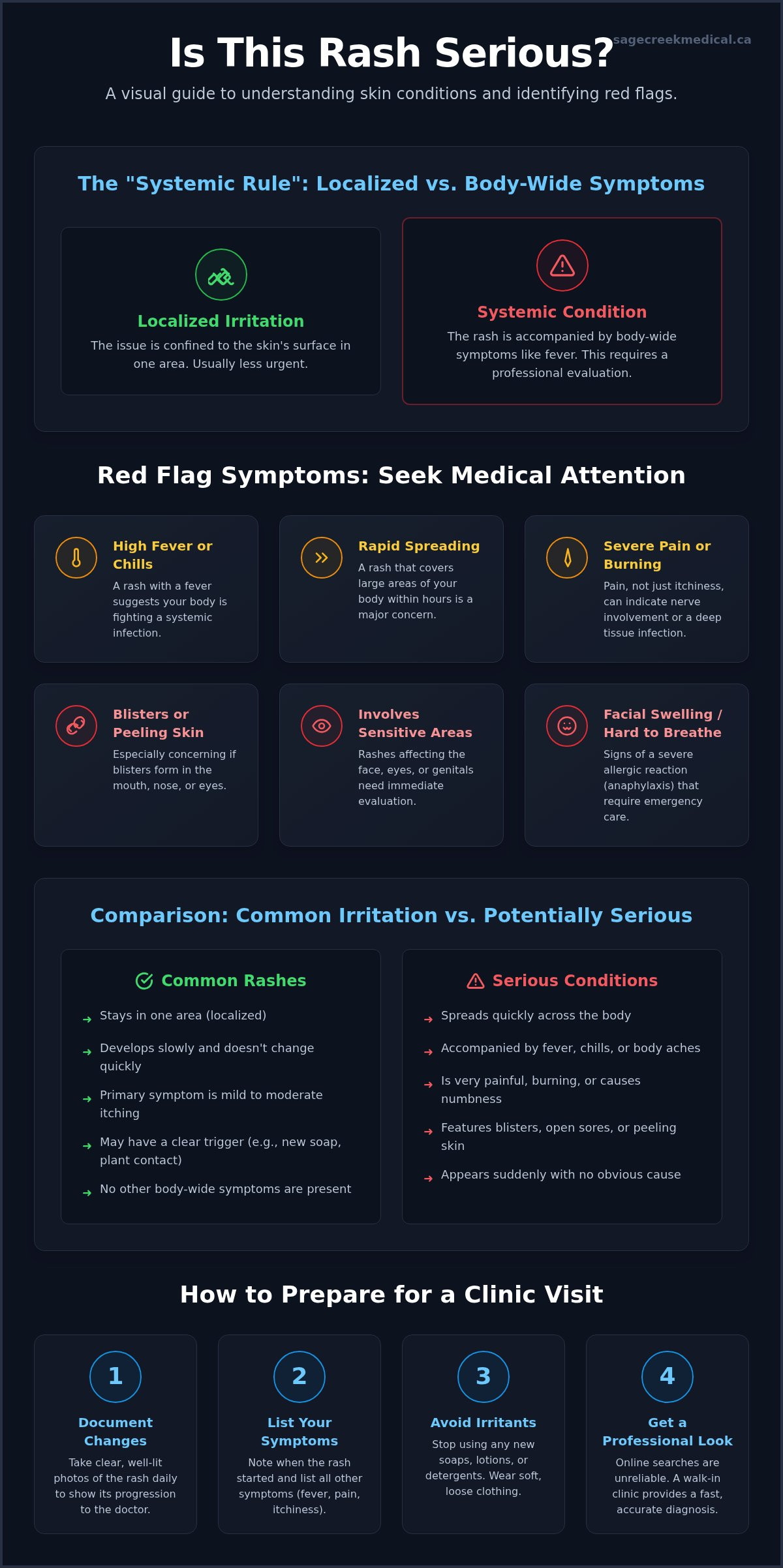
Determining is this rash serious often requires looking past the visual irritation and assessing how your entire body feels. While many skin issues are minor, certain “red flag” symptoms indicate that the condition is no longer localized to the skin’s surface. If you develop a high fever or experience shaking chills alongside a new rash, it’s a sign that your immune system is responding to a systemic threat. This combination often points toward a serious infection or an acute inflammatory response that needs a professional evaluation as soon as possible.
The speed at which a rash develops is another critical factor. A slow-moving patch of dry skin is rarely an emergency, but a rash that spreads across your limbs or torso in a matter of hours is a significant concern. You should be particularly vigilant if the irritation involves the face, eyes, or genitals. Understanding when to seek medical attention for a rash is vital because rapid progression often correlates with the severity of the underlying cause. If you aren’t experiencing an emergency but feel uneasy about a sudden change, visiting our team for a professional skin assessment can provide the reassurance you need.
We also advise patients to pay attention to the sensation of the rash. While itchiness is common and usually associated with allergies or simple irritants, severe pain is a much more concerning sign. Painful rashes can indicate nerve involvement, deep tissue infection, or severe reactions like Stevens-Johnson Syndrome, where the skin may begin to blister or peel away. If your skin feels like it’s burning or if you notice blisters forming inside your mouth or around your eyes, seek medical care immediately.
The ‘Glass Test’ for Non-Blanching Rashes
You can perform a simple check at home called the “glass test” to see if a rash is potentially life-threatening. Press a clear drinking glass firmly against the red spots. Most common rashes will “blanch,” meaning they turn white or disappear under the pressure. If the spots stay red or purple and are visible through the glass, they are called petechiae. This non-blanching response can be a sign of a medical emergency like meningitis. If you see these persistent spots, especially in children, bypass the clinic and head straight to a Winnipeg emergency room.
Signs of Anaphylaxis and Allergic Emergencies
Hives, or urticaria, are often harmless, but they can be the first sign of anaphylaxis, a life-threatening allergic reaction. Monitor yourself or your loved ones for any swelling of the lips, tongue, or throat. If the rash is paired with difficulty breathing, a rapid pulse, or a sudden drop in blood pressure, it is a systemic emergency. These situations require immediate intervention with epinephrine and emergency services to ensure the airway remains clear and the body stabilizes.
Common Rashes vs. Serious Conditions: A Comparison Guide
Most rashes tell a story about what is happening inside or on the surface of your body. To determine is this rash serious, we often start by looking at whether the irritation is localized or systemic. Contact dermatitis, for instance, usually stays exactly where your skin touched an irritant, like a new watch strap or a specific plant. In contrast, a systemic infection often appears on both sides of the body and may be accompanied by the “off” feeling we discussed earlier. While a localized itch is annoying, it rarely carries the same weight as a sudden, body-wide eruption.
For parents in our community, childhood rashes are a frequent source of concern. Common heat rash, which we see often during humid Winnipeg summers, typically looks like tiny pink bumps in areas where sweat gets trapped. This is very different from viral exanthems, which are rashes caused by a virus. These often appear as widespread red spots and can be a sign of conditions like roseola or even measles. If your child’s rash doesn’t fade when pressed or is paired with a high fever, it’s time to seek medical treatment to rule out more significant viral concerns.
Living in Manitoba also means being aware of the “bullseye” or target pattern. This specific shape, known as erythema migrans, is a hallmark sign of Lyme disease. Unlike a typical mosquito bite that fades in a few days, a bullseye rash often expands slowly over time. If you notice this pattern after spending time in wooded or grassy areas, it’s vital to have it evaluated. We also distinguish these acute, sudden-onset rashes from chronic conditions like eczema. While eczema can flare up and look quite angry, it is a long-term condition characterized by dry, thickened skin rather than the rapid, “out of nowhere” change that prompts the question, is this rash serious?
Infection Indicators: Cellulitis and Impetigo
Bacterial infections like cellulitis or impetigo require prompt attention to prevent them from spreading. Cellulitis often presents as an area of skin that is red, swollen, and feels noticeably warm to the touch. A major red flag is the appearance of red streaks radiating away from the site, which suggests the infection may be moving toward your lymph nodes. Impetigo, more common in children, often features “honey-colored” crusts or sores. Because these infections can become dangerous if they enter the bloodstream, visiting a Winnipeg clinic allows a physician to prescribe the necessary antibiotics to stop the infection in its tracks.
Viral vs. Allergic Rashes
Distinguishing between a viral rash and an allergic reaction often comes down to the “itch factor” and the physical shape of the spots. Allergic hives (urticaria) are typically raised, pale red welts that are intensely itchy and may shift locations on the body. Viral rashes are often flatter, more symmetrical, and less likely to itch severely. While over-the-counter antihistamines can help manage the discomfort of a simple allergic reaction, they won’t clear up a viral or bacterial issue. If you’re unsure which one you’re dealing with, a professional evaluation ensures you aren’t masking a deeper problem with temporary relief.
Managing Skin Irritation at Home and When to Visit a Walk-In Clinic
When you discover a new skin irritation, your first instinct is often to reach for a home remedy. While some minor issues resolve on their own, it is important to have a structured plan so you aren’t left wondering, is this rash serious, while the condition worsens. We recommend following these five practical steps to manage the situation safely and prepare for a professional evaluation if it becomes necessary.
- Step 1: Document the rash. Take clear, well-lit photos of the affected area immediately. Rashes can change appearance or spread quickly, and having a visual record helps our physicians see the progression of the irritation.
- Step 2: Avoid irritants. It’s tempting to apply “natural” oils or scented lotions to soothe the skin. However, many over-the-counter products contain fragrances or preservatives that can trigger further inflammation. Stick to lukewarm water and avoid scratching, which can introduce bacteria and lead to secondary infections.
- Step 3: Use cool compresses. A clean, damp cloth can provide temporary relief from itching or heat. Monitor the area closely; if the coolness doesn’t provide relief, or if the skin starts to feel painful rather than just itchy, it’s time to seek care.
- Step 4: Assess for red flags. Re-evaluate the symptoms we discussed earlier. If you notice a fever, rapid spreading, or the “glass test” results we mentioned, stop home care and seek medical attention.
- Step 5: Follow the 48-hour rule. If a rash persists beyond 48 hours without improvement, even if it seems mild, a professional diagnosis is the safest path forward.
We understand that navigating healthcare can feel overwhelming, but our goal is to make the process as straightforward as possible. If home care isn’t working, you can visit our clinic for an evaluation to get the specific treatment you need.
The Danger of ‘Wait and See’ with Children
Pediatric skin is thinner and more reactive than adult skin, which is why we often suggest a more cautious approach for our youngest patients. Many childhood conditions, like Roseola (which often starts with a high fever followed by a rash) or Fifth Disease (known for its “slapped-cheek” appearance), are common and usually mild. However, because children can’t always describe their symptoms accurately, a faster evaluation is often necessary to rule out more concerning viral or bacterial issues. If you are looking for long-term support for your family, you can learn more about pediatric care in Winnipeg and how to connect with a local provider.
What to Bring to Your Appointment
To help us provide the most accurate diagnosis, please come prepared with a few key pieces of information. We’ll need to see your active Manitoba Health card to process your visit. It’s also incredibly helpful if you can provide a list of any current medications and mention any new soaps, detergents, or foods you’ve introduced in the last week. Having a brief timeline of when the rash started and how it has changed ensures our team can spend more time focusing on your treatment and recovery.
Professional Rash Evaluation at Sage Creek Medical Center
When you’re at home trying to decide, is this rash serious, the uncertainty can be the most stressful part of the experience. At Sage Creek Medical Center, our goal is to replace that anxiety with clear clinical answers and a personalized treatment plan. Our physicians approach every dermatological concern with a thorough physical exam, taking the time to understand the history of your symptoms and any potential triggers in your daily life. We don’t just look at the skin; we look at you as an individual within our community.
Our modern facility in the Sage Creek neighborhood is designed to be a one-stop resource for your family’s health. By choosing a clinic that integrates diagnostic services with immediate treatment, you save yourself the exhaustion of multiple trips across the city. Most skin conditions we evaluate are managed effectively through professional-grade topical treatments or oral medications. Having our team right here means you can begin your recovery the same day you seek help, often without ever leaving the building. It’s about providing a safe, person-centered space that values your time and your health.
Integrated Care: From Diagnosis to Prescription
One of the most significant advantages of our center is the presence of an on-site pharmacy. Once your doctor determines the cause of your rash, they can coordinate directly with our pharmacists to ensure your prescription is ready before you head home. This seamless transition is part of our commitment to holistic health and reliability. If you’re unable to wait or simply prefer to rest, we also offer free city-wide delivery for prescriptions. Having your pharmacy in Winnipeg located in the same space as your medical provider ensures that everyone involved in your care is on the same page, reducing the risk of communication gaps.
Next Steps: Booking or Walking In
Accessing professional care shouldn’t be a complicated journey. We welcome walk-in patients throughout the week, with our doors opening at 7:30 am on weekdays to accommodate your work and school schedules. While our family practice is currently at capacity and focusing on our 2026 waitlist, our walk-in services remain a reliable option for acute skin concerns that require a doctor’s eye.
If you’re still asking yourself, is this rash serious, we encourage you to prioritize your peace of mind. Our team is here to provide the clinical authority and neighborly warmth you deserve. You can visit us at 115 Sage Creek Blvd #105 during our standard walk-in hours:
- Monday to Friday: 7:30 am to 8:00 pm
- Saturday: 10:00 am to 5:00 pm
- Sunday: 10:00 am to 3:00 pm
Don’t let a skin concern linger and cause unnecessary worry. Whether it’s a minor irritation or something that requires a prescription, we are here to support you through every phase of your recovery.
Getting the Answers You Need for Lasting Peace of Mind
Your skin is a vital part of your overall health, and its changes deserve careful attention rather than stressful guesswork. By recognizing red flags like fever or rapid spreading and knowing when to transition from home care to a professional evaluation, you’re taking an active role in your own well-being. Instead of spending your evening wondering is this rash serious, we invite you to lean on the expertise of our experienced Winnipeg physicians. We believe that health care should be accessible and supportive at every stage of life.
Our modern facility is a dedicated pillar of the Sage Creek community, designed to make your visit as low-stress as possible. We’ve simplified the process by providing on-site pharmacy services; this means you can pick up your medicated creams or antibiotics immediately after your consultation. This integrated approach ensures you get back to your routine with the support you need without any unnecessary delay.
Visit Sage Creek Medical Center’s Walk-In Clinic for a professional rash evaluation today. We are here to provide the reliable, empathetic care your family deserves right in your own neighborhood.
Frequently Asked Questions
Is a rash that doesn’t itch serious?
A rash that doesn’t itch can still be serious and shouldn’t be ignored based on the lack of discomfort alone. While many minor irritations are famously itchy, some systemic infections, autoimmune responses, or inflammatory conditions present without any itching at all. We recommend checking for other “red flag” symptoms like a high fever or body aches to help determine if you need a professional evaluation.
How can I tell if a rash is an emergency?
You can identify a medical emergency by looking for systemic symptoms that affect your breathing or consciousness. If you experience difficulty swallowing, swelling of the lips or tongue, or a high fever alongside the skin change, seek immediate emergency care. These signs point to a severe allergic reaction or a life-threatening infection that requires hospital intervention rather than a standard clinic visit.
Can stress cause a sudden serious rash?
Stress often triggers sudden skin eruptions like hives or flares of chronic conditions like eczema. While these stress-related issues are uncomfortable and frustrating, they are rarely life-threatening on their own. However, if you are asking is this rash serious because it appeared during a period of high pressure, we suggest a professional evaluation to ensure the trigger isn’t actually an underlying infection or a new allergy.
What does a meningitis rash look like?
A meningitis rash typically appears as small red or purple pinpricks that may eventually look like fresh bruises. A key characteristic is that these spots are non-blanching, meaning they don’t fade or turn white when you press a clear glass against them. This specific response is a critical warning sign that requires an immediate trip to the nearest Winnipeg emergency department for urgent testing.
When should I take my child to a walk-in clinic for a rash?
You should bring your child to a walk-in clinic if their rash persists for more than 48 hours or is accompanied by a low-grade fever and mild fussiness. While many childhood rashes are part of common viral illnesses, our physicians can provide a clear diagnosis to rule out more concerning issues. We prioritize creating a calm, supportive environment for pediatric evaluations to lower the anxiety often associated with these visits.
Are all red rashes contagious?
Not all red rashes are contagious; many are caused by internal inflammation or contact with specific environmental irritants. Conditions like eczema, heat rash, or contact dermatitis cannot be passed from person to person. However, since viral or fungal rashes can spread through contact, it’s best to have a professional assessment before returning to daycare, school, or shared work environments.
What should I do if my rash is spreading quickly?
If your rash is spreading quickly across your limbs or torso, you should seek a medical evaluation as soon as possible. Rapid progression is often a sign that your body is reacting strongly to a systemic allergen or an acute infection. While you’re preparing for your visit, take clear photos of the spread to show our team, as this visual history helps us understand the speed of the reaction.
Is it okay to put hydrocortisone on a rash I can’t identify?
We generally advise against applying hydrocortisone or other steroid creams to a rash until it has been professionally identified. If the irritation is caused by a fungal or bacterial infection, steroids can actually worsen the condition by suppressing your skin’s local immune response. It is much safer to keep the area clean and dry until a physician can recommend the correct medicated treatment for your specific case.