
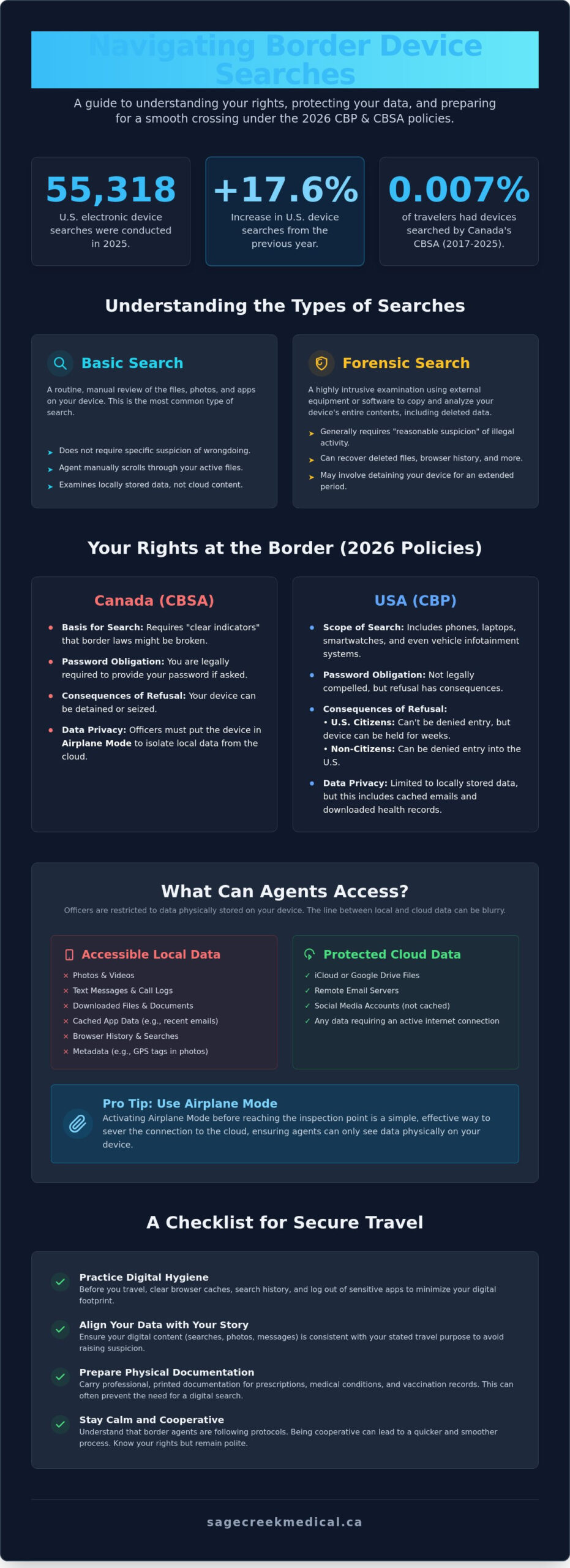
In 2025, U.S. border agents conducted a record 55,318 electronic device searches, which is a 17.6% increase from the previous year. It’s completely natural to feel a surge of anxiety when you think about an official scrolling through your personal photos or private health records. Most of us view our phones as extensions of ourselves, and the thought of that privacy being interrupted can be deeply unsettling. You deserve to feel confident and prepared every time you head toward the line.
Understanding exactly what information officials have access when they search: your smartphone, laptop, or even your smartwatch is the first step toward a stress-free journey. We’ll help you navigate the 2026 CBP and CBSA policy updates so you can protect your sensitive medical data while remaining a cooperative traveler. We’re going to look at the legal limits of border searches, how to secure your digital files, and the simple steps you can take here in Winnipeg to ensure your medical documentation is professional and ready for inspection. Our goal is to provide the clarity you need to travel with peace of mind.
Key Takeaways
- Distinguish between basic and forensic searches to understand your rights under the latest 2026 border policies.
- Identify the specific data that officials have access when they search: your device, and how to keep cloud-based medical records private.
- Secure your sensitive health information by using digital hygiene strategies like clearing browser caches and managing tracking apps.
- Streamline your border crossing by preparing professional documentation for prescriptions and ensuring your travel vaccinations are current.
The Legal Reality: Understanding the Border Search Exception
Crossing the border feels different than walking through our local neighborhood. While we enjoy strong privacy protections in our daily lives, international boundaries operate under a unique set of rules. The Border Search Exception is a legal doctrine that allows government agents to conduct searches without the standard warrants or probable cause required elsewhere. In 2026, this means that both Canadian and U.S. officials have the authority to look at your physical belongings, including your digital devices, to ensure compliance with customs and immigration laws.
The level of scrutiny usually depends on the type of examination. A basic search is a routine review of your device’s active files or photos. However, an advanced or forensic search is much more intrusive, involving software that can recover deleted data or bypass security. Under the latest protocols, agents generally need a reasonable suspicion of illegal activity before they can escalate to a forensic search. Knowing exactly what data officials have access when they search: your smartphone or laptop allows you to prepare with confidence.
Your Rights at the Canadian Border (CBSA)
The CBSA updated its digital device policy on March 11, 2026. Officers can only examine your phone or laptop if they have clear indicators that border laws might be broken. If they do ask for a search, you’re legally obligated to provide your password; refusing can lead to your device being detained or even seized. To protect your privacy, officers are now required to place devices in airplane mode to ensure they only see files physically stored on the hardware, rather than your cloud accounts. While only 0.007% of travelers had their devices searched between 2017 and 2025, being prepared helps keep your journey smooth.
Your Rights at the US Border (CBP)
In January 2026, the U.S. implemented Directive 3340-049B, which broadened the types of devices subject to inspection to include everything from smartwatches to vehicle infotainment systems. This policy change comes after U.S. CBP conducted 55,318 searches in 2025, marking a 17.6% increase from the previous year. While U.S. citizens can’t be denied entry for refusing a device search, their devices can be held for weeks for forensic analysis. For non-citizens and permanent residents, refusing a search can result in being denied entry entirely. While agents are limited to local data, the items they can access when they search: your device include cached emails and stored health records. We want our Winnipeg neighbors to feel ready for these interactions, so having your physical medical documentation from our clinic can often help clarify your travel purpose and reduce the need for deeper digital inspections.
Data and Privacy: What Border Agents Access When They Search Your Devices
When we hand over a device at the border, the immediate concern is often how much of our personal lives becomes visible. It’s helpful to understand exactly what information officials have access when they search: your phone or tablet. Generally, agents are legally restricted to searching data that is physically stored on the hardware itself. This includes your saved photos, text messages, and any files you’ve specifically downloaded for offline use. Knowing what agents can access when they search: your device helps you ensure your digital footprint matches your stated travel goals.
The Distinction Between Local and Cloud Storage
According to the latest CBP policy on device searches, officers are not permitted to access information stored solely on remote servers, such as your iCloud, Google Drive, or remote email servers. However, the line between local and cloud data is often blurred by apps that stay logged in. If your email or social media app has cached recent messages, those files are technically residing on the device’s memory. Putting your phone in airplane mode before you reach the inspection booth is a simple, effective way to ensure that remote data stays remote. We always suggest this small step to our Winnipeg neighbors who are heading south for a visit.
Metadata and Hidden Digital Footprints
Metadata is the data about your data that agents use to build a timeline. This includes details like GPS coordinates embedded in your photos or the exact timestamps of your last few browser searches. If you tell an officer you’re traveling for a quick weekend getaway, but your browser history reveals recent searches for local apartment rentals or job boards, it can create a conflict in your story. Agents look for these inconsistencies to determine if a traveler intends to work illegally or stay beyond their permitted time. This is why being consistent and honest about your plans is so important for a smooth crossing.
Beyond personal photos, officials look for prohibited content or evidence of intent that contradicts your visa status. This can sometimes include sensitive medical information or health tracking data that hasn’t been properly explained. If you’re carrying medications but don’t have a clear record on hand, it can cause unnecessary delays during an inspection. Our team at Sage Creek Medical Center can help ensure your prescriptions are properly documented, providing a physical paper trail that often reduces the need for agents to dig through your digital history for verification.
Medical Confidentiality: Protecting Prescriptions and Health Records
Many of us now use smartphones to manage our well-being through pharmacy portals, cycle trackers, or chronic disease management apps. While these tools are incredibly convenient for daily life in Winnipeg, they store deeply personal information that you may not want to share with strangers. If border officials gain access when they search: your electronic device, they could potentially view your entire prescription history or sensitive health logs. Protecting this information is about more than just privacy; it’s about ensuring your medical history isn’t misinterpreted in a high-pressure environment.
Special care is needed for travelers carrying medications classified as controlled substances. If an agent finds these items without clear, matching documentation, it can lead to detailed questioning. We always recommend keeping physical copies of your prescriptions from our clinic or pharmacy. Physical papers are much easier to present than digital files buried deep within a device. This simple preparation helps you avoid a situation where an officer feels the need to dig through your phone for verification. Knowing what agents can access when they search: your phone allows you to keep your most sensitive data behind a secure digital lock.
Securing Health Apps and Portals
We suggest taking a few practical steps to secure your digital health data before you reach the border line. Log out of any pharmacy apps or the Manitoba Health portal on your device. If your smartphone allows it, use app-level passwords or biometric locks for folders containing medical PDFs or health tracking data. These layers of security act as a gentle boundary. By keeping your medical data secure, you also lower the risk of being flagged for “medical tourism,” which can happen if agents find records indicating you are seeking specialized care abroad that contradicts your stated travel purpose.
Communicating with Agents About Medical Data
If an officer asks to see your device, you can professionally state that it contains confidential medical information. While agents have broad powers, being transparent about the sensitive nature of your data is a valid part of the conversation. Understanding traveler rights at the border is essential for anyone crossing into the U.S. in 2026. You should always carry your physical health card as your primary identifier. If questions arise about your medications, refer the officer to your physical documentation rather than offering up your device for a search. Our team is always here to help you prepare these records so you can head out on your trip with the quiet confidence that your privacy is protected.
Practical Preparation: A Checklist for Winnipeg Travelers
Preparing for a border crossing doesn’t have to be a source of stress. For our neighbors here in Winnipeg, a few minutes of digital and physical organization can make a world of difference. The goal isn’t to hide information, but rather to ensure your most personal data isn’t unnecessarily exposed. By tidying up your devices, you significantly reduce what agents have access when they search: your smartphone or laptop. A simple “device hygiene” routine, such as deleting unnecessary apps and clearing your browser cache, can go a long way in protecting your privacy.
High-security travelers sometimes choose the “Travel Phone” strategy, which involves carrying a secondary device with minimal data. While this might feel like a lot of effort for a weekend trip to Grand Forks, it’s a solid option for those with heightened privacy concerns. If you choose to bring your primary device, ensure Full Disk Encryption (FDE) is active. This security feature is most effective when the device is completely powered down, as it locks the encryption keys away from the reach of forensic tools. For those carrying sensitive work or medical files, backing up your data to a secure drive at home and wiping the device before you leave Manitoba is the gold standard for digital safety.
The 10-Minute Digital Prep
We recommend a quick digital tune-up before you reach the border line. First, disable biometric features like FaceID or TouchID and switch to a strong alphanumeric passcode. Agents can sometimes compel travelers to use a finger or face to unlock a phone, but passcodes often carry different legal considerations. Next, turn off all lock screen notifications. This prevents sensitive texts, pharmacy alerts, or health notifications from appearing while your device is sitting on the inspection desk. Finally, make it a habit to power your device down completely before you reach the primary inspection booth.
Physical Documentation Strategy
It might seem old-fashioned, but the best way to protect your digital privacy is to carry more paper. When you have a dedicated physical “Travel Folder,” you can provide the exact information an officer needs without ever handing over your phone. This folder should include your immunization records, travel insurance details, and certified prescription printouts. Having these documents organized and ready to present shows that you’re a prepared, transparent, and cooperative traveler.
Our team at Sage Creek Medical Center is here to support your travel readiness. Whether you need a quick consultation to update your vaccinations or a printed summary of your medications from our on-site pharmacy, we can help you get organized. Having professional, clinical documentation on hand is often the fastest way to satisfy an officer’s questions about the information they might access when they search: your personal records.
Beyond the Digital: Preparing for a Healthy Trip with Sage Creek Medical
Physical health readiness is often the quietest part of travel preparation, yet it’s one of the most significant factors in a smooth border crossing. When you arrive at the inspection booth feeling well and carrying organized health records, you project a sense of readiness that often lowers the level of scrutiny you might face. Admissibility isn’t just about your digital data; it’s also about meeting the health requirements of your destination. Ensuring your body is prepared for the journey is just as vital as securing your smartphone.
Having a clear, physical paper trail for your health needs acts as a shield for your digital privacy. When you present a certified immunization record or a signed medical certificate, you satisfy an officer’s curiosity immediately. This proactive approach ensures that agents don’t feel the need to seek broader digital access when they search: your personal electronic devices for proof of vaccination or prescription legitimacy. A little bit of physical preparation goes a long way in keeping your private digital life private.
Travel Consultations and Vaccinations
A quick visit to a Winnipeg walk-in clinic before you depart is a practical way to handle last-minute travel requirements. Our team can help you navigate “uninsured services,” such as specialized travel exams or the specific documentation required for carrying chronic disease medications across international lines. If you’re currently in the process of finding a family doctor, we can assist with authorized health needs and ensure your records are current before you leave Manitoba. This preparation gives you the peace of mind that your physical health won’t become a point of contention at the port of entry.
The Sage Creek Advantage: Local Care for Global Travel
We take pride in being a trusted pillar of the Sage Creek neighborhood, offering a person-centered environment that prioritizes your comfort. Our on-site pharmacy is a vital resource for travelers, providing easy prescription documentation and last-minute medication dispensing so you aren’t rushing at the airport. We understand the unique needs of our community and are here to provide the medical certificates or sick notes you might need for travel insurance or border officials. If you need urgent documentation before you head out, our team is ready to help with the quiet confidence and efficiency you expect from your local care provider.
Ultimately, travel is about the joy of discovery and the comfort of returning home to your loved ones. While the 2026 border landscape requires a bit more digital and physical diligence, these steps shouldn’t overshadow the excitement of your trip. By securing your data and preparing your health records with our team, you can focus on the journey ahead. We’re here to ensure that you have the support you need through every phase of your life, whether you’re here in Winnipeg or exploring the world.
Heading Out with Confidence and Peace of Mind
Traveling in 2026 requires a thoughtful approach to both digital safety and physical health. We’ve explored how understanding your rights at the border and maintaining proactive device hygiene can significantly lower travel anxiety. By keeping your medical data secure and preparing a physical folder of essential health documents, you can limit the specific files that border agents might access when they search: your electronic devices. These simple steps ensure you remain a cooperative traveler while protecting your most sensitive personal information.
Our team is here to help you get ready for your next adventure. We offer comprehensive travel health services and have experienced family physicians who understand the documentation you need for a smooth crossing. With our on-site pharmacy providing free Winnipeg delivery, getting your prescriptions and professional printouts organized is easier than ever. Book your pre-travel health consultation at Sage Creek Medical Center today to ensure you’re fully prepared. We want you to focus on the joy of your journey, knowing your health and privacy are well-supported. Safe travels and enjoy every moment of your trip.
Frequently Asked Questions
Can border agents read my private text messages or emails?
Yes, border agents can read messages and emails that are physically stored or cached on your device. While 2026 policies generally prohibit agents from browsing your live cloud accounts, any data that has been downloaded to your phone’s memory is subject to inspection. This is why many travelers choose to log out of sensitive accounts before reaching the primary inspection booth to limit what officers can access when they search: your device.
What happens if I refuse to unlock my phone for a border agent?
The consequences for refusing to unlock a device depend on your citizenship and which border you are crossing. In Canada, the CBSA may detain or seize your device for further examination if you refuse to provide a password. At the U.S. border, non-citizens can be denied entry entirely. While U.S. citizens cannot be denied entry for refusing, their devices can be held for weeks for forensic analysis, which can be a significant disruption for those returning home to Winnipeg.
Do I need to show my medical records if I am carrying prescription drugs?
It is highly recommended to carry physical medical documentation if you are traveling with prescription medications, especially controlled substances. Providing a clear, printed record from our clinic or pharmacy helps verify your identity and the legitimacy of your treatment. This proactive step often satisfies an officer’s questions immediately, reducing the likelihood that they will need to dig through your digital history for proof of your medical needs.
Can border agents search my social media accounts?
Agents can view social media information that is currently visible or cached within an app on your phone. They often look for inconsistencies between your stated travel plans and your digital footprint. If your public or cached posts suggest an intent that contradicts your visa, it can lead to further questioning. We suggest our neighbors review their privacy settings and log out of apps to manage what officials have access when they search: your social media presence.
Does the “Border Search Exception” apply to my laptop and tablet too?
Yes, the legal doctrine applies to nearly all personal electronics, including laptops, tablets, and even smartwatches. Under the 2026 CBP Directive 3340-049B, the definition of an electronic device has expanded to include drones and vehicle infotainment systems. Any device capable of storing digital information can be subject to a search at the port of entry without a standard warrant.
Can I be searched even if I haven’t done anything wrong?
Yes, “basic” searches can be conducted without any suspicion of wrongdoing. While forensic searches usually require reasonable suspicion, routine inspections of your belongings and digital devices are a standard part of border security. Statistics show that while searches are rare, with the CBSA examining only 0.007% of travelers’ devices between 2017 and 2025, the authority to conduct them remains absolute at the port of entry.
What should I do if an agent starts looking through my photos?
If an agent begins reviewing your photos, remain calm and cooperative. You have the right to professionally state that your device contains private medical information or privileged materials. While you cannot physically stop the search, making your privacy concerns known is a valid part of the interaction. Having your physical health documentation ready can often pivot the conversation back to your travel purpose and away from your personal gallery.
How far back can border agents search my digital history?
There is no specific time limit on how far back an agent can look, as they can search anything currently stored on the device. In a basic search, they generally see what is immediately visible in your browser history or message logs. However, if a device is flagged for an advanced forensic search, specialized software can sometimes recover data you thought was deleted long ago. This is why maintaining good digital hygiene before your trip is a smart move for every traveler.