
Did you know that nearly 15% of our neighbors are currently living with diabetes in winnipeg, including those who haven’t received a formal diagnosis yet? It’s a significant number that highlights just how many of us are walking this path together in our community. We know that managing your health can feel like a full-time job, especially when you’re trying to navigate Manitoba Health wait times or keep your blood sugar stable during a brutal January cold snap. You deserve a care plan that feels as local and grounded as your own neighborhood.
In this comprehensive 2026 guide, we’ll show you exactly how to access the latest provincial resources and manage your lifestyle within our unique Manitoba climate. We’ll explore the newest updates to the Manitoba Enhanced Pharmacare Program, practical ways to handle extreme weather, and the steps to finding a family doctor who truly understands chronic disease management. By the end of this article, you’ll have a clear roadmap for building a supportive care team and a reliable medical home right here in the city. Let’s look at how we can make your health journey simpler and more supported.
Key Takeaways
- Learn how to navigate the WRHA system and establish your family physician as the central coordinator for your multidisciplinary care team.
- Discover practical strategies for protecting your insulin and managing blood sugar fluctuations during the extreme temperature shifts common when living with diabetes in winnipeg.
- Understand how to differentiate between symptoms requiring a routine clinic visit and those needing urgent care, including the vital role of regular foot exams.
- Explore how integrated services like on-site pharmacy dispensing and free city-wide delivery can lower the daily stress of managing chronic health needs.
Navigating the Winnipeg Diabetes Landscape in 2026
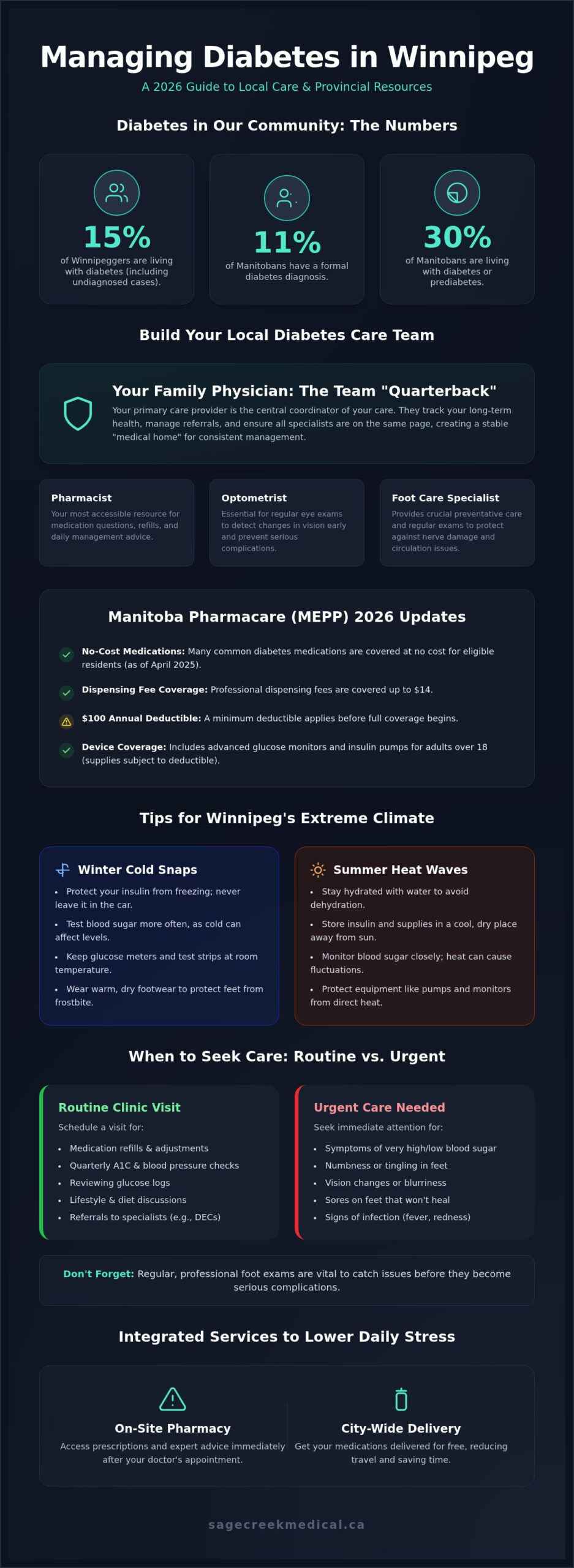
Statistics show that about 11% of Manitobans are currently diagnosed with diabetes. When we include those living with prediabetes, that number climbs to 30%. Living with diabetes in winnipeg means being part of a large, resilient community. The provincial health goals for 2026 focus on proactive, community-based management to help neighbors stay healthy and out of the hospital. Understanding how local systems work is the first step to feeling in control of your health journey.
It’s helpful to understand who does what in our healthcare system. Manitoba Health sets the provincial policy and provides the funding, while the Winnipeg Regional Health Authority (WRHA) manages the clinical programs and specialized services. However, the most vital part of your journey is your “medical home.” This is your local primary care clinic where your history is known and your care is consistent. Community clinics like ours bridge the gap between hospital specialists and your home life, translating complex diabetes management strategies into daily habits that fit your specific routine.
Understanding Manitoba Health Coverage
As of 2026, the Manitoba Enhanced Pharmacare Program (MEPP) has significantly improved how we access medication. Since April 2025, many common diabetes medications are covered at no cost for eligible residents, and the program covers professional dispensing fees up to $14. There’s still a minimum annual deductible of $100 to keep in mind before full coverage kicks in. For a deeper look at how these provincial systems work together, you can read our Manitoba Health: A Comprehensive Guide. Coverage also extends to advanced glucose monitors and insulin pumps for adults over 18, though supplies are generally subject to your Pharmacare deductible.
The Role of Diabetes Education Centres (DECs)
Sometimes, living with diabetes in winnipeg requires a deeper level of specialized support. This is where Diabetes Education Centres (DECs) become invaluable. These centres offer access to specialized nurses and dietitians who help you fine-tune your nutrition, master your glucose monitor, and monitor your long-term progress. Accessing these resources requires a referral from your family doctor. For those of us in the Sage Creek area, having a local physician who can coordinate these referrals ensures you don’t get lost in the wider system. Your doctor acts as the anchor, making sure information flows smoothly between the specialists and your daily care routine. This collaborative approach helps lower the anxiety of managing a chronic condition by ensuring you’re never navigating the path alone.
Building Your Local Diabetes Care Team
Managing your health is a collaborative journey that shouldn’t be walked alone. When you’re living with diabetes in winnipeg, assembling a local team ensures you have professional support exactly where you live and work. Think of this team as a specialized network designed to catch small issues before they become major hurdles. While specialists like endocrinologists provide deep expertise, your local care team handles the day-to-day realities of your health. This includes your family doctor, your pharmacist, and specialists in foot and eye care who help prevent long-term complications.
Your family physician acts as the “quarterback” of this team. They see the whole field and coordinate every move. By tracking your A1C trends and blood pressure over years rather than months, they provide the continuity required for effective chronic disease management. Beyond the clinic, regular check-ups with a local optometrist and a foot care professional are essential. As outlined in reports on Diabetes in Canada, early detection of changes in vision or sensation can prevent the most serious complications of the disease.
The Primary Care Provider (PCP)
A consistent relationship with a primary care provider is the foundation of your medical home. This consistency allows your doctor to notice subtle shifts in your health that a walk-in physician might miss. If you don’t currently have a steady provider, you can use our guide to find family doctors in Winnipeg accepting new patients. We recommend scheduling quarterly reviews. These appointments aren’t just for refills; they’re your opportunity to discuss lifestyle adjustments, review your glucose logs, and ensure your screening tests are up to date.
The Pharmacist as a Daily Resource
Your pharmacist is often the most accessible member of your healthcare team. Modern pharmacy services go far beyond simply dispensing pills. They provide vital medication counseling to help you understand how different treatments interact. For those living with diabetes in winnipeg, winter travel can be a barrier to picking up supplies. Utilizing free city-wide delivery services ensures you never miss a dose because of a blizzard or a busy schedule. We also suggest asking your pharmacist to synchronize your refills. This simple step means all your medications come due at the same time, reducing the number of trips you need to make. If you’re looking for a more integrated approach, our team at Sage Creek Medical Center can help coordinate your prescriptions directly with your care plan.
Practical Tips for Winnipeg’s Unique Climate and Lifestyle
Winnipeg is a city of beautiful but harsh extremes. Whether we’re facing a -40°C wind chill or a humid summer heatwave, living with diabetes in winnipeg requires a specific set of survival skills. Rapid temperature shifts can alter how your body uses insulin and how your equipment performs. Our goal is to help you stay ahead of these changes so you can enjoy every season our city offers without unnecessary stress. By preparing for the environmental factors unique to the Prairies, you can maintain steady control of your health year-round.
Winter Safety and Blood Glucose
Extreme cold affects more than just your comfort. When temperatures drop well below freezing, your body often restricts blood flow to your extremities to keep your core warm. This can lead to inaccurate readings if your hands are cold during a finger-prick test. We suggest warming your hands thoroughly before testing to ensure an accurate sample. Your equipment is also vulnerable; meters and pumps can fail in sub-zero temperatures. If you’re commuting or running errands, keep your kit in an interior pocket close to your body heat rather than in a bag or a cold vehicle. If insulin freezes, it loses its effectiveness and should be replaced immediately.
Staying active is another challenge when the sidewalks are icy and the wind is biting. We often recommend utilizing our city’s excellent indoor spaces to keep your routine consistent. The downtown skywalk system, local malls like Polo Park or St. Vital, and the indoor tracks at community centers provide safe, climate-controlled environments for your daily walk. Even a 20-minute stroll through the Forks Market can help maintain your insulin sensitivity during the long winter months when we tend to be less mobile.
Nutrition in the ‘Peg
Our local food landscape changes with the seasons, and your meal plan can too. During our heavy winters, it’s natural to crave “comfort foods” that are often high in refined carbohydrates. Instead, we suggest looking toward locally sourced, low-glycemic options that are readily available in Manitoba. Our province is a great source for lean proteins like pickerel and bison, which are excellent for a balanced diabetes diet. During the summer months, our local farmers’ markets offer fresh greens and berries that provide essential fiber and antioxidants.
Working with a local dietitian can help you customize these regional ingredients into a plan that fits your lifestyle. They can help you navigate the grocery aisles to find Manitoba-grown produce that supports stable blood sugars. Focusing on what’s available in our own backyard makes healthy eating feel like a natural part of your life here. If you need help getting started, our clinic can provide the referrals needed to connect you with a specialist who understands our local food environment.
Managing Complications and Urgent Care in Winnipeg
While we focus on long-term wellness, sometimes immediate health concerns arise. Living with diabetes in winnipeg means knowing which resource to use when your blood sugar spikes or a minor infection develops. Not every health hurdle requires an emergency room visit. In fact, using local clinics for non-emergencies often leads to faster care and better follow-up. Our goal is to ensure you feel confident deciding where to turn when your health needs shift unexpectedly.
Foot Care and Prevention
Winnipeg’s climate presents specific challenges for foot health. Our extremely dry indoor air in winter and the biting cold outside can lead to cracked skin and reduced sensation. Because small cuts can quickly become serious for those with diabetes, a daily self-check routine is your first line of defense. We recommend inspecting your feet every night for redness, blisters, or calluses. If you notice something unusual, professional foot care services in Southeast Winnipeg are available to help. Regular clinical exams are essential for catching issues before they escalate into significant complications.
Walk-In vs. Family Practice
Knowing when to visit a walk-in clinic in Winnipeg versus waiting for your family doctor can save you time and anxiety. Walk-in services are ideal for minor infections, skin issues, or when you face an unexpected gap in your prescription supplies. At modern community clinics, your walk-in visit is documented and communicated back to your primary care physician. This ensures your medical record remains a complete, unified history of your health.
One of the biggest advantages of local care is the integration of medical and pharmacy services. If you’re managing a minor complication, being able to see a doctor and pick up your prescription in one stop makes a difficult day much easier. Our on-site pharmacy even offers free city-wide delivery, ensuring that your focus stays on recovery rather than logistics. This person-centered approach is designed to lower the anxiety often associated with medical visits.
We also recognize the emotional weight of diabetes distress. It’s common to feel overwhelmed by the daily demands of management. Local counseling and support groups provide a safe space to address these feelings, helping you maintain the mental resilience needed for long-term health. If you’re concerned about a new symptom or need to establish a routine check-up, our team at Sage Creek Medical Center is here to provide the reliable, neighborly care you deserve.
Why Sage Creek Medical is Your Partner in Diabetes Care
Choosing a healthcare provider is a deeply personal decision, especially when you’re living with diabetes in winnipeg. You aren’t just looking for a clinical diagnosis; you’re looking for a partner who understands the rhythm of our neighborhood and the specific challenges of our local environment. At Sage Creek Medical Center, we’ve built our practice around the idea that healthcare should be accessible, empathetic, and deeply rooted in the community. By combining modern clinical expertise with a welcoming, neighborly warmth, we aim to lower the anxiety often associated with chronic disease management.
Comprehensive Chronic Disease Management
Our approach to chronic disease management is methodical and patient-centered. We don’t just look at a single A1C reading in isolation. Instead, the team at Sage Creek Medical Center tracks your trends over time, alongside your blood pressure and lipid levels, to create a complete picture of your health. This longitudinal view allows us to make proactive adjustments to your care plan before small shifts become significant concerns. We believe in treating the individual, not just the condition. This means your care plan is tailored to your specific lifestyle, whether you’re navigating a busy work schedule or managing the demands of a growing family in Southeast Winnipeg.
We also act as your primary point of contact within the broader healthcare system. If your care requires specialized nursing or dietitian support through the WRHA, we coordinate those referrals directly. This ensures that everyone on your team is working toward the same goals. Our physicians take the time to listen to your concerns, ensuring you leave every appointment feeling heard and supported. We’re here to help you build the resilience needed for long-term wellness in a space that feels safe and professional.
Seamless Pharmacy Integration
One of the most significant advantages we offer is the integration of our medical clinic with an on-site pharmacy. This “one-stop” model simplifies your day by allowing you to see your doctor and manage your prescriptions in a single visit. The pharmacy team at Sage Creek Medical Center is highly experienced in supporting the latest diabetes technology, from glucose monitors to insulin pump supplies. They work side-by-side with our physicians to ensure your medication regimen is both effective and easy to follow.
We understand that living with diabetes in winnipeg often means dealing with unpredictable weather and transportation hurdles. To make your life easier, our on-site pharmacy offers free city-wide delivery for all prescriptions and diabetes supplies. Whether you’re at home or at work, we bring your medications to you, ensuring you never have to worry about missing a dose because of a snowstorm or a tight schedule. This level of support is part of our commitment to being a reliable pillar of the local neighborhood. We value long-term relationships and look forward to supporting you through every phase of your health journey.
Taking Charge of Your Health Journey in Winnipeg
Managing a chronic condition is a journey of small, consistent steps. We’ve explored how understanding provincial coverage and building a local care team can simplify your daily routine. By adapting your lifestyle to the unique Manitoba climate and utilizing community resources, you can maintain steady control over your health. living with diabetes in winnipeg doesn’t have to feel like a solo effort when you have a dedicated medical home in your own neighborhood.
At Sage Creek Medical Center, we’re committed to providing the reliable, person-centered support you deserve. Our modern facility brings together experienced family physicians and dedicated chronic disease management services under one roof. With our on-site pharmacy and free city-wide delivery, managing your daily prescriptions becomes much more convenient. We invite you to book your chronic disease management consultation at Sage Creek Medical Center today. We’re ready to help you navigate every season of life with quiet confidence and neighborly care.
Frequently Asked Questions
Is diabetes care free in Manitoba?
Manitoba Health covers many diabetes-related costs, including insulin pumps for eligible adults and most medications under the Enhanced Pharmacare Program. However, there’s a minimum annual deductible of $100 you’ll need to meet first. Once you’ve reached that deductible, the province pays 100% of eligible drug expenses. Coverage for advanced glucose monitors is also available for those with Type 1 diabetes through provincial programs.
How do I get a referral to a Winnipeg Diabetes Education Centre?
Accessing a Diabetes Education Centre (DEC) starts with a conversation with your primary care provider. Your family doctor will assess your needs and send a formal referral to the WRHA. These centres provide specialized support from dietitians and nurses who help you master your equipment and nutrition. It’s a collaborative process designed to give you the tools needed for successful long-term management.
Can I get insulin delivered for free in Winnipeg?
You can certainly get your insulin and supplies delivered at no extra cost through our on-site pharmacy. We offer free city-wide delivery to make living with diabetes in winnipeg a little easier, especially when the weather makes travel difficult. This service ensures you never have to worry about missing a dose. It’s just one way we support our neighbors in managing their health from the comfort of home.
What should I do if I run out of diabetes medication and my clinic is closed?
If you face an unexpected gap in your medication, you can visit a walk-in clinic for a temporary bridge prescription. Our walk-in services handle these types of non-emergency concerns to ensure your treatment remains consistent. The walk-in physician will document the visit so your primary care doctor stays informed. It’s always best to bring your current medication bottles with you to help the doctor verify your dosage.
Does the extreme Winnipeg cold affect my blood sugar levels?
Extreme cold definitely impacts your body’s glucose management. The physical stress of shivering or the body’s effort to stay warm can cause blood sugar levels to rise or fall unexpectedly. Cold fingers also make it difficult to get an accurate blood sample for testing. We recommend warming your hands thoroughly before checking your levels and keeping your testing supplies in an inside pocket close to your body.
Are there local support groups for people living with diabetes in Winnipeg?
Winnipeg has a vibrant network of support, including programs at the YouVille Diabetes Centre and various WRHA community groups. Many of these organizations offer peer-led sessions where you can share experiences and tips with others in the community. Whether you prefer in-person meetings or virtual workshops, there are plenty of ways to connect. We can help you find a local group that aligns with your lifestyle and health goals.
How often should I see my family doctor for diabetes check-ups?
We suggest scheduling a diabetes review every three to six months to keep your health on track. These regular visits allow us to monitor your A1C trends, check your blood pressure, and discuss any lifestyle adjustments. Staying consistent with these appointments is the most effective way to prevent long-term complications. It also gives us a chance to update your personalized care plan as your health needs evolve over time.
Where can I get a professional diabetic foot exam in Sage Creek?
Professional diabetic foot exams are available right here at our modern Sage Creek facility. We incorporate these exams into your regular chronic disease management visits to ensure your foot health is monitored closely. Our team looks for early signs of reduced sensation or skin changes that require attention. Keeping these checks local makes it easier for you to maintain the consistent care necessary for healthy living with diabetes in winnipeg.