
If you’re looking for a walk in clinic winnipeg residents can turn to for a non-emergency health concern, it helps to know what walk-in care can address and how to prepare. Before you go, review the clinic’s current hours and walk-in instructions, then gather your Manitoba Health card information and a few details about your symptoms or medications.
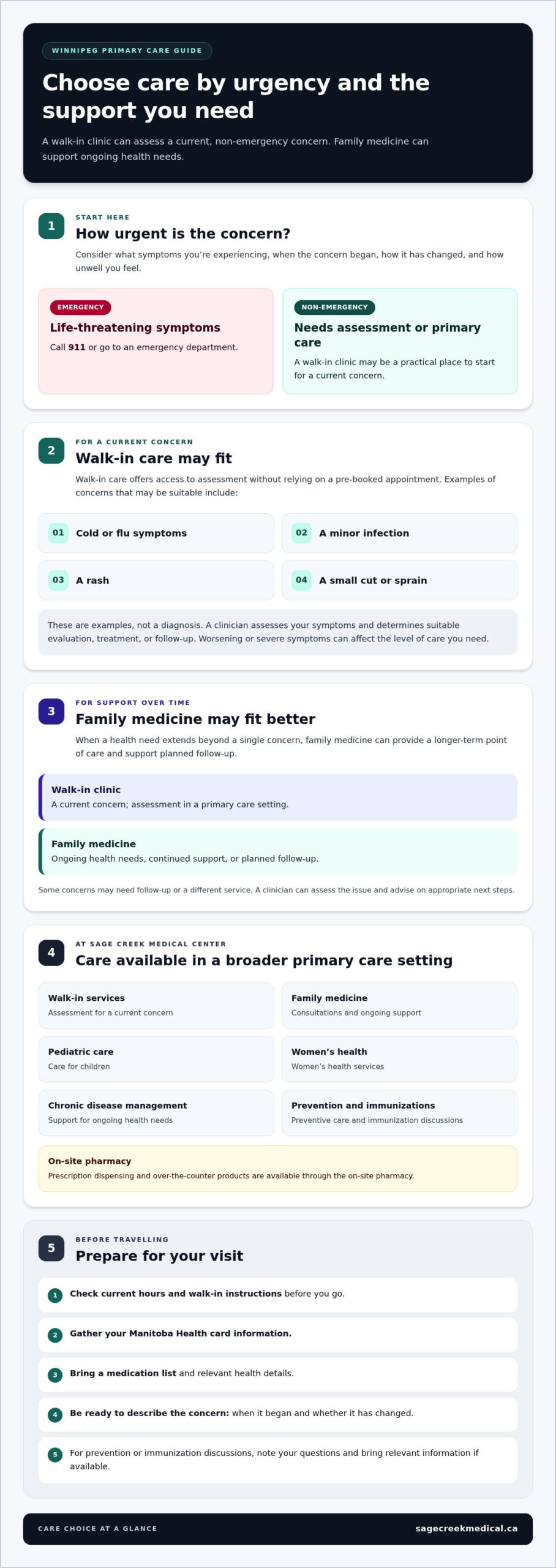
At Sage Creek Medical Center, walk-in services are part of a broader primary care setting that includes family medicine, women’s health, pediatric care and chronic disease management. A walk-in visit can help with a current, non-emergency concern. For emergency symptoms, call 911 or go to an emergency department. For health needs that require continued support, family medicine can provide a longer-term point of care.
This guide explains when a walk-in clinic may be a good fit, what care is available at Sage Creek Medical Center and how to prepare for a visit in Winnipeg. It also compares walk-in care with family medicine and explains how the clinic’s on-site pharmacy fits into its primary care services.
Key Takeaways
- Choose a walk in clinic winnipeg option for a non-emergency concern based on how urgent it is and the kind of support you need.
- Walk-in care can address a current health concern, while family medicine supports ongoing health needs.
- Before travelling, review the clinic’s current walk-in instructions and hours. Bring your Manitoba Health card information, a medication list and a clear description of your concern.
- Sage Creek Medical Center provides walk-in and primary care services, including family medicine, pediatric care, women’s health, chronic disease management and immunizations.
When a Walk-In Clinic in Winnipeg Is the Right Fit
A health concern can come up between regular appointments, leaving you to decide where to seek care. The right setting depends on how urgent the issue is, what symptoms you’re experiencing and the kind of support you need. A walk-in clinic is a practical option for many non-emergency concerns that need professional assessment in a primary care setting.
A Winnipeg walk-in clinic is a primary care setting where you can seek help for a health concern without relying on a pre-booked appointment. It offers access to care for a current issue, while family medicine can provide support over time. If you’re choosing a walk in clinic winnipeg residents can access, first consider whether your concern is non-emergency and suitable for assessment in a clinic.
What kinds of concerns may be suitable for a walk-in visit?
A walk-in visit may be appropriate for common concerns such as cold or flu symptoms, a minor infection, a rash, or a small cut or sprain. These examples can help you decide where to start, but the clinician will assess your symptoms and determine what evaluation, treatment or follow-up is appropriate.
- Consider a clinic visit when the concern is non-emergency and you need assessment or primary care.
- Pay attention to changes: note whether symptoms are getting worse or feel severe, as this can affect the level of care you need.
- Seek emergency help for a life-threatening emergency. Call 911 or go to an emergency department.
Don’t rely on a symptom example alone when deciding where to go. Consider when the concern began, how it has changed and how unwell you feel. A clinician’s assessment can help determine the appropriate next step.
How does walk-in care fit into Winnipeg’s primary care landscape?
Walk-in clinics are one part of primary care in Winnipeg, alongside family physicians and other community-based services. The Winnipeg Regional Health Authority advises people to seek appropriate care for non-emergency concerns through options such as a clinic, family doctor or nurse practitioner. Walk-in care can address a current concern, while a family doctor can help coordinate care over time.
For a general overview of how urgent care centers serve people with health concerns that need attention outside a traditional appointment, see the linked background. Local services and care pathways can differ, so use Winnipeg-specific guidance when deciding where to go. If you don’t have a regular family physician, this Winnipeg family doctor search guide can help you explore options for ongoing primary care alongside walk-in visits.
What Care Can You Access at a Winnipeg Walk-In Clinic?
A walk-in visit can provide assessment and primary care for a current concern, or help you discuss prevention and next steps. At Sage Creek Medical Center in Winnipeg, walk-in services are offered alongside family medicine, pediatric care, women’s health, chronic disease management, preventive care and immunizations. The clinician assesses your health needs and determines what care is suitable.
At Sage Creek Medical Center, walk-in care is part of a wider range of primary care services, with a clinician’s assessment guiding the care that is appropriate for you. When planning a visit, think about both the concern you want addressed and whether you may need ongoing support.
Primary and preventive care during a walk-in visit
A primary care visit may focus on a new health concern or a preventive need. At Sage Creek Medical Center, care includes walk-in services alongside family medicine, pediatric care and women’s health. The clinic also provides preventive care and immunizations. Tell the clinician what prompted your visit, when the concern began and whether anything has changed. For a preventive or immunization discussion, share relevant health information and questions so the clinician can guide the conversation.
Before a visit focused on prevention, write down any questions you want to cover and bring relevant health details, such as your medication list or immunization information if available. The clinician can discuss appropriate next steps based on your circumstances.
When care involves follow-up or additional support
Some concerns can be addressed during an initial visit. Others need follow-up, ongoing management or a different service. Sage Creek Medical Center offers family medicine consultations and chronic disease management for health needs that extend beyond a single concern. During a walk-in visit, the clinician can assess the issue and advise you about appropriate follow-up.
For a clearer picture of how local services and Manitoba Health fit into care decisions, review this guide to Manitoba Health and local care. The Province of Manitoba also provides information about Manitoba government clinics, another useful reference when learning about care options in the province.
Sage Creek Medical Center also has an on-site pharmacy for prescription dispensing and over-the-counter products. Discuss medication-related questions with the clinician or pharmacy team as appropriate. To learn more about the clinic’s care in Winnipeg, visit Sage Creek Medical Center.
Winnipeg Walk-In vs Family Doctor: Which Do You Need?
Walk-in clinics and family doctors are both part of primary care, but they serve different needs. A walk-in visit can help address a current concern. A family doctor can become familiar with your health over time and support planned follow-up. Consider whether you need help with a new issue, ongoing management or both.
| Care factor | Walk-in clinic | Family doctor |
|---|---|---|
| Immediate concern | May suit a new, non-emergency issue that needs assessment. | Can assess a new concern, depending on appointment access and timing. |
| Continuity | Often focused on the concern addressed during that visit. | Can build familiarity with your health history and needs over time. |
| Typical purpose | Episodic primary care for a current health need. | Ongoing care, prevention and planned follow-up. |
This is a general comparison, not a rule that one type of care is always preferable. Your symptoms, health history and access to care all matter. Depending on the clinician’s assessment, a clinic visit may also lead to recommended follow-up or another service.
When a walk-in visit may be a practical option
A walk-in visit may be useful when a new, non-emergency concern needs attention and you don’t have a timely appointment with your regular doctor. For example, you may need an assessment of a recent symptom rather than wait for a routine visit. Review the clinic’s current walk-in instructions before travelling. For severe or life-threatening symptoms, call 911 or go to an emergency department.
Consider the purpose of your visit: do you have a specific concern you want assessed, or do you need a broader review of your health and care plan? That distinction can help you choose where to start. A walk-in clinic in Winnipeg can provide primary care for a current issue, but one visit doesn’t automatically establish an ongoing relationship with a family doctor.
Why ongoing family medicine still matters
Continuity means having a care relationship with a clinician or team that can become familiar with your health history, preferences and changes over time. That context can be valuable for recurring symptoms, chronic conditions or concerns that need planned follow-up. A family doctor can help coordinate those conversations and keep care connected rather than treating each concern as an isolated event.
Walk-in care and family medicine can work alongside one another. If you’re looking for a longer-term primary care relationship for yourself or your household, this Winnipeg guide to choosing a family clinic can help you think through what ongoing support may matter to you.
How to Prepare for a Walk-In Clinic Visit in Winnipeg
A little preparation can make a clinic visit more straightforward. Before heading to a walk in clinic winnipeg patients can use, review the clinic’s current instructions, gather relevant health information and think about how to describe the concern. A short note on your phone can help you remember the details you want to share.
Use this simple sequence:
- Check first: Review the clinic’s current hours, walk-in instructions and any updates about capacity before travelling.
- Gather key details: Bring your Manitoba Health card information where applicable, relevant identification and a list of medications or allergies.
- Describe the concern: Note what you’re experiencing, when it began and whether it has changed.
- Plan for next steps: Bring relevant records or test information if available, and prepare questions about follow-up.
What information should you bring?
Bring information that can help the care team understand your health and the reason for your visit. This may include your Manitoba Health card, identification, medication names, allergies and relevant medical or test records. If you’re visiting on behalf of a child or helping a family member, prepare the details you know about their symptoms and health history. You can still explain your concern if you don’t have every document with you.
Writing down questions in advance can also help. Keep them focused on the issue you came in to discuss, changes you’ve noticed and what to do if symptoms continue. If you take several medications, a current list or the containers can help you provide accurate information.
How to plan around clinic hours and wait times
Clinic hours, walk-in procedures, capacity and wait times can change. Don’t rely only on an old directory listing or information saved from a previous visit. Check the clinic’s current updates before leaving, especially if you’re travelling with a child, arranging transportation or fitting the visit around other responsibilities.
Review the latest clinic information before you leave. Posted hours alone may not tell you whether the clinic can accept additional patients, so follow its current walk-in instructions when planning your visit.
At the visit, describe your concern in a clear order: what’s bothering you, when it started, what has changed and what you’ve tried so far. Share relevant medication and health-history details, then listen for guidance about assessment and follow-up. You don’t need to diagnose the problem yourself.
For information about Sage Creek Medical Center’s Winnipeg walk-in and primary care services, visit Sage Creek Medical Center.
Getting Walk-In Care at Sage Creek Medical Center
For people looking for a walk in clinic winnipeg residents can access for primary care, Sage Creek Medical Center provides walk-in services alongside family medicine and other care. Located in Winnipeg, the clinic offers primary care support for current concerns as well as services that can contribute to longer-term health discussions.
A neighborhood clinic for different stages of life
Care at Sage Creek Medical Center includes family medicine consultations, women’s health services, pediatric care and chronic disease management. The clinic also provides preventive care, immunizations and minor surgical procedures. The clinician assesses your needs and advises on suitable care. These services bring several primary care supports together in one Winnipeg setting.
For a parent, pediatric care and immunizations may be relevant to a child’s health needs. An adult managing a chronic condition can discuss ongoing care, while someone with a new concern can seek a walk-in assessment. The care team considers each patient’s circumstances and recommends appropriate next steps.
An on-site pharmacy provides prescription dispensing and over-the-counter products. Having pharmacy services at the clinic makes it convenient to discuss medication-related needs as part of your care. The pharmacy also offers free city-wide delivery.
Walk-in care can address a current primary care need, while family medicine and chronic disease management support conversations about ongoing health. A walk-in visit alone doesn’t establish a continuing relationship with a particular clinician. If your concern needs follow-up, ask about the recommended next step and keep a note of any advice or care plan to refer to later.
How to take your next step
Before travelling, review the clinic website for current visit guidance, walk-in instructions and hours. Use the latest information to plan your visit. To prepare, bring your Manitoba Health card details where applicable, medication information and a clear description of your concern.
Choosing a local care option is about matching the support you need with the services available. Sage Creek Medical Center brings walk-in and primary care together in Winnipeg, with an on-site pharmacy. For information about visiting the clinic and its services, visit Sage Creek Medical Center.
Take the Next Step Toward the Care You Need
You don’t need to have every answer about your health before choosing where to start. Focus on the concern you have now and the kind of support you need. If you’re considering a walk in clinic winnipeg visit, review the clinic’s current visit information and plan accordingly.
After speaking with a clinician, note any recommended follow-up, changes to watch for or questions to raise next time. Keeping that information together can make future conversations easier and help you stay engaged in your care. A single visit can be one step in a broader health plan.
Sage Creek Medical Center is part of Winnipeg’s local healthcare community. To learn more about the clinic’s walk-in and primary care services, visit Sage Creek Medical Center.
Frequently Asked Questions
Do I need a family doctor to visit a walk-in clinic in Winnipeg?
No. You can seek care at a walk-in clinic for a current concern even if you don’t have a family doctor or can’t reach your regular provider. A walk-in visit can help address an immediate need, but it doesn’t automatically create an ongoing care relationship. If you have recurring or complex health needs, consider arranging continuing primary care in Winnipeg as well.
How long is the wait at a Winnipeg walk-in clinic?
Wait times vary by clinic and visit. They depend on factors such as patient volume, time of day and the care needs of people ahead of you. An online schedule may not reflect current capacity. Review the clinic’s latest updates before travelling and allow flexibility in your plans.
Can children be seen at a walk-in clinic in Winnipeg?
Yes. Sage Creek Medical Center provides pediatric care. Whether a clinic visit is suitable depends on the child’s age, symptoms and health history, as well as the care needed. Bring relevant medication details and be ready to explain when symptoms began. If your child’s symptoms are severe or worsening rapidly, seek emergency help rather than waiting for a routine clinic assessment.
Can a walk-in clinic renew a prescription?
A clinician can assess a request for a prescription renewal. The decision depends on the medication, your health history and whether continuing it is appropriate. Bring the medication container or note its name and dose, along with the pharmacy details and how many doses you have left. Mention missed doses, side effects or recent changes so the clinician can assess your situation and discuss next steps.
Can a Winnipeg walk-in clinic refer me to a specialist?
A clinician may recommend a specialist referral if it’s appropriate for your concern, but a referral isn’t guaranteed. The decision depends on the assessment and the type of care needed. Explain your symptoms, relevant medical history and any previous assessments or treatments. You can also ask what follow-up is recommended and what signs should prompt you to seek care again.
What if I do not have a Manitoba Health card?
Not having a card doesn’t by itself determine the cost of a visit or whether a service is insured. Coverage depends on your eligibility and the service. Some medically necessary care may be insured for eligible Manitoba residents, while other services can involve direct fees. Bring any health coverage information you have. If you’re covered by another Canadian province, bring that health card as well.