
You wake up, head to the bathroom, and suddenly feel a sharp, stinging sensation that catches you off guard. It’s a moment that immediately triggers a wave of anxiety, leaving you wondering if it’s a minor irritation or something that requires a doctor right away. When you’re dealing with painful urination what to do is likely the first question on your mind. It’s perfectly normal to feel uneasy or confused about whether you should wait for the discomfort to pass or seek medical attention immediately.
We understand how disruptive and stressful these symptoms can be for you and your family. You deserve clear answers and fast relief without the added weight of clinical coldness. In this guide, we’ll walk you through the immediate steps to manage your discomfort and help you identify common causes like UTIs or other infections. We’ll also explain how to access professional care right here in Winnipeg, including how to use your Manitoba Health card for a pharmacist assessment or a walk-in consultation. By the end of this article, you’ll have a clear path toward a diagnosis and the treatment you need to feel like yourself again.
Key Takeaways
- Identify the specific sensations of dysuria, such as burning or stinging, to help our medical team provide a faster and more accurate diagnosis.
- Understand the differences between common causes like UTIs and STIs so you can take the right steps toward a full recovery.
- Learn about painful urination what to do for immediate relief at home and recognize the clear signs that it is time to seek a professional prescription.
- Navigate Winnipeg’s healthcare system with confidence by using your Manitoba Health card for covered assessments and local walk-in services.
- Discover the benefits of person-centered care that combines clinical consultations with an on-site pharmacy for a seamless, stress-free experience.
Understanding Painful Urination (Dysuria) & Immediate Steps
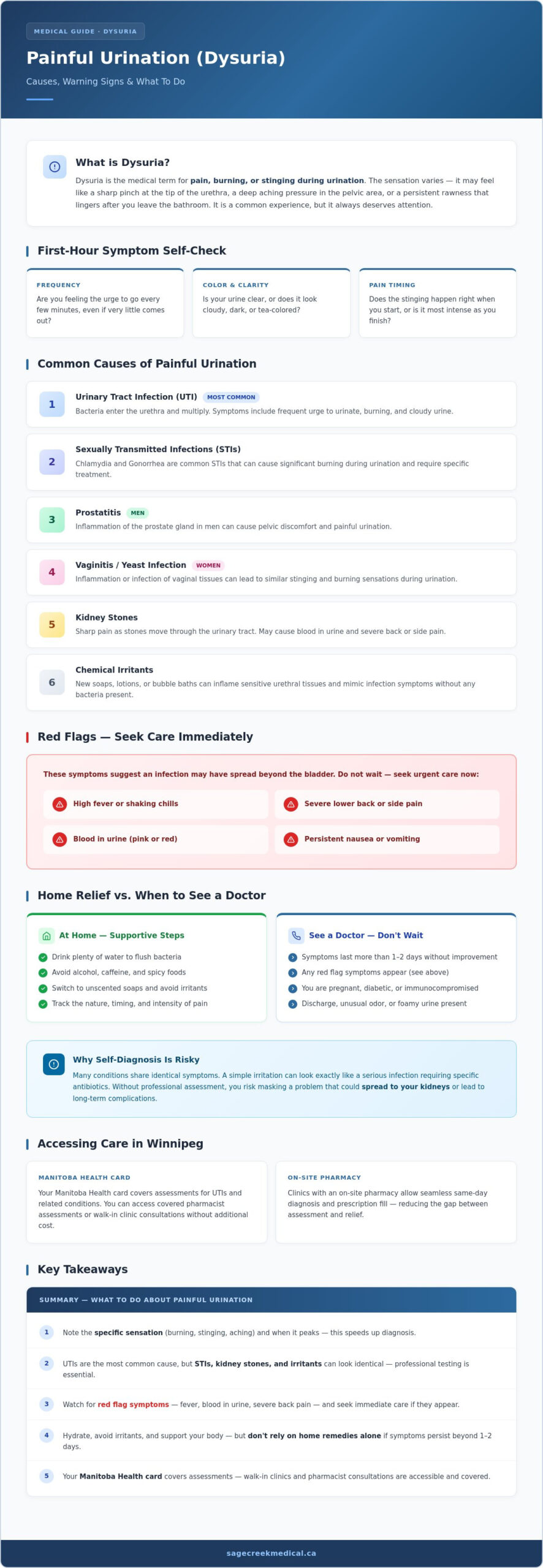
Feeling a sharp pinch or a persistent burn when you use the bathroom can be incredibly unsettling. It is a common experience that many of our neighbors in Winnipeg face, yet it often brings a sense of isolation and worry. Dysuria is the medical term for pain during urination. While often linked to common infections, Dysuria is a broad symptom that can indicate several different underlying health issues. When you are first noticing this discomfort, knowing about painful urination what to do can help you stay calm and take the right steps toward feeling better.
The sensation isn’t always the same for everyone. Some people describe a localized stinging at the very tip of the urethra, while others feel a deep, aching pressure in the pelvic area. You might also notice a persistent itch or a feeling of “rawness” that doesn’t go away after you leave the bathroom. Because these feelings are so varied, paying close attention to the specific type of discomfort you’re experiencing is the first step in helping our care team find the right solution for you.
During the first hour of noticing symptoms, we recommend a quick self-check to gather information. If you are unsure about painful urination what to do, your first priority should be observing the intensity and nature of the pain. Use this checklist to track your body’s signals:
- Frequency: Are you feeling the urge to go every few minutes, even if very little comes out?
- Color and Clarity: Is your urine clear, or does it look cloudy, dark, or tea-colored?
- Pain Timing: Does the stinging happen right when you start, or is it most intense as you finish?
It’s tempting to search for home remedies or wait a few days to see if it clears up on its own. However, self-diagnosis is risky because many different conditions share the same symptoms. A simple irritation might look exactly like a more serious infection that requires specific antibiotics. Getting a professional assessment ensures you aren’t masking a problem that could eventually spread to your kidneys or lead to longer-term complications.
Is It an Emergency? Red Flags to Watch For
While most cases can be handled at a walk-in clinic, some symptoms require more urgent medical attention. If your painful urination is accompanied by a high fever, shaking chills, or severe pain in your lower back or side, you should seek care immediately. Other serious signs include visible blood in the urine, which may appear pink or bright red, and persistent nausea or vomiting. These red flags suggest that an infection may have moved beyond the bladder.
Tracking Your Symptoms for the Doctor
When you sit down with a physician, the more detail you can provide, the better. Try to notice if there are any unusual odors or if the urine appears “foamy.” Knowing exactly when the pain peaks, such as at the start or the very end of the stream, helps us differentiate between a bladder issue and a urethral irritation. This level of detail helps our team provide the person-centered care that our community relies on.
Common Causes: Why It Hurts to Pee
When you are searching for painful urination what to do, identifying the “why” behind the pain is your first step toward relief. While many people immediately assume they have a urinary tract infection, several different conditions can cause that familiar stinging sensation. Our team sees a wide variety of these cases, and we’ve found that pinpointing the cause early prevents a minor annoyance from turning into a significant health hurdle. There are several common causes of painful urination that range from simple irritations to infections that require professional care.
Urinary Tract Infections (UTIs) are the most frequent culprit we encounter in Winnipeg. These occur when bacteria enter the urethra and begin to multiply. However, Sexually Transmitted Infections (STIs) like Chlamydia and Gonorrhea can also cause significant burning during urination. For men, the pain might stem from prostatitis, which is an inflammation of the prostate gland. Women might experience similar discomfort due to vaginitis or a yeast infection. Sometimes, the cause isn’t an infection at all. Physical issues like kidney stones can cause sharp pain as they move, while chemical irritants found in new soaps, lotions, or bubble baths can inflame sensitive tissues.
If you’re noticing these symptoms, our team at Sage Creek Medical Center can help you find the specific cause and start the right treatment today.
The Difference Between a UTI and a Bladder Infection
Many people use these terms interchangeably, but there is a slight distinction. A UTI is a broad term for an infection anywhere in your urinary system. A bladder infection, or cystitis, is a specific type of UTI where the bacteria are localized in the bladder. If left untreated, these bacteria can travel upward to the kidneys, which is a much more serious condition. When you visit a clinic, we typically use a simple urinalysis to check for white blood cells or bacteria to confirm where the infection is most active.
Gender-Specific Considerations for Pain
Anatomy plays a large role in why you might be feeling discomfort. Women are statistically more prone to UTIs because they have a shorter urethra, making it easier for bacteria to reach the bladder. As women reach menopause, changes in estrogen levels can also lead to thinning of the urinary tract tissues, which increases sensitivity. For men, urinary pain is often linked to the prostate. An enlarged prostate or a prostate infection can squeeze the urethra, making urination both difficult and painful. Expert providers like Dr. Sankeerth Reddy’s Clinic emphasize that targeted care for these male-specific issues is crucial for a full recovery. Regardless of your age or gender, understanding about painful urination what to do starts with recognizing these unique biological factors.
Beyond treating specific infections, men may also benefit from the specialized sexual health services provided by clinics like FullMast.
What to Do: Home Relief vs. When You Need a Doctor
When that sharp sting hits, your first instinct is often to look for quick relief within your own home. While there are several ways to ease the discomfort, it’s vital to distinguish between managing symptoms and actually treating the cause. If you’re wondering about painful urination what to do, your first step should be increasing your water intake. Drinking plenty of water helps dilute your urine, making it less acidic and less painful when it passes over inflamed tissues. However, while hydration can flush out some bacteria, it isn’t a substitute for professional medical treatment for painful urination.
What you put into your body matters just as much as how much water you drink. We recommend avoiding common bladder irritants like caffeine, alcohol, and very spicy foods while you are experiencing symptoms. These substances can make the burning sensation much worse by further aggravating the lining of the urinary tract. You might also consider over-the-counter (OTC) pain relievers specifically designed for urinary discomfort. These can provide temporary relief from the urgency and stinging, but they don’t kill bacteria. The “wait and see” approach is often the most dangerous choice; delaying a visit to a professional can allow a simple bladder infection to travel to the kidneys, leading to more severe health complications.
Safe Home Comfort Measures
Sometimes, a bit of warmth can go a long way in soothing the pelvic pressure that often accompanies urinary pain. Applying a heating pad to your lower abdomen or back can relax the muscles and provide a sense of calm. Maintaining gentle hygiene is also key; avoid harsh, scented soaps that might cause further irritation. You have likely heard that cranberry juice is a “cure-all” for these issues. In reality, while some studies suggest certain compounds in cranberries may help prevent bacteria from sticking to the bladder wall, it won’t cure an active infection once it has started.
When Medical Intervention Is Non-Negotiable
There are certain times when home care simply isn’t enough. If your symptoms last for more than 24 hours without improvement, it’s time to see a doctor. This is especially critical for those who are pregnant, as urinary infections can pose risks to both the parent and the baby. Additionally, if you find yourself dealing with recurrent infections that keep coming back, a more thorough investigation is needed to find the root cause. When you’re deciding on painful urination what to do, remember that our local walk-in services are here to provide the definitive diagnosis and prescriptions that home care cannot offer.
Accessing Fast Care in Winnipeg: Walk-in Clinics and Manitoba Health
Finding relief in our city shouldn’t be a complicated process. When you’re struggling with painful urination what to do, the best local resource is a community-based clinic that understands our neighborhood’s needs. Choosing a walk in clinic in Winnipeg allows you to receive a same-day diagnosis, often within a 30 to 180-minute window. This is significantly faster than the long waits at an emergency department, where non-urgent cases might wait 8 hours or more. For most simple infections, a walk-in setting provides the focused attention you need without the stress of a hospital environment.
To make your visit as smooth as possible, please bring your physical or digital Manitoba Health card. Our team will need your 9-digit Personal Health Information Number (PHIN) to process your visit through provincial billing. It’s also helpful to have a list of any current medications or supplements you are taking. This information helps our physicians ensure that any new prescription is safe and won’t interact with your existing health routine. If you’re currently experiencing discomfort, you can visit our walk-in clinic today to speak with a physician and start your recovery.
Walk-in Clinic vs. Emergency Room in Winnipeg
Many people head to the Emergency Room when they feel sudden pain, but for non-life-threatening issues like dysuria, this often leads to frustratingly long wait times. ERs must prioritize trauma and cardiac cases, whereas walk-in clinics are designed specifically for acute issues like UTIs. If you’re experiencing the red flags we mentioned earlier, like severe back pain or high fever, an Urgent Care center is the appropriate middle ground. For standard burning or stinging, local diagnostic labs in Winnipeg typically return urine culture results within 24 to 48 hours, allowing us to adjust your treatment plan if the initial results suggest a specific type of bacteria.
Navigating Insured Services
Most medically necessary consultations and diagnostic tests are fully covered for residents with a valid provincial health card. Interestingly, Manitobans are also eligible for up to three pharmacist assessments for uncomplicated cystitis per year at no cost, which is a great local benefit for quick relief. For those who don’t have a regular provider, we can provide guidance on family doctors in Winnipeg accepting new patients to ensure you have consistent support. If you’ve recently moved to the province, there’s typically a three-month waiting period before your new coverage begins, but we can help navigate the billing for out-of-province patients to ensure you get the care you need immediately.
Prompt Treatment at Sage Creek Medical Center & Pharmacy
When you’re feeling unwell, the last thing you want is to spend your day driving across the city to multiple locations. We’ve built our facility to be a trusted pillar of the neighborhood, providing a seamless experience from the moment you walk through our doors. If you’re stressed about painful urination what to do, we offer a “one-stop” approach where you can see a physician and fill your prescription in the very same building. This integrated model removes the friction of modern healthcare, allowing you to focus entirely on your recovery.
Our team of experienced physicians provides specialized attention for both women’s and men’s urinary health. We understand that these issues are personal and sometimes difficult to discuss, which is why we prioritize a safe, person-centered environment. Whether you’re visiting us for a routine consultation or acute walk-in care, we treat you as an individual rather than just a symptom. We also believe in the importance of long-term relationships; if you don’t have a regular provider, we can help you transition from walk-in care to a permanent family physician within our practice to ensure your health is supported through all phases of life.
The Advantage of Our On-Site Pharmacy
Having a pharmacy just steps away from the exam room is more than just a convenience; it’s a vital part of our care model. Once our physicians provide a diagnosis, you can immediately access the necessary antibiotics or symptom relief products without leaving the building. Our pharmacists are also available for private consultations to discuss over-the-counter bladder health products or to explain your medication schedule in detail. If you’re too uncomfortable to wait or need to get home to rest, we offer free city-wide delivery to ensure your treatment reaches your doorstep without any extra effort on your part. We even provide direct billing to Manitoba Health to keep your visit as straightforward as possible.
Booking and Visit Expectations
We’ve designed our clinic to be approachable and highly organized. When you arrive for walk-in care, you’ll be greeted by a team that values your time and your comfort. Our communication rhythm is steady and calm, ensuring you understand every step of the assessment process. We’re open Monday through Friday from 7:30 am to 8:00 pm, with weekend hours to support our community when they need us most. We’re committed to the Sage Creek neighborhood and the surrounding Winnipeg area, acting as a reliable anchor for your family’s health needs. If you’re currently experiencing discomfort, please visit Sage Creek Medical Center for prompt, empathetic care today.
Take the Next Step Toward Feeling Better
Addressing urinary discomfort early is the best way to prevent complications and return to your daily routine. Throughout this guide, we’ve explored how to track your symptoms, why a professional diagnosis is safer than self-treatment, and the easiest ways to navigate Manitoba Health services in Winnipeg. When you are uncertain about painful urination what to do, remember that our team of experienced local physicians is here to provide the clinical authority and neighborly warmth you deserve.
Our facility offers comprehensive primary care and walk-in services designed to lower the anxiety often associated with medical visits. By combining expert consultations with an on-site pharmacy and free city-wide delivery, we ensure that your path to recovery is as smooth as possible. You don’t have to manage this discomfort alone; our community-centered approach means we are here to support you through every step of the process. We are committed to providing a safe, accessible space where your health and comfort come first.
Visit Sage Creek Medical Center Walk-in Clinic for Immediate Care
We look forward to helping you feel like yourself again soon.
Frequently Asked Questions
Can a UTI go away on its own without antibiotics?
Most bacterial urinary tract infections require antibiotics to clear completely. While you might notice a temporary decrease in discomfort by drinking plenty of water, the underlying bacteria often remain in the system. Leaving an infection untreated increases the risk of it traveling to your kidneys, which can lead to a much more serious health situation. We recommend a professional assessment to ensure the infection is fully resolved.
How do I know if my painful urination is an STI or a UTI?
It is impossible to distinguish between the two based on sensations alone because their symptoms overlap significantly. Both can cause intense burning and pelvic pressure. UTIs are often accompanied by a frequent, urgent need to go, while STIs might involve unusual discharge or sores. Our physicians use specific diagnostic tests to identify the exact cause so we can provide the correct treatment for your specific needs.
Is blood in the urine always an emergency?
Finding blood in your urine requires prompt medical attention, but it doesn’t always necessitate a trip to the emergency room. It is often a sign of a severe bladder infection or a kidney stone. If you also have a high fever, vomiting, or intense back pain, you should go to an Urgent Care center. Otherwise, our walk-in clinic can assess the cause and start your treatment during regular hours.
What will the doctor do to diagnose the cause of my pain?
We typically begin with a physical exam and a review of your symptoms. Our team will then ask for a small urine sample to perform a dipstick test right in the clinic. This test looks for white blood cells, nitrites, and blood. In some cases, we send the sample to a local lab for a culture, which helps us identify the specific bacteria and the most effective antibiotic for your recovery.
Are walk-in clinic visits for painful urination covered by Manitoba Health?
Yes, medically necessary consultations for urinary issues are fully covered for residents with a valid provincial health card. When you’re deciding on painful urination what to do, knowing that your visit and standard diagnostic tests are insured can help lower your stress. We provide direct billing to Manitoba Health, so you only need to bring your physical or digital card and your 9-digit PHIN to your appointment.
How long does it take for antibiotics to stop the burning sensation?
Most patients experience a noticeable reduction in pain within 24 to 48 hours of starting their medication. However, feeling better doesn’t mean the infection is gone. It is vital that you finish the entire course of antibiotics exactly as our physicians prescribed. Stopping your medication early can allow the strongest bacteria to survive, which may lead to a recurrent infection that is much harder to treat in the future.
Can I get a prescription for a UTI through a Winnipeg walk-in clinic?
Our physicians can provide a prescription immediately after your assessment if an infection is confirmed. Because we have an on-site pharmacy, you can fill your prescription before you even leave the building. If you’re feeling too unwell to wait, we can also arrange for free city-wide delivery. This ensures you can go straight home to rest while we bring your medication directly to your doorstep in Winnipeg.
What should I do if I have painful urination while pregnant?
You should contact a healthcare provider immediately if you experience any urinary discomfort during pregnancy. When considering painful urination what to do while expecting, professional intervention is essential because untreated infections can lead to complications like preterm labor. We treat these cases with extra care, selecting antibiotics that are safe for both you and your baby to ensure a healthy and comfortable pregnancy for our neighbors.